Tuesday, November 22, 2011
Monday, November 21, 2011
The Hiding Place - Review
I grew up with my mom talking about The Hiding Place by Corrie Ten Boon. She told and retold several of the stories until I felt like I had already read the book. In my university ethics class, the professor referenced Corrie Ten Boon's ethical disagreements with her sister about whether it is ever OK to lie - even when lying might protect a human life. Corrie Ten Boon's story has taken on the aura of a modern Christian legend.
As I picked up the book to read, I honestly had a mixture of interest and skepticism. The interest came from the recognition that it must be a classic for a reason, and I guess the skepticism came from the postmodern distrust of easy answers from modernism. Both my interest and my skepticism were rewarded, though not in equal measure.
I was entranced by the story of Corrie's Dutch family's resistance to Nazism through underground work and care for the weak. This was one of those books that I found myself reading at every spare minute at home. Also, the way Corrie's family engages their faith in a good God while evil triumphs temporarily was fascinating and heart-warming.
A few times, though, I found myself uncomfortable with Corries sense that God was working in the tiny details of her life. I heard the echos of my doubting friends in my head. "If God could miraculously smuggle a Bible into her prison cell, why didn't he just eliminate the prison all together?"
However, the co-existence of obvious tiny miracles and huge evils pushed me toward humility in determining what God should do in our world. This juxtaposition pushed on me the realization that God can't always do what God wants to do because we humans often resist his desires.
Also, Corrie found that even problems like fleas in their concentration camp barracks could become blessings (annoying critters that kept the even more bothersome German guards away). Again, this pushed me toward humility - realizing that we often cannot see the total picture of what is good or bad for us at a given time. The best response to all our circumstances is joyful trust in our Father - even if that does seem irrational or even lame at times.
This is a very good read, and although I don't agree with her perspective 100% percent, I certainly agree with and am inspired by her heart and life.
The Josh rating: JJJJ.
As I picked up the book to read, I honestly had a mixture of interest and skepticism. The interest came from the recognition that it must be a classic for a reason, and I guess the skepticism came from the postmodern distrust of easy answers from modernism. Both my interest and my skepticism were rewarded, though not in equal measure.
I was entranced by the story of Corrie's Dutch family's resistance to Nazism through underground work and care for the weak. This was one of those books that I found myself reading at every spare minute at home. Also, the way Corrie's family engages their faith in a good God while evil triumphs temporarily was fascinating and heart-warming.
A few times, though, I found myself uncomfortable with Corries sense that God was working in the tiny details of her life. I heard the echos of my doubting friends in my head. "If God could miraculously smuggle a Bible into her prison cell, why didn't he just eliminate the prison all together?"
However, the co-existence of obvious tiny miracles and huge evils pushed me toward humility in determining what God should do in our world. This juxtaposition pushed on me the realization that God can't always do what God wants to do because we humans often resist his desires.
Also, Corrie found that even problems like fleas in their concentration camp barracks could become blessings (annoying critters that kept the even more bothersome German guards away). Again, this pushed me toward humility - realizing that we often cannot see the total picture of what is good or bad for us at a given time. The best response to all our circumstances is joyful trust in our Father - even if that does seem irrational or even lame at times.
This is a very good read, and although I don't agree with her perspective 100% percent, I certainly agree with and am inspired by her heart and life.
The Josh rating: JJJJ.
Thursday, November 17, 2011
Sanctuary - Review
William Faulkner's Sanctuary was the best, weirdest, darkest, most difficult novel I've read in a while. It was like reading a novel through a kaleidoscope. The characters, settings, and times shift and turn at a dizzying pace.
Half-way through the novel, he gives information that makes sense of the opening scenes. Even in the closing chapters, information unfolds that interprets many of the mysterious edges that haunted the whole novel.
It's almost as if Faulkner has this huge entrancing photograph that he has torn into little bits. Then, he takes the readers through the frustratingly entrancing process of reassembling the original image.
This is not a novel for the faint at heart. It deals with rape, murder, impotence, racism, class-ism, divorce, adultery, alcoholism, and more. The general message seems to be that our world is a tangled up mess, where all our broken pieces are more connected to everyone else's broken pieces more than we'd like to admit.
The Josh rating: JJJJ.
Half-way through the novel, he gives information that makes sense of the opening scenes. Even in the closing chapters, information unfolds that interprets many of the mysterious edges that haunted the whole novel.
It's almost as if Faulkner has this huge entrancing photograph that he has torn into little bits. Then, he takes the readers through the frustratingly entrancing process of reassembling the original image.
This is not a novel for the faint at heart. It deals with rape, murder, impotence, racism, class-ism, divorce, adultery, alcoholism, and more. The general message seems to be that our world is a tangled up mess, where all our broken pieces are more connected to everyone else's broken pieces more than we'd like to admit.
The Josh rating: JJJJ.
Wednesday, November 16, 2011
Indian in the Cupboard - Review
Emma and I just finished reading Indian in the Cupboard, the classic children's novel by Lynne Reid Banks. A boy named Omri finds a magic combination of an old cupboard and a mysterious old key that makes his plastic figurines turn to life. In addition, to the suspenseful and and entrancing story, this book teaches the values of empathy and unselfishness. As Omri gets to know his little people better, he learns to view the world from their perspective and to put their well-being above his own personal desires.
This is a great book for parents to read together with children. Emma and I both enjoyed the reading and looked forward to our nights with "The Indian." The Josh rating: JJJJ.
Monday, November 14, 2011
The African Queen (Best Movie #17) - Review
The African Queen, starring Humphrey Bogart and Katherine Hepburn, ranks as the #17 best movie of all time on the American Film Institute's top 100 list. This is one of the few older romantic comedies that we didn't find supremely cheesy. Sure, it has its moments, but overall, this is a movie about one person coming out of her shell and two people falling in love.
Katherine Hepburn is a missionary in Africa when World War 2 breaks out. The colonial territories of Germany and Great Britain are caught up in the conflict. When her brother dies, she must ride to safety on the old river boat of the kind but rough Humphrey Bogart. She slowly develops respect for him and freedom to be herself, and eventually they fall in love. Without giving away the ending, there is an over-the-top but artistic ending that wraps the movie in a pretty bow.
One refreshing element of this movie was the modesty. If this movie was made today, it would have been filled with nudity and sex. However, The African Queen has them taking dips into the river in their boxers and bloomers. That might not be as realistic, but it was nice to be able to watch a movie without having to deal with that temptation.
The Josh rating: JJJJ.
Katherine Hepburn is a missionary in Africa when World War 2 breaks out. The colonial territories of Germany and Great Britain are caught up in the conflict. When her brother dies, she must ride to safety on the old river boat of the kind but rough Humphrey Bogart. She slowly develops respect for him and freedom to be herself, and eventually they fall in love. Without giving away the ending, there is an over-the-top but artistic ending that wraps the movie in a pretty bow.
One refreshing element of this movie was the modesty. If this movie was made today, it would have been filled with nudity and sex. However, The African Queen has them taking dips into the river in their boxers and bloomers. That might not be as realistic, but it was nice to be able to watch a movie without having to deal with that temptation.
The Josh rating: JJJJ.
Sunday, November 13, 2011
Korea Tip 118: Getting a Teaching Job in Korea
"I'm thinking of working in Korea. What should I do to prepare? What advice do you have for me?"
I've been getting these questions a lot lately. Here are my answers.
1) Work for a reliable institution. You are usually safer with universities or public schools (or programs working with public schools). As a general rule of thumb, the larger the institution and the older the English teaching program, the safer it is as a workplace. Here are some I recommend:
2) Start early. Korea requires more and more documentation and authentication every year. Some of those documents can take a great deal of time to obtain.
3) Maintain healthy skepticism. Most employers and most recruiters are pretty good people who will treat you pretty well, but there are some real scumbags out there. Check the wages compared to other jobs with similar working hours. Ask to speak with a current or former employee (a foreigner if possible).
4) Check out the area. While public transportation here is good, its quality diminishes dramatically outside major cities. Be aware that if you live in the sticks, you may have to buy a car or suffer the randomness of buses beyond your control. If you're a Christian, you'll want to be looking for an English speaking church within reasonable commuting distance.
5) Know your rights. We're currently working on an English Teacher's Rights guide. Stay tuned here for that posting coming soon. In the meantime, make sure your potential employer plans to provide you with health insurance and pension.
I've been getting these questions a lot lately. Here are my answers.
1) Work for a reliable institution. You are usually safer with universities or public schools (or programs working with public schools). As a general rule of thumb, the larger the institution and the older the English teaching program, the safer it is as a workplace. Here are some I recommend:
2) Start early. Korea requires more and more documentation and authentication every year. Some of those documents can take a great deal of time to obtain.
3) Maintain healthy skepticism. Most employers and most recruiters are pretty good people who will treat you pretty well, but there are some real scumbags out there. Check the wages compared to other jobs with similar working hours. Ask to speak with a current or former employee (a foreigner if possible).
4) Check out the area. While public transportation here is good, its quality diminishes dramatically outside major cities. Be aware that if you live in the sticks, you may have to buy a car or suffer the randomness of buses beyond your control. If you're a Christian, you'll want to be looking for an English speaking church within reasonable commuting distance.
5) Know your rights. We're currently working on an English Teacher's Rights guide. Stay tuned here for that posting coming soon. In the meantime, make sure your potential employer plans to provide you with health insurance and pension.
Friday, November 11, 2011
Nazarene Heritage: Unity (Snakes in a Church)
4 Then the people of Israel set out from Mount Hor, taking the road to the Red Sea to go around the land of Edom. But the people grew impatient with the long journey, 5 and they began to speak against God and Moses. “Why have you brought us out of Egypt to die here in the wilderness?” they complained. “There is nothing to eat here and nothing to drink. And we hate this horrible manna!”
6 So the Lord sent poisonous snakes among the people, and many were bitten and died. 7 Then the people came to Moses and cried out, “We have sinned by speaking against the Lord and against you. Pray that the Lord will take away the snakes.” So Moses prayed for the people.
8 Then the Lord told him, “Make a replica of a poisonous snake and attach it to a pole. All who are bitten will live if they simply look at it!” 9 So Moses made a snake out of bronze and attached it to a pole. Then anyone who was bitten by a snake could look at the bronze snake and be healed!
Snakes on a Plane was possibly the worst movie made in the last ten years. The basic concept is that someone releases hundreds of poisonous snakes on a plane flying over the Pacific Ocean. They can’t land, and they can’t get the snakes out. Just so you don’t have to watch it, let me give you the summary. It’s a bad movie, and lots of people die.
At the risk of extreme cheesiness and possible biblical irreverence, I want to use snakes as a theme for our talk today on unity. You might call this sermon Snakes in a Church. Let me give you the summary. It’s a bad problem, and lots of people die - spiritually.
In Moses’ story, God sent the snakes as a punishment for Israel’s complaining and lack of faith. In our story, the snakes are more the cause of the problems. Our snakes are our sneaky, sneaking sins that hide in the darkness, tell us lies, and masquerade as truth. They poison our lives, and they poison our churches. Both stories point to Jesus as the cure.
24/7 Video
Our church is doing our 4th session of 24/7 Prayer in a few weeks. We'll be using this video to help promote it in our church. It fits perfectly with our theme of unity for this week.
Wednesday, November 9, 2011
Friday Night Lights - Review
Four years ago, Sarah gave me the first season of Friday Night Lights for my birthday. I absolutely loved it. The high school football, the small town drama, the Texas setting, all brought back waves of memories for me. That's why I started watching. I kept watching because this show deals fearlessly with nearly every major issue of our society in mostly positive ways. (Season 2 is a little weak and soap-opera-esque, but my friend Matt wisely advised us that it gets better.)
Relevant Magazine published several articles on Friday Night Lights which are well worth reading:
Some of the highlights of the show for me:
Relevant Magazine published several articles on Friday Night Lights which are well worth reading:
Some of the highlights of the show for me:
- Without a doubt, the best part of the show is the honest, loving, committed, flawed, enduring relationship of the coach and his wife. They really love each other. They really hurt each other. They really find ways to forgive, to find healing, and to stay happy together. Sarah and I often caught ourselves laughing at the familiarity of their arguments: "Do not whisper-yell at me!"
- I love watching the coach's leadership process. He's way different than me - way more silent and way less encouraging, but he's very honest and very good at what he does. As a leader, I love watching a good leader lead.
- Honest struggles with friendship, faith, pain, family, failure, healing, injustice, loneliness, and nearly every other issue of life pepper the show.
- The dialog and artistry rivals that in any movie. I rarely, rarely ended an episode feeling my cheese-alert go off. That is a rare event in today's television market.
Tuesday, November 8, 2011
Wild Blood
Wild blood climbing up a tree
Wild blood climbing up me
Thorns in the bushes
Thorns in the vines
Thorns in the rushes
Of unsettled times
Wild blood in the street
Wild blood on our feet
Forgot our shoes
Forgot how to lose
Rush out, rush in
Again and again
Thorns on the hills
Thorns on our hands
Thorns in the ills
Of unsettled lands
Wild blood roses unpreened
Wild blood roses unseen
Wild blood climbing up me
Thorns in the bushes
Thorns in the vines
Thorns in the rushes
Of unsettled times
Wild blood in the street
Wild blood on our feet
Forgot our shoes
Forgot how to lose
Rush out, rush in
Again and again
Thorns on the hills
Thorns on our hands
Thorns in the ills
Of unsettled lands
Wild blood roses unpreened
Wild blood roses unseen
Monday, November 7, 2011
Dying to Live
Our small group is discussing this video this week. A medical doctor is diagnosed with terminal cancer and discusses how this effects her spiritual journey. (Thanks for the recommendation, Pete.)
Thursday, November 3, 2011
Arise and Shine - Engage Magazine Article
-- This article originally appeared at: www.engagemagazine.com. --
Baptism
speaks of a new life, and on September 4 we witnessed this glorious
sacrament in abundance as nine people rose up from the waters at KNU International English Church (at Korea Nazarene University).
In golden letters on a wall overlooking the plaza, 'Arise, shine'
(Isaiah 60:1) formed a fitting backdrop for Christians arising from the
water aglow with sunlight.
The baptism testimonies were as different as you would expect in a group hailing from four countries and spread over three generations.
Undoubtedly, one of the most uplifting stories shared was from Mrs. Lee, a mother of two teenage sons who were also baptized. As one of her sons translated, she spoke of her life without God for 27 years and how she had slowly started experiencing the Lord in her life again. Even though she doesn't speak English well, with help from the pastors and the Holy Spirit, she has overcome the language barrier. One night she dreamed she met God in a room with a white wall and high ceiling. Later in the week she joined her sons in the church's 24/7 prayer room, and she was shocked to see the same room where she had met the Lord in her dream. She immediately broke down in tears, and soon after she gave her life to Christ.
The baptism testimonies were as different as you would expect in a group hailing from four countries and spread over three generations.
Undoubtedly, one of the most uplifting stories shared was from Mrs. Lee, a mother of two teenage sons who were also baptized. As one of her sons translated, she spoke of her life without God for 27 years and how she had slowly started experiencing the Lord in her life again. Even though she doesn't speak English well, with help from the pastors and the Holy Spirit, she has overcome the language barrier. One night she dreamed she met God in a room with a white wall and high ceiling. Later in the week she joined her sons in the church's 24/7 prayer room, and she was shocked to see the same room where she had met the Lord in her dream. She immediately broke down in tears, and soon after she gave her life to Christ.
Wednesday, November 2, 2011
Korea Tip 117: A Few Good Articles on North and South Korea
1. North Korea's Patchy Capitalism. Due to the total failure of the government controlled system, North Korean citizens of all levels are resorting to gray-market capitalism. Simply to purchase food and fuel, they must barter services and goods on the open market. This hints at hopes and problems for unification.
2. Better Food-Aid to North Korea. 20 years of food assistance has failed to relieve chronic food-insecurity in North Korea, and hundreds of thousands have starved. This is largely due to the governments incapacity and unwillingness to distribute the aid effectively and fairly. Therefore, future aid programs need more stringent demands for outside involvement
3. Capitalism's Unstoppable Bubbling Up. Once you start, you can't stop. Capitalism is coming to North Korea, largely tainted with corruption and black markets, but still coming. This is the crack in the communist system that will shatter it. (This is why we should release all sanctions and invest and trade heavily with North Korea.)
4. Multiculturalism in South Korea. With increasing numbers of long-term foreign residents and multicultural marriages, South Korea is quickly losing its homogeneous make-up. By 2020, 1/3 of all children born in South Korea may be multi-ethnic. South Korea is still very much in the growing pains on adjusting to multiculturalism, but there are some signs of hope.
2. Better Food-Aid to North Korea. 20 years of food assistance has failed to relieve chronic food-insecurity in North Korea, and hundreds of thousands have starved. This is largely due to the governments incapacity and unwillingness to distribute the aid effectively and fairly. Therefore, future aid programs need more stringent demands for outside involvement
3. Capitalism's Unstoppable Bubbling Up. Once you start, you can't stop. Capitalism is coming to North Korea, largely tainted with corruption and black markets, but still coming. This is the crack in the communist system that will shatter it. (This is why we should release all sanctions and invest and trade heavily with North Korea.)
4. Multiculturalism in South Korea. With increasing numbers of long-term foreign residents and multicultural marriages, South Korea is quickly losing its homogeneous make-up. By 2020, 1/3 of all children born in South Korea may be multi-ethnic. South Korea is still very much in the growing pains on adjusting to multiculturalism, but there are some signs of hope.
Tuesday, November 1, 2011
Nazarene Heritage Week 2: Wesley and Bresee (All Saints Day)
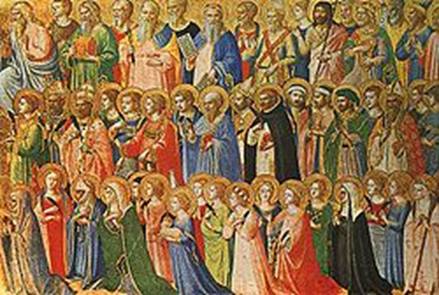
Today is All Saints Day - a day to remember people who have followed Jesus especially well. Nazarenes donʼt usually celebrate All Saints Day, but weʼre missing out.
All Saints Day is an important part of Christian tradition, and it was actually John Wesleyʼs favorite day of the church year. All Saints Day is a great opportunity for us to remember the “great cloud of witnesses” who have gone before us (Hebrews 12:1).
Listen to how John the Revelator describes this great crowd in his vision of
heaven in Revelation 7:9-17.
9 After this I saw a vast crowd, too great to count, from every nation and tribe and people and language, standing in front of the throne and before the Lamb. They were clothed in white robes and held palm branches in their hands. 10 And they were shouting with a mighty shout,“Salvation comes from our God who sits on the throne and from the Lamb!”
11 And all the angels were standing around the throne and around the elders and the four living beings. And they fell before the throne with their faces to the ground and worshiped God. 12 They sang,
“Amen! Blessing and glory and wisdom and thanksgiving and honor
and power and strength belong to our God forever and ever! Amen.”
[3] 13 Then one of the twenty-four elders asked me, “Who are these who are clothed in white? Where did they come from?”
14 And I said to him, “Sir, you are the one who knows.”
Then he said to me, “These are the ones who died in the great tribulation. They have washed their robes in the blood of the Lamb and made them white.
15 “That is why they stand in front of God’s throne and serve him day and night in his Temple. And he who sits on the throne will give them shelter.
16 They will never again be hungry or thirsty; they will never be scorched by the heat of the sun.
17 For the Lamb on the throne will be their Shepherd. He will lead them to springs of life-giving water. And God will wipe every tear from their eyes.”
There will come a time, when we will stand with the saints from every tribe and language and culture and time - all those who have ever trusted in the Jesus as the Lamb of God. Together we will sing praises to God. We will be one people, healed together by his love.
All Saints Day is a day to practice this corporate worship and unity now - here on earth. We stand today with the saints of Africa, Asia, Europe, Oceania, and the Americas. We stand today with the saints of the first humans, the first Israelites, the first Christians, the Middle Ages, the Reformation, the Industrial Age, our own time, and all times yet to come. Together, we are Godʼs people. Together, we worship him. Together, we learn what it means to follow him.
Today, as part of our study of our Nazarene Heritage, we are focusing on the two most important saints in our history: John Wesley and Phineas Bresee. As we talk about these two leaders and how God used them, my prayer is that we will catch some of their passion and let God use us in similar ways.
Monday, October 31, 2011
All Saints Day Prayer
God of Abraham, Isaac, and Jacob,
Who
lived by your covenant,
Imperfectly
but without giving up,
Make
us faithful as well.
God of Adam, Moses, and David,
Who
failed spectacularly,
Yet
repented faithfully,
Make
us faithful as well.
God of Rahab, Esther, and Ruth,
Who
dared much and loved much,
Make
us faithful as well.
God of the Psalmists,
Who
shouted their doubts
And
sang your praises,
Make
us faithful as well.
God of Isaiah, Jeremiah, and Amos,
Who
spoke your truth
Despite great opposition,
Make
us faithful as well.
Friday, October 28, 2011
Bresee's Tattoos
In my research on Wesley and Bresee this week, I discovered Holy Hijinx, a Nazarene satire site. Check out this phenomenally funny post on the "discovery" of Phineas Bresee's tats. The upper one is the logo for Nazarene Compassionate Ministries, and the lower one is the heart of the logo for the Church of the Nazarene. Absolutely hilarious! Well done, Holy Hijinx. I think we'll put this in the bulletin this week.
Wednesday, October 26, 2011
Leadership Fundamentals
An MDiv student just interviewed me about leadership. Here are my answers.
1. In your opinion, what does good leadership consist of in your organization? Good leadership is: "to equip his people for works of service, so that the body of Christ may be built up until we all reach unity in the faith and in the knowledge of the Son of God and become mature, attaining to the whole measure of the fullness of Christ" (Eph 4:12-13). My job is to help our people do their jobs which helps us all grow up into the people God wants us to be. This plays out by investing heavily in our pastoral team, working closely with them to help them grow as leaders. Also, I need to spend time helping our board be equipped and inspired to lead - not just to fill a post. This is always something that I can do better. My natural tendency is to try to be the loan leader rather than to lead by equipping leaders.
2. What qualities are needed to effectively lead at the top?
A) Humility. First and foremost, we must know our own weakness, fallibility ...
1. In your opinion, what does good leadership consist of in your organization? Good leadership is: "to equip his people for works of service, so that the body of Christ may be built up until we all reach unity in the faith and in the knowledge of the Son of God and become mature, attaining to the whole measure of the fullness of Christ" (Eph 4:12-13). My job is to help our people do their jobs which helps us all grow up into the people God wants us to be. This plays out by investing heavily in our pastoral team, working closely with them to help them grow as leaders. Also, I need to spend time helping our board be equipped and inspired to lead - not just to fill a post. This is always something that I can do better. My natural tendency is to try to be the loan leader rather than to lead by equipping leaders.
2. What qualities are needed to effectively lead at the top?
A) Humility. First and foremost, we must know our own weakness, fallibility ...
Tuesday, October 25, 2011
Best American Essays (2010) - Review
This is my second Best American Essays book to read, and I loved both of them. The most valuable part of this book series is that it exposes me to good thoughts and good writers I would not otherwise encounter.
Here's how the series works. Robert Atwan (the series editor) - and I presume a massive team of interns - comb through nearly every literary magazine or journal printed in the USA for the best stuff written that year. That list includes 100-200 articles. Then, each year, they choose a celebrity author to be the guest editor, who culls that massive selection into 20 or so for the book.
This year's guest editor was Christopher Hitchens, the famous atheist who wrote God Is Not Great. I was a little concerned that the essays might be overly hostile to Christianity or religion, but that was not the case. The selection was surprisingly neutral and occasionally positive in that regard.
The topics showed an amazingly wide scope: a Tolstoy scholar with a theory that he was murdered, a necrophiliac murdering lion, eyeballs, Einstein's impact on the American Jewish community, the French philosopher Montaigne, Marion Barry - the crack smoking DC mayor, Brooklyn, human genomics, John Updike, a beautiful theory on Van Gogh's true illness written by someone who has chronic spells of dizziness, multiculturalism, Central Asia's history as the intellectual center of the world, Bill Buckley - the founder of The National Review, and George Orwell's classist battle.
I feel like a more intelligent, more informed person for reading this book. Perhaps there's a bit of narcissism in there feeding my desire for this kind of book, but perhaps there is also a genuine desire to see and to understand our world. Hoping toward that end, I give this a strong Josh rating of: JJJJ (out of 5).
To skip to the 2011 book, try this one:
Here's how the series works. Robert Atwan (the series editor) - and I presume a massive team of interns - comb through nearly every literary magazine or journal printed in the USA for the best stuff written that year. That list includes 100-200 articles. Then, each year, they choose a celebrity author to be the guest editor, who culls that massive selection into 20 or so for the book.
This year's guest editor was Christopher Hitchens, the famous atheist who wrote God Is Not Great. I was a little concerned that the essays might be overly hostile to Christianity or religion, but that was not the case. The selection was surprisingly neutral and occasionally positive in that regard.
The topics showed an amazingly wide scope: a Tolstoy scholar with a theory that he was murdered, a necrophiliac murdering lion, eyeballs, Einstein's impact on the American Jewish community, the French philosopher Montaigne, Marion Barry - the crack smoking DC mayor, Brooklyn, human genomics, John Updike, a beautiful theory on Van Gogh's true illness written by someone who has chronic spells of dizziness, multiculturalism, Central Asia's history as the intellectual center of the world, Bill Buckley - the founder of The National Review, and George Orwell's classist battle.
I feel like a more intelligent, more informed person for reading this book. Perhaps there's a bit of narcissism in there feeding my desire for this kind of book, but perhaps there is also a genuine desire to see and to understand our world. Hoping toward that end, I give this a strong Josh rating of: JJJJ (out of 5).
To skip to the 2011 book, try this one:
Monday, October 24, 2011
Mere Churchianity - Review
Our small group read Mere Churchianity over the summer and early fall. One of our members has been following the site www.interentmonk.com, started by Michael Spencer, for years. Honestly, we collectively had mixed reviews of the book.
On the positive side:
- Spencer really understands the frustrations of many people with classic Fundamentalist Christianity.
- Spencer also does a great job explaining that fundamentalism is not the only way to be authentically Christian.
- Also, Spencer winsomely redirects the church and church dropouts to focus on Jesus instead of our defunct traditions.
- Spencer also hints at a few possible solutions for our massive dysfunctions.
- Spencer frustratingly equates evangelicalism with fundamentalism. As an evangelical who is not fundamentalist, this drove me crazy.
- Spencer paints with a broad brush, sweeping all churches and Christians into large stereotypes. This was also very frustrating. Our group found ourselves understanding with his frustrations but disagreeing with his stereotypes.
- While Spencer hints at solutions, he is noticeably short on answers. To be fair though, part of his point is that the answers are not so easy and available as we've claimed.
Overall, I would say this is a good book for people who have been deeply hurt by the church. This can give them hope that they can still be Christian despite their frustrations with the church. I wish it was more balanced, but perhaps the imbalance is itself a gift to those who have had a negatively imbalanced experience of church (and to those of us who need to understand the natural feelings embedded in that type of experience).
The Josh rating: JJJ.
Sunday, October 23, 2011
The Importance of Followers
I love this quote: "The first follower transforms the lone nut into a leader. ... Leadership is overglorified. ... If you really care about starting a movement, have the courage to follow and to show others how to follow. And when you find a lone nut doing something great, have the guts to stand up and join in." - Derek Sivers
Friday, October 21, 2011
Nazarene Heritage: Holiness
Isaiah 6:1-8
John 17:13-26
Galatians 5:13-25
I grew up hating holiness. I hated hearing about it. I hated singing about it. I hated talking about it. I hated everything about holiness.
That was a problem - especially for someone in the Church of the Nazarene, which is a “holiness denomination.” We talked about holiness a lot. We preached about it. We sang about it. We talked about it in Sunday School. But I hated it.
Then, I went to MidAmerica Nazarene University, and I discovered that I was not alone. “Doctrine of Holiness” was required for all ministry students, and it was one of the students’ least favorite classes - right behind “History and Polity of the Church of the Nazarene.” When special preachers came and did revival services and talked about holiness and entire sanctification, we felt this awkward tension between wanting to stand up and argue and wanting to run to the altar and repent and pray -- again -- for the hundredth time. Any time “Holiness unto the Lord” was sung, we cringed inside and kind of turned to our neighbors with an uncomfortable smirk, like “There they go again.” We might even swing our arms in mock joy (“Sing it, shout it, loud and long”), while inside we were scoffing at such an overplayed and under-lived song on an over-preached subject.
What’s the deal? Why all the resistance? Why all the bitter feelings? Why on earth would future pastors not want to talk about being holy? And if the theology majors didn’t want to talk about holiness, you know everyone else was either clueless or hostile. What happened?
John 17:13-26
Galatians 5:13-25
I grew up hating holiness. I hated hearing about it. I hated singing about it. I hated talking about it. I hated everything about holiness.
That was a problem - especially for someone in the Church of the Nazarene, which is a “holiness denomination.” We talked about holiness a lot. We preached about it. We sang about it. We talked about it in Sunday School. But I hated it.
Then, I went to MidAmerica Nazarene University, and I discovered that I was not alone. “Doctrine of Holiness” was required for all ministry students, and it was one of the students’ least favorite classes - right behind “History and Polity of the Church of the Nazarene.” When special preachers came and did revival services and talked about holiness and entire sanctification, we felt this awkward tension between wanting to stand up and argue and wanting to run to the altar and repent and pray -- again -- for the hundredth time. Any time “Holiness unto the Lord” was sung, we cringed inside and kind of turned to our neighbors with an uncomfortable smirk, like “There they go again.” We might even swing our arms in mock joy (“Sing it, shout it, loud and long”), while inside we were scoffing at such an overplayed and under-lived song on an over-preached subject.
What’s the deal? Why all the resistance? Why all the bitter feelings? Why on earth would future pastors not want to talk about being holy? And if the theology majors didn’t want to talk about holiness, you know everyone else was either clueless or hostile. What happened?
Tuesday, October 18, 2011
2011 Annual Review: Making SPACE for God's NEXT
As I’ve been thinking about this year for our church, I’ve also been thinking of a story from my Texas history class. The key story of Texas history is their struggle for independence from Mexico. Here’s a 30 second summary. Texans rebelled against Mexico and had some early victories in 1835. Yeehaw! Mexico responded with a well-trained army under the ruthless General Santa Anna. The small, unorganized Texas army started - as we say in Texas - gettin’ whoopped (beaten). Under General Sam Houston, the Texas army retreated, recruited, and trained ... retreated, recruited, and trained. They were building strength and waiting for the right time. Finally, in 1836, the Texans attacked, captured Santa Anna, and won the war.
On the surface, it looked like they were moving backward and getting weaker. But they weren’t. They were getting stronger and preparing to move forward from a position of strength. They were preparing for victory.
Thursday, October 13, 2011
Wednesday, October 12, 2011
"Everything that Rises Must Converge" - by Flannery O'Connor
Our small group is now discussing different articles or stories every week. This week it's my choice, and I jumped at the chance to discuss a Flannery O'Connor story. I'm intrigued by the concept of pointed fiction - telling a story as a way to prod people into thinking deeply about theology, spirituality, culture, and ethics.
My choice for this week is the title work for one of her collections of short stories: "Everything that Rises Must Converge."
-----
HER DOCTOR had told Julian's mother that she must lose twenty pounds on account of her blood pressure, so on Wednesday nights Julian had to take her downtown on the bus for a reducing class at the Y. The reducing class was designed for working girls over fifty, who weighed from 165 to 200 pounds. His mother was one of the slimmer ones, but she said ladies did not tell their age or weight. She would not ride the buses by herself at night since they had been integrated, and because the reducing class was one of her few pleasures, necessary for her health, and free, she said Julian could at least put himself out to take her, considering all she did for him. Julian did not like to consider all she did for him, but every Wednesday night he braced himself and took her.
She was almost ready to go, standing before the hall mirror, putting on her hat, while he, his hands behind him, appeared pinned to the door frame, waiting like Saint Sebastian for the arrows to begin piercing him.
My choice for this week is the title work for one of her collections of short stories: "Everything that Rises Must Converge."
-----
HER DOCTOR had told Julian's mother that she must lose twenty pounds on account of her blood pressure, so on Wednesday nights Julian had to take her downtown on the bus for a reducing class at the Y. The reducing class was designed for working girls over fifty, who weighed from 165 to 200 pounds. His mother was one of the slimmer ones, but she said ladies did not tell their age or weight. She would not ride the buses by herself at night since they had been integrated, and because the reducing class was one of her few pleasures, necessary for her health, and free, she said Julian could at least put himself out to take her, considering all she did for him. Julian did not like to consider all she did for him, but every Wednesday night he braced himself and took her.
She was almost ready to go, standing before the hall mirror, putting on her hat, while he, his hands behind him, appeared pinned to the door frame, waiting like Saint Sebastian for the arrows to begin piercing him.
Korea Tip 115: HomePlus - Shopping in New Frontiers.
Click here for the text version of this story. I especially like the idea of just scanning something at home when it runs out. This could put an end to shopping lists. Very innovative.
Monday, October 10, 2011
How Overwork Happened to Me
I have preached against overwork for years. I've condemned others (vocally and internally) for consistent overworking. I've prided myself in my "structural preventions" for working too much. In our house, we have a weekly sabbath, family night, and date night. I arrogantly believed that these protected me from the increasingly common problem of overworking.
"Pride comes before the fall" (Proverbs 16:18).
As a pastor, I expect to work 50-55 hours a week. If we expect church members to work 40 hours a week, attend worship services, hang out with church people, and volunteer, then it's fair to expect pastors to put in about the same amount of time. I've thought for years that my structural barriers kept me at around the 50 hour mark, and that difficult weeks wouldn't push me too far overboard.
Difficult circumstances and a new baby have forced me to reexamine my schedule. I was shocked when I counted my hours in a normal work week. My normal - not so difficult week - totals 57 working hours. That put a quantifiable explanation to my feelings of fatigue, depression, overload, imbalance, and inability to catch-up at home. No wonder I've been tired. No wonder I can't seem to do any of the things I've been wanting to do at home. No wonder I haven't been doing any art. No wonder I feel stressed and anxious. I'm chronically overloaded!
How did this happen? After preaching against overwork and being a staunch supporter of simplicity, how did I end up a victim of one of my own greatest enemies?
"Pride comes before the fall" (Proverbs 16:18).
As a pastor, I expect to work 50-55 hours a week. If we expect church members to work 40 hours a week, attend worship services, hang out with church people, and volunteer, then it's fair to expect pastors to put in about the same amount of time. I've thought for years that my structural barriers kept me at around the 50 hour mark, and that difficult weeks wouldn't push me too far overboard.Difficult circumstances and a new baby have forced me to reexamine my schedule. I was shocked when I counted my hours in a normal work week. My normal - not so difficult week - totals 57 working hours. That put a quantifiable explanation to my feelings of fatigue, depression, overload, imbalance, and inability to catch-up at home. No wonder I've been tired. No wonder I can't seem to do any of the things I've been wanting to do at home. No wonder I haven't been doing any art. No wonder I feel stressed and anxious. I'm chronically overloaded!
How did this happen? After preaching against overwork and being a staunch supporter of simplicity, how did I end up a victim of one of my own greatest enemies?
Labels:
balance,
depression,
life,
margin,
overwork,
self-examination,
simple,
simplicity,
stress,
work
Friday, September 30, 2011
Art and Worship
Part 1: “Art-Full Worship” (Exodus 31:1-11 and John 6:47-58)
“In the beginning, God created...” “In the beginning, God created the heavens and the earth” (Genesis 1:1). And what a wonderful, resplendent, beautiful world God created.
From fish to flowers ...
From atoms to Alps ...
From galaxies to germs ...
Our God has created an infinitely complex world. From its smallest to largest dimensions, the beauty and complexity of our world staggers our minds and enraptures our hearts. Our God creates. Our God creates flowers that no one will ever see and stars that no one will ever reach. Our God creates bacteria and electrons and magnetic waves and thermonuclear reactions and sea currents and black holes and nebula and more species of animals than we have even discovered. Our God creates. Beauty and complexity, simplicity and profundity, majesty and glory ooze from God’s very Being. God is Creator, and creation bears God’s glory.
From the beginning of time, people have worshiped God through creation. Adam and Eve joined the creative process by naming the animals, caring for the garden, and creating more human beings. Noah joined the Creator’s mission by creating an ark as an instrument of salvation and then building an altar as a sign of worship. Abraham, Isaac, and Jacob all worshiped God by building altars to hold their sacrifices.
Creation and beauty have always been part of worship of the Creator. Worship has always been art-full (full of art). As people made like the Creator, we cannot help but to create when we express our worship of the Creator. Our creation - our mutual display of beauty - draws us closer to the heart of the Creator.
“In the beginning, God created...” “In the beginning, God created the heavens and the earth” (Genesis 1:1). And what a wonderful, resplendent, beautiful world God created.
From fish to flowers ...
From atoms to Alps ...
From galaxies to germs ...
Our God has created an infinitely complex world. From its smallest to largest dimensions, the beauty and complexity of our world staggers our minds and enraptures our hearts. Our God creates. Our God creates flowers that no one will ever see and stars that no one will ever reach. Our God creates bacteria and electrons and magnetic waves and thermonuclear reactions and sea currents and black holes and nebula and more species of animals than we have even discovered. Our God creates. Beauty and complexity, simplicity and profundity, majesty and glory ooze from God’s very Being. God is Creator, and creation bears God’s glory.
From the beginning of time, people have worshiped God through creation. Adam and Eve joined the creative process by naming the animals, caring for the garden, and creating more human beings. Noah joined the Creator’s mission by creating an ark as an instrument of salvation and then building an altar as a sign of worship. Abraham, Isaac, and Jacob all worshiped God by building altars to hold their sacrifices. Creation and beauty have always been part of worship of the Creator. Worship has always been art-full (full of art). As people made like the Creator, we cannot help but to create when we express our worship of the Creator. Our creation - our mutual display of beauty - draws us closer to the heart of the Creator.
"The Plan" - by Alex Gray
This poem is by mystic artist Alex Gray, who tries to paint in a way that allows God's Spirit to work more in our world. It is a little humanistic and New-Age-ish; I don't believe humans working together will heal our world. However, I do believe that God heals our world partly by working through us humans. What I really love about this poem is that it catches the essence of our role as co-creators with God.
- God Creates the Cosmos with Love.
- When we create with Love we align ourselves with the God Force.
- The Cosmos and our world is God’s evolving creation, an unfinished masterpiece we each co-create.
- Love will go to any length to fulfill its creation.
- We are each a finite mirror of God’s infinite creation.
- To see through appearances to God’s transcendent presence beatifies and transfigures our experience of God’s immanent creation.
- Creating sacred space mirrors God’s creation.
- Our challenge as co-creators is to mirror God’s love and beauty in all our creations.
Monday, September 26, 2011
Pieces of Peace
Blue skies in my heart
Deep currents in my soul
Whirlwind in my chest
- My fragmentary whole
Performance, achievement
Anxiety, depression
Laughter, love, and joy
- My loose compression
Believing and doubting
Following and turning away
Resting and Wrestling
- My drunken stumbling way
His love endures forever
His mercies know no end
His death atones for me
- My unfailing Friend
Deep currents in my soul
Whirlwind in my chest
- My fragmentary whole
Performance, achievement
Anxiety, depression
Laughter, love, and joy
- My loose compression
Believing and doubting
Following and turning away
Resting and Wrestling
- My drunken stumbling way
His love endures forever
His mercies know no end
His death atones for me
- My unfailing Friend
Friday, September 23, 2011
Sacraments: Channels of God's Grace
Roughly one sixth of the world does not have a reliable supply of clean drinking water. More than 3.5 million people die every year because of water related illness.
Scientists and community organizers have tried to solve this problem in a variety of ways, but one of the most creative is atmospheric water generators. AWG’s take water from the air around us. In most environments, there is enough water in the air to provide clean drinking water for several families with a single AWG machine. This is an amazing technology. The water is already there. We just have to tap into it.
However, we also have to recognize that this is not the normal way people get water. Normally, people go to one of three sources for their water: rivers, lakes, or wells. For many thousands of years, most people in most places have gotten most of their water from these reliable sources - rivers, lakes, and wells. This water is much easier to reach.
That’s kind of how grace works. God’s grace is all around us. We can experience God laying in our beds or walking on a mountain or riding a subway. Grace is in the air we breathe. We just have to tap into it.
This is beautiful and profound, but we are also wise to recognize that there are some “normal” ways to experience God’s grace. There are some normal channels of grace that have proved effective means of grace, and our spiritual ancestors have been coming back to these basic channels of grace for thousands of years.
Theologians call these “means of grace.” Down through the years, the Church has recognized two means of grace as being especially deep and meaningful for Christians: baptism and communion. These are often called the sacraments.
A sacrament is a living drama of God’s gracious action. It is a sign pointing to grace. In a sacrament, we remember what God has done for us through Jesus. But in this remembering and re-enacting, we are also opening ourselves to God’s gracious action again. It seems that we humans need to experience these very physical things - water, bread, and wine - to help us experience the fullness of God’s grace. The physical is somehow connected to the spiritual. The sign pointing us to grace also becomes a channel bringing grace to us.
To continue reading this post, click here. (Scroll to September 23, 2011 if necessary.)
.
Tuesday, September 20, 2011
MIB - Missing in Baby-land
If you follow this blog, you know I haven't been posting much lately. Here are a few of the happy reasons why.
-- Just before I entered the operating room. They took Sarah in 20 minutes before me, so I had a long time of nervous pacing and strained Korean dialog with the staff. --
-- This is the normal way for parents to view their new babies in Korea. One of our church members just had a baby and still hasn't held him after 3 days (because she had a C-section and they don't expect C-section moms to nurse until 5-6 days after). However, our hospital was more flexible, and though we had to push, Sarah was able to nurse about an hour after delivery. Also, we could get our baby pretty much any time. --
-- I'm one proud papa. He even opened his eyes for the camera. --
-- Sarah's first time seeing him outside the operation room --
-- My mom and Emma visiting the hospital on Day 1. Sarah's mom is also here, and her dad is coming tomorrow, but I don't have any other good family pics on my computer yet. --
-- Emma's first time holding John David --
-- He started fussing a little, and happy changed to: "Uh oh, now what?" --
As I get adjusted to life in Baby-Land, I'll try to get back to more regular posts, but this will have to do for now.
-- Just before we left for the hospital --
-- Just before I entered the operating room. They took Sarah in 20 minutes before me, so I had a long time of nervous pacing and strained Korean dialog with the staff. --
-- This is the normal way for parents to view their new babies in Korea. One of our church members just had a baby and still hasn't held him after 3 days (because she had a C-section and they don't expect C-section moms to nurse until 5-6 days after). However, our hospital was more flexible, and though we had to push, Sarah was able to nurse about an hour after delivery. Also, we could get our baby pretty much any time. --
-- I'm one proud papa. He even opened his eyes for the camera. --
-- Sarah's first time seeing him outside the operation room --
-- My mom and Emma visiting the hospital on Day 1. Sarah's mom is also here, and her dad is coming tomorrow, but I don't have any other good family pics on my computer yet. --
-- Emma's first time holding John David --
-- He started fussing a little, and happy changed to: "Uh oh, now what?" --
As I get adjusted to life in Baby-Land, I'll try to get back to more regular posts, but this will have to do for now.
Friday, September 16, 2011
Scripture and Preaching
2 Questions for Discussion
When have you really felt God speaking to you through a sermon?
What were the main points of the last 5 sermons you heard?
Raise your hand if you could remember at least one of the last five sermon topics? Keep your hand up if you could remember two? Three? Four? Five?
But I expect that almost all of us could point to at least one sermon that was a powerful spiritual event for us. Somehow, sometimes, sermons become miracles. Reading the Bible and talking about it becomes a transcendent event when the words on the page become the Word of God for us in our hearts.
This is our topic today - the role of scripture and preaching in the worship service. You can read the Bible at home. You can listen to sermon podcasts or read them online, but something special happens when we gather to hear from God together. What is that? How does that work? How can we have more of those special, supernatural, God-filled moments when we gather on Sundays?
Our primary text for today is in 2 Timothy. Timothy is Paul’s ministry student. Paul has been training Timothy for years. In our series on 1 Thessalonians, we saw part of this training period with Timothy serving as Paul’s assistant. Timothy is out on his own now, in Ephesus. Timothy is the Christian leader of the island, kind of like a bishop or lead pastor for a network of house churches. Paul is giving his final advice to Timothy, charging him with his most important tasks as a minister. Again and again, Paul comes back to one fundamental task: “Preach the Word of God.” Let’s read part of Paul’s advice starting in 3:14.
Chapter 3: 14 But you must remain faithful to the things you have been taught. You know they are true, for you know you can trust those who taught you. 15 You have been taught the holy Scriptures from childhood, and they have given you the wisdom to receive the salvation that comes by trusting in Christ Jesus. 16 All Scripture is inspired by God and is useful to teach us what is true and to make us realize what is wrong in our lives. It corrects us when we are wrong and teaches us to do what is right. 17 God uses it to prepare and equip his people to do every good work. ...
To continue reading this post, click here.
(If necessary, scroll to Friday Sept. 16, 2011.)
.
When have you really felt God speaking to you through a sermon?
What were the main points of the last 5 sermons you heard?
Raise your hand if you could remember at least one of the last five sermon topics? Keep your hand up if you could remember two? Three? Four? Five?
But I expect that almost all of us could point to at least one sermon that was a powerful spiritual event for us. Somehow, sometimes, sermons become miracles. Reading the Bible and talking about it becomes a transcendent event when the words on the page become the Word of God for us in our hearts.
This is our topic today - the role of scripture and preaching in the worship service. You can read the Bible at home. You can listen to sermon podcasts or read them online, but something special happens when we gather to hear from God together. What is that? How does that work? How can we have more of those special, supernatural, God-filled moments when we gather on Sundays?
Our primary text for today is in 2 Timothy. Timothy is Paul’s ministry student. Paul has been training Timothy for years. In our series on 1 Thessalonians, we saw part of this training period with Timothy serving as Paul’s assistant. Timothy is out on his own now, in Ephesus. Timothy is the Christian leader of the island, kind of like a bishop or lead pastor for a network of house churches. Paul is giving his final advice to Timothy, charging him with his most important tasks as a minister. Again and again, Paul comes back to one fundamental task: “Preach the Word of God.” Let’s read part of Paul’s advice starting in 3:14.
Chapter 3: 14 But you must remain faithful to the things you have been taught. You know they are true, for you know you can trust those who taught you. 15 You have been taught the holy Scriptures from childhood, and they have given you the wisdom to receive the salvation that comes by trusting in Christ Jesus. 16 All Scripture is inspired by God and is useful to teach us what is true and to make us realize what is wrong in our lives. It corrects us when we are wrong and teaches us to do what is right. 17 God uses it to prepare and equip his people to do every good work. ...
To continue reading this post, click here.
(If necessary, scroll to Friday Sept. 16, 2011.)
.
Wednesday, September 14, 2011
God Is Not a White Man
Check out this awesome, quirky, theologically astute music video by the band Gungor:
Thursday, August 25, 2011
Life's Fast Moving Opportunity - 1 Thessalonians 5
First of all, I want to thank you for all of your care and support for our family over the past week and a half. Many of you came to visit us. Several offered to help or brought us meals. John David is a blessing, but you have also been a blessing and an encouragement to us.
Second, I want to let you show you some pictures of the newest member of our family, and this is not John David. Let me introduce you to Elliana Renae Palmer, or Ella for short. Ella was born on Tuesday - three weeks early. Michael and Elizabeth went to our hospital for a check up and were holding her in their arms three hours later. John David and Ella were born 4 days and 32 minutes apart. Sarah and Elizabeth were in the same hospital, on the same floor, just across the hall from each other.
These are special times - full times - full of love and meaning and opportunity. We couldn’t have planned it like this if we tried. This was a beautiful, serendipitous blessing.
But these days will not last forever. These moments are passing. We can only experience them now. You know what parents say to each other: Cherish these moments. Before you know it, he’ll be riding a bike. Blink twice, and she’ll be entering college. They grow up so fast.
This is not far from our text today. This week, we are finishing our study on 1 Thessalonians, so we’ll read all of chapter 5. It’s pretty long, so we’ll take it in sections. Let’s start with just verse 1.
1 Now concerning how and when all this will happen, dear brothers and sisters, we don’t really need to write you.
You can’t catch it very well in English, but Paul actually uses two different Greek words for time here: chronos and chairos. Chronos is for the simple progression of time - tick, tock, tick, tock. One second after another, one hour, one day. Chronos is the kind of time when you say, “Their plane arrives Friday September 2 at 1:05 pm.”
But Chairos is a different kind of time. Chairos is focused on the quality of time rather than the quantity of time. Chairos is closer to the idea of an opportunity or when we look back on a particular period in our life and say, “Those were good times.” Chairos is like that moment of opportunity when there is an opening in a horse race, and the rider has to go fast before it closes.
To help explain the nature of Chairos, the ancient Greeks depicted Chairos as a young man moving fast, with wings on both his back and feet. He is tipping the scales in one direction for now, right now only. One scholar explains, “His hair is long in front and bald behind; he must be grasped, if at all, by the fore-lock.” If you want to catch Chairos, you have to get ahead of it, or it will get away. ...
To continue reading this post, click here.
.
Second, I want to let you show you some pictures of the newest member of our family, and this is not John David. Let me introduce you to Elliana Renae Palmer, or Ella for short. Ella was born on Tuesday - three weeks early. Michael and Elizabeth went to our hospital for a check up and were holding her in their arms three hours later. John David and Ella were born 4 days and 32 minutes apart. Sarah and Elizabeth were in the same hospital, on the same floor, just across the hall from each other.
These are special times - full times - full of love and meaning and opportunity. We couldn’t have planned it like this if we tried. This was a beautiful, serendipitous blessing.
But these days will not last forever. These moments are passing. We can only experience them now. You know what parents say to each other: Cherish these moments. Before you know it, he’ll be riding a bike. Blink twice, and she’ll be entering college. They grow up so fast.
This is not far from our text today. This week, we are finishing our study on 1 Thessalonians, so we’ll read all of chapter 5. It’s pretty long, so we’ll take it in sections. Let’s start with just verse 1.
1 Now concerning how and when all this will happen, dear brothers and sisters, we don’t really need to write you.
You can’t catch it very well in English, but Paul actually uses two different Greek words for time here: chronos and chairos. Chronos is for the simple progression of time - tick, tock, tick, tock. One second after another, one hour, one day. Chronos is the kind of time when you say, “Their plane arrives Friday September 2 at 1:05 pm.”
But Chairos is a different kind of time. Chairos is focused on the quality of time rather than the quantity of time. Chairos is closer to the idea of an opportunity or when we look back on a particular period in our life and say, “Those were good times.” Chairos is like that moment of opportunity when there is an opening in a horse race, and the rider has to go fast before it closes.
To help explain the nature of Chairos, the ancient Greeks depicted Chairos as a young man moving fast, with wings on both his back and feet. He is tipping the scales in one direction for now, right now only. One scholar explains, “His hair is long in front and bald behind; he must be grasped, if at all, by the fore-lock.” If you want to catch Chairos, you have to get ahead of it, or it will get away. ...
To continue reading this post, click here.
.
Wednesday, August 17, 2011
Korea Tip 114: Crazy May Have a Cause
Be careful what you call crazy. When you enter a very different culture, some things will seem very strange - even senseless. Korea is definitely not an exception in this category - at least not for Westerners. I can't count the number of times I've said or heard someone else say, "That's just crazy." Not to mention the thousand other variants.
However, one thing that dawned on me this week (once again) is that most of the unusual practices in Korea that seem crazy to me at first actually have a pretty good cause in reality. Here are a few examples.
I could go on and on and on and on. The point is that there are usually good reasons for most of the things we don't understand.
What are some things you don't understand about Korea?
What are some things you have learned that have helped you understand Korea?
However, one thing that dawned on me this week (once again) is that most of the unusual practices in Korea that seem crazy to me at first actually have a pretty good cause in reality. Here are a few examples.
- Brushing teeth after every meal. I was shocked to meet several of the professors in my office building every day around 1:15 - brushing their teeth in the bathroom. That seemed a little excessive to me. That is until, I started eating in the faculty dining room. The kimchi, onions, and garlic had me reaching for a toothbrush, too. On occasion, I even stoop to an afternoon flossing to get those little bits of green stuff out of my teeth.
- Last minute planning. This is one that really drives most westerners crazy. The plans change 3 times before the event, and then 5 more times during the event. You can't figure out what classes you're actually teaching until the week before the classes start, and even that might not be the final say. But, this one is kind of a vicious cycle. It's hard to make and keep plans when everyone else is changing their plans because other people are changing their plans, too. After reformatting the event 7 times, some people decide that the simplest thing to do is to wait until the last day - after it's almost impossible for any more notices of change to come in - and then work super hard to plan the whole event. For Westerners, this seems terribly inefficient and stressful, but it actually kind of works in Korean culture - and may even work a little better, given the structural limitations.
- Opening the windows in the winter. So the heat's on full blast, and icicles are forming outside (or inside), and the windows are open - all of them. This leaves lots of Westerners scratching their heads or angry. Or, the first student to walk into the classroom and turns heat up to full blast. Then, 20 minutes into class, it's crazy hot, and all the students have their coats on, so one of the students opens the window instead of turning down the heat. Lots of cultural reasons here. (A) The primary traditional heat sources (stoves or propane heaters) gave off noxious fumes, so fresh air was very important for health. (B) Airing out a house is important in Confucian philosophy. (C) With the class room scenario, the students may think the teacher turned on the heat. Therefore, they don't have the authority to override the teacher's decision there. However, they are sitting next to the window, so no problem with opening it to get a little more comfortable - especially considering A and B. (D) Also, many Koreans will keep their coats on inside for lots of reasons. Schools weren't traditionally heated well, so coats were necessary. Taking it off just seems like too much trouble - or possibly an insult to the person who sets the classroom environment.
I could go on and on and on and on. The point is that there are usually good reasons for most of the things we don't understand.
What are some things you don't understand about Korea?
What are some things you have learned that have helped you understand Korea?
Monday, August 15, 2011
A Village for Widows
Our mission is to be a loving community that changes our world. We say it every week, and we mean it. Our church, KNU International English Church (at Korea Nazarene University), is passionately living out our calling to change our world.
However, we understand that we can’t change the whole world all at once. A key plank of our vision is “global change through local action.” We serve our local community in a variety of ways, and we are partnering with Nazarenes in Bangladesh to help build a village for widows and orphans. What follows is the story of how this partnership developed.
Missions in our DNA
As a multicultural church founded by missionaries, our church has always had missions in our DNA. ...
READ THE REST AT: www.engagemagazine.com.
However, we understand that we can’t change the whole world all at once. A key plank of our vision is “global change through local action.” We serve our local community in a variety of ways, and we are partnering with Nazarenes in Bangladesh to help build a village for widows and orphans. What follows is the story of how this partnership developed.
Missions in our DNA
As a multicultural church founded by missionaries, our church has always had missions in our DNA. ...
READ THE REST AT: www.engagemagazine.com.
Sunday, August 14, 2011
Memories, Hopes, and Conversations - Review
Whatever image enters into a church's corporate imagination, that picture will have shaping power concerning structures, goals, schedules, finances, and practices (38).
Appreciative inquiry is built on theories that move a congregation away from deficit-based models toward the images and forces that are most life giving (39).
Memories, Hopes, and Conversations explains how to apply the process of Appreciative Inquiry to church life. Embedded in the change process of a Japanese-American church, Mark Lau Branson uses this extended case study to walk us through the process of helping a church imagine a new future by taking an appreciative look at their past.
One of the common problems of organizational life is that we focus our attention on the negative. As we engage in "problem-solving," we inadvertently focus our attention on the weakest and most draining parts of our systems. This negative focus pulls us into its own vortex of negativity and often prevents any real solutions or growth from emerging.
On the other hand, Appreciative Inquiry, which has been used with great success by businesses and NGOs, uses intentional questions and interviews to focus our attention on our greatest strengths and assets. We ask questions about the best parts of our past, our most enriching experiences then and now. Then, we also ask questions about our desires and hopes for the future. After we collect all the information from a broad-based interview process, we begin imagining together how we could grow into our strengths and expand them to enrich our church more fully.
Built on the basic philosophy of gratitude, Appreciate Inquiry is both hopeful and realistic. This approach acknowledges that how we frame our questions and discussions impacts our energy and our outcomes.
After struggling many times to address our churches blessings and challenges with multiculturalism, we are starting to try an appreciative inquiry approach. I'm asking our leaders to interview people with basic questions about their positive experiences with multiculturalism. My hope is that this will point us in the direction of the things we do best and how to do more of them.
This is a good book, a needed book. However, there was something lacking which I can't quite identify. The Josh rating: JJJJ.
Appreciative inquiry is built on theories that move a congregation away from deficit-based models toward the images and forces that are most life giving (39).
Memories, Hopes, and Conversations explains how to apply the process of Appreciative Inquiry to church life. Embedded in the change process of a Japanese-American church, Mark Lau Branson uses this extended case study to walk us through the process of helping a church imagine a new future by taking an appreciative look at their past.
One of the common problems of organizational life is that we focus our attention on the negative. As we engage in "problem-solving," we inadvertently focus our attention on the weakest and most draining parts of our systems. This negative focus pulls us into its own vortex of negativity and often prevents any real solutions or growth from emerging.
On the other hand, Appreciative Inquiry, which has been used with great success by businesses and NGOs, uses intentional questions and interviews to focus our attention on our greatest strengths and assets. We ask questions about the best parts of our past, our most enriching experiences then and now. Then, we also ask questions about our desires and hopes for the future. After we collect all the information from a broad-based interview process, we begin imagining together how we could grow into our strengths and expand them to enrich our church more fully.
Built on the basic philosophy of gratitude, Appreciate Inquiry is both hopeful and realistic. This approach acknowledges that how we frame our questions and discussions impacts our energy and our outcomes.
After struggling many times to address our churches blessings and challenges with multiculturalism, we are starting to try an appreciative inquiry approach. I'm asking our leaders to interview people with basic questions about their positive experiences with multiculturalism. My hope is that this will point us in the direction of the things we do best and how to do more of them.
This is a good book, a needed book. However, there was something lacking which I can't quite identify. The Josh rating: JJJJ.
Friday, August 12, 2011
The Last Juror - Review
Grisham veers a little from his traditional courtroom style, but not too far. A legal drama is still a major factor in the story, but the lead character in this story is a kid fresh out of college (without graduating) who stumbles into the ownership of a small town newspaper. His paper reports mercilessly on a hideous murder by a member of the county's most notorious criminal family, and he is wrapped up into the drama.
Outside the courtroom, we see a young man struggling to come into his manhood. We also get a fresh look at the racial tensions of the deep south in the 1970s. However, this is refreshingly rendered through the lens of a hyper successful black family with eight kids and seven PhD's.
The Last Juror walks a fine line between gentle story telling and compelling suspense, and that seems to be exactly what Grisham is aiming for - just enough suspense to keep us interested in the main story: a positive image of small town America - even with its weaknesses and faux paus. As Willie Traynor, a yankee at heart, adapts to life in rural Mississippi, the readers kind of get the feel that they too could make a home there.
Good, enjoyable reading, but not ground breaking or can't-put-it-down. The Josh rating: JJJ.
Outside the courtroom, we see a young man struggling to come into his manhood. We also get a fresh look at the racial tensions of the deep south in the 1970s. However, this is refreshingly rendered through the lens of a hyper successful black family with eight kids and seven PhD's.
The Last Juror walks a fine line between gentle story telling and compelling suspense, and that seems to be exactly what Grisham is aiming for - just enough suspense to keep us interested in the main story: a positive image of small town America - even with its weaknesses and faux paus. As Willie Traynor, a yankee at heart, adapts to life in rural Mississippi, the readers kind of get the feel that they too could make a home there.
Good, enjoyable reading, but not ground breaking or can't-put-it-down. The Josh rating: JJJ.
Stronger through Sharing (1 Thessalonians 3)
Tomorrow is 광복절 (Korea’s Liberation Day). For more than forty years, the Korean people resisted Japanese colonization. Sometimes, this resistance was public as in the March 1st, Declaration of Independence in 1919. More often though, the resistance was through guerilla warfare, covert meetings, secret newspapers delivered at night, and hidden educational gatherings.
Throughout the resistance movement, one thing remained constant. The resistance became stronger when people bound together. Isolation led to weakness, but communal sharing led to strength. As long as people felt that they were alone in their desire to be free and alone in their faith that freedom is possible, then their courage to resist grew weak. But when people realized that they are not alone, that others stand together with them, that others also share the faith that freedom is possible, then their courage to resist became stronger.
Isolation leads to weakness. Communal sharing leads to strength. This is the message under the text of 1 Thessalonians 3. Let’s read it now.
1 Finally, when we could stand it no longer, we decided to stay alone in Athens, 2 and we sent Timothy to visit you. He is our brother and God’s co-worker in proclaiming the Good News of Christ. We sent him to strengthen you, to encourage you in your faith, 3 and to keep you from being shaken by the troubles you were going through. ...
To continue reading this post, click here. (If necessary, scroll to the post on August 12, 2011.)
.
To continue reading this post, click here. (If necessary, scroll to the post on August 12, 2011.)
.
Monday, August 8, 2011
A Life Inside
A life inside a lifeMysterious, profound, surreal
Microscopic beginnings
Splitting, expanding, complexifying
A life inside a life
Swelling, nudging, protruding
Making its presence known
Listening, stretching, responding
Demanding care and preparation
A life inside a life
Unsettling, disruptive, life-altering
Joy-giving, enriching, heart-expanding
While still
A life inside a life.
Thursday, August 4, 2011
Questioning Our Leaders - 1 Thessalonians 2
My ministry here is not a failure. You know that I have not been wasting my time and yours. You may or may not know that sometimes I have been misunderstood, criticized, and treated unfairly. Yet God has given me the strength to continue preaching God’s Good News boldly, in spite of those who may object.
My teaching is not in error. My motives are pure. I’m not doing a bait-and-switch to catch people with a feel-good gospel.
I am called by God to be his messenger, his prophet. God has entrusted me with his message, and you can be sure that I’m trying to please God not people. God knows my heart. God knows why I do this.
I’m not the kind of guy who flatters others or soft-pedals the truth or just says what you want to hear. You certainly know that I haven’t taken it easy on you. I’ve given you the truth even when the truth is difficult and unpopular. Clearly, I’m not in this for the money or the glory.
As a pastor called and ordained by God and the Church, I could push my way. I have that right, but I always try to side with gentleness. I’ve cared for you like a mother nursing her own children. And the truth is I haven’t just shared God’s Gospel, but I’ve been sharing my heart and soul with you.
Don’t you remember how I was bivocational - holding down two jobs so as not to be a burden to you? Don’t you remember how I turned down pay raises to make room for more missional ministry? You yourselves stand as witnesses - along with God - that I’ve been honest and faithful and above reproach here.
Like a father guiding the growth of his children ...
To continue reading this sermon, click here. (If necessary, scroll to post on August 4, 2011.)
.
To continue reading this sermon, click here. (If necessary, scroll to post on August 4, 2011.)
.
Labels:
1 Thessalonians,
church,
CONFLICT,
CRITICISM,
INTEGRITY,
leadership,
love,
PASTORS
Saturday, July 30, 2011
Turning the World Upside Down (1 Thessalonians 1)

For the next five week’s we’ll be walking through a little New Testament book called 1 Thessalonians. It’s pretty small - just five chapters and only about two pages in my Bible, but it was actually written to a really important city.
Thessalonica (now Thessaloniki) is still the second largest city in Greece, but it is some 2,300 years old. Around the New Testament times, it was the capital of Macedonia - the northern half of Greece. And it was rich, very rich. It had an excellent port, comfortably nestled into the northernmost port of a gulf. It was also centrally located on the major Roman highway running east and west through the empire. All of this led to lots of importing and exporting. They worked hard, and they had lots of cash.
Thessalonians were also very religious. Like most ancient Greeks and Romans, they worshiped a wide variety of gods.
- Of course, there were the traditional gods of Greek mythology, but the most prominent in Thessalonica were Dionysius and Artemis.
- Dionysius was the god of wine and ecstasy. His followers were famous for wild drunken party-parades which “freed” everyone from all their social inhibitions.
- Artemis was worshiped both as goddess of wild animals and goddess of fertility.
- Thessalonians also adopted two Egyptian gods: Isis and Osiris.
- Isis was the goddess of motherhood, fertility, and magic. Her statues often showed her nursing a son. Also known as the Queen of Heaven, she offered salvation and eternal life to all in exchange for humility, confession, and repentance.
- Osiris was Isis’s brother and husband, and he was supposed to be the god of the afterlife and underworld. Osiris was believed to die every year and be raised from the dead by Isis’s tears.
To continue reading this post, click here.
.
Wednesday, July 27, 2011
Double Indemnity - AFI Greatest Movie #29
"Straight down the line, Baby. Straight down the line." Perfect plan. Perfect execution. Perfect murder. Except that nothing is ever perfect.
In Double Indemnity, AFI's 29th greatest film of all time, Fred MacMurray (the star from "My Three Sons") is swept into a murder plot by a beautiful woman who wants to be free from her overbearing husband. As an insurance guy, he ought to know how to work the system, and he almost does - until his intuitive and nosy friend spots the one hole in their case. From that point on, MacMurray begins to unravel in the style of Crime and Punishment.
All in all the point seems to be rather simple, crime (and selfishness) doesn't pay. Theologically, you can almost see sin's creeping tentacles slowly wrap around MacMurray and pull him foot by foot into his own pit.
The closing scene is artistically brilliant in its reverse foil. MacMurray's friend, who was always in need of a match, suddenly has one on hand and lights one last cigaret for MacMurray as he waits dying for both the ambulance and the police.
A classic crime and suspense tale, but not incredible. The Josh rating: JJJ.
Subscribe to:
Posts (Atom)