Showing posts with label reviews. Show all posts

Wednesday, July 10, 2013

Rainmaker - Review

Our church garage sale had two John Grisham books I hadn't read, so I tipped Sarah off.  Emma gave them to me for Fathers Day.  Score.
Rainmaker picks up on several common Grisham themes - injustice, underdogs, corporate wrongdoing, and ultimately dissatisfaction with money.  
The premise is simple.  Donny Ray had medical insurance, but when he needed a bone marrow transplant, his insurers unfairly denied his claim.  However, his parents were so poor and uneducated that they simply fought the insurance company with letters and phone calls, until it was too late.  When Donny Ray lay on his deathbed, they stumbled into contact with a young law student who took their case.  Against all odds, and with some very fortunate help from others, Rudy Baylor took down one of America's largest insurance companies and exposed their widespread fraud.
What I love about Grisham is that he tells a story with a point, or in this case multiple points.  1) Beware of corporate greed and abuse.  Not every big business is a good business.  2) Beware of greed - from within.  Riches may not be worth the sacrifices required to get them (or to keep them).  
Thanks for another good one, Mr. Grisham.


Monday, December 19, 2011

A Thousand Acres - Review

Jane Smiley won the Pulitzer Prize for A Thousand Acres, a novel about an Iowa farm family.  Since I was on my way to Iowa (though not to a farm family), I thought this would be a good read.  I was right.  True to form with good books, I ended up staying up late one might to finish the last 100 pages.
A Thousand Acres moves through the mundane details of farm life - cans of used nails, repairing tractors, cows in corn fields after harvest, etc, etc, etc.  But through the slow trudge through minutia, Smiley also reflects on the relationships and deeper meanings of life that find expression in these microscopic realia. 
This is a story of sin, abuse, recovery, failure, transition, selfishness, unselfishness, humilty, and even - barely - healing.  While I typically hope for more positive resolution, the final chapter of the book is one of the best I've ever read in terms of sheer poignancy. 
The Josh rating: JJJJ.

Wednesday, December 7, 2011

Korea Tip 122: Fine Italian Dining in SsangYong Dong

There are some great Italian restaurants in Cheonan, and there are some Italian restaurants in SsangYong Dong (one of Cheonan's neighborhoods or districts, where KNU is located).  But there aren't many really good Italian restaurants in SsangYong Dong.  Most are semi-fast food, or they are a good try, but not quite. 
Until now.
Lieto opened several months ago, but I thought it was just a pricey coffee shop.  Sarah and I stumbled into this fine dining establishment looking for another place for our Friday night date last week.  We were pleasantly surprised!
First of all, the atmosphere is great - really classy and quiet.
Secondly, the service is very fast.  I noticed that she was already preparing the house salads as soon as she gave us the menus and confirmed that we would be ordering a meal.
Then, the house salad was hands-down the best house salad I've had in Korea.  It had a variety of fresh vegetables and a mouth-watering red wine and vinegarette dressing.
Next, out came a pumpkin soup.  Then, garlic bread.  Both of these were moderate, but I had to love the constant flow of appetizers.
The main courses were good.  Sarah's carbonara was a little bland, and my amitriciana was very spicy - even for me, but the quality was very good. 
Finally, the meal was topped off with high quality home roasted coffee. 
The only downside was the price.  For the two of us, it cost 29,000 won.  We won't be going back often, but maybe for a special occasion. 
It's located just a block east of the SsangYong Lotte Mart on the main street.

Sunday, November 27, 2011

The Overload Syndrome - Review

I thought I was reading The Overload Syndrome for other people.
I realized I was wrong in the introduction.
People are stressed ... exhausted ... overloaded.  
"I feel like a minnow in a flash flood."
Margin is the space that once existed between our load and our limits.  Margin is the space between vitality and exhaustion.  It is our breathing room, our reserves, our leeway.  
We push the limits as far as possible.
We spend ten percent more than we have - and it no longer matters if one is talking about time, energy, or money.
Without margin, we are self-protective, painfully uninterested in an opportunity to serve our neighbor.  Without margin, we tread water and hang on by our fingernails, trying to survive an other day.  Without margin we are chronically exhausted, chronically late, chronically rushed.  Without margin, we are overloaded.
What about you?  Have you lost your joy and passion?  Do you suffer from work dread?  Are your relationships strained from stress?  Do you wish you could check into a hospital just to sleep?
Understand that you are not alone.
I am not alone.  You are not alone.  Many of us - if not most of us - are overloaded.  This book has been part of the beginning of my healing process.
You need to read this book.
The Josh rating: JJJJJ.

Wednesday, November 9, 2011

Friday Night Lights - Review

Four years ago, Sarah gave me the first season of Friday Night Lights for my birthday.  I absolutely loved it.  The high school football, the small town drama, the Texas setting, all brought back waves of memories for me.  That's why I started watching.  I kept watching because this show deals fearlessly with nearly every major issue of our society in mostly positive ways.  (Season 2 is a little weak and soap-opera-esque, but my friend Matt wisely advised us that it gets better.)

Relevant Magazine published several articles on Friday Night Lights which are well worth reading:
Some of the highlights of the show for me:
  • Without a doubt, the best part of the show is the honest, loving, committed, flawed, enduring relationship of the coach and his wife.  They really love each other.  They really hurt each other.  They really find ways to forgive, to find healing, and to stay happy together.  Sarah and I often caught ourselves laughing at the familiarity of their arguments: "Do not whisper-yell at me!" 
  • I love watching the coach's leadership process.  He's way different than me - way more silent and way less encouraging, but he's very honest and very good at what he does.  As a leader, I love watching a good leader lead.
  • Honest struggles with friendship, faith, pain, family, failure, healing, injustice, loneliness, and nearly every other issue of life pepper the show.
  • The dialog and artistry rivals that in any movie.  I rarely, rarely ended an episode feeling my cheese-alert go off.  That is a rare event in today's television market.
The Josh rating: hands down 5 Js: JJJJJ.  If you want to understand more about American culture, this is a must watch series.


Friday, August 12, 2011

The Last Juror - Review

Grisham veers a little from his traditional courtroom style, but not too far.  A legal drama is still a major factor in the story, but the lead character in this story is a kid fresh out of college (without graduating) who stumbles into the ownership of a small town newspaper.  His paper reports mercilessly on a hideous murder by a member of the county's most notorious criminal family, and he is wrapped up into the drama.
Outside the courtroom, we see a young man struggling to come into his manhood. We also get a fresh look at the racial tensions of the deep south in the 1970s.  However, this is refreshingly rendered through the lens of a hyper successful black family with eight kids and seven PhD's.
The Last Juror walks a fine line between gentle story telling and compelling suspense, and that seems to be exactly what Grisham is aiming for - just enough suspense to keep us interested in the main story: a positive image of small town America - even with its weaknesses and faux paus.  As Willie Traynor, a yankee at heart, adapts to life in rural Mississippi, the readers kind of get the feel that they too could make a home there.
Good, enjoyable reading, but not ground breaking or can't-put-it-down.  The Josh rating: JJJ.

Wednesday, July 27, 2011

Double Indemnity - AFI Greatest Movie #29


"Straight down the line, Baby.  Straight down the line."  Perfect plan.  Perfect execution.  Perfect murder.  Except that nothing is ever perfect.
In Double Indemnity, AFI's 29th greatest film of all time, Fred MacMurray (the star from "My Three Sons") is swept into a murder plot by a beautiful woman who wants to be free from her overbearing husband.  As an insurance guy, he ought to know how to work the system, and he almost does - until his intuitive and nosy friend spots the one hole in their case.  From that point on, MacMurray begins to unravel in the style of Crime and Punishment.
All in all the point seems to be rather simple, crime (and selfishness) doesn't pay.  Theologically, you can almost see sin's creeping tentacles slowly wrap around MacMurray and pull him foot by foot into his own pit.
The closing scene is artistically brilliant in its reverse foil.  MacMurray's friend, who was always in need of a match, suddenly has one on hand and lights one last cigaret for MacMurray as he waits dying for both the ambulance and the police.
A classic crime and suspense tale, but not incredible.  The Josh rating: JJJ.

Wednesday, June 29, 2011

Korea Tip 112: Restaurants near Cheonan Bus Terminal

Sometimes, it's hard to find anything other than Korean food and chain restaurants like McDonalds and Outback.  (Not there's anything wrong with Korean.  Just sometimes it's nice to have a taste of home.)  For folks living in the Cheonan area, here are a few recommendations for good eats near the bus terminal (formerly known as - and still often called - Yawoori).

For starters, don't miss the upper level of the Shinsege building. 
  • I was delighted to see that the former food court area near the movie theater is being remodeled to include a Bennigans and a W-Burger.   
  • The old (and not so good) coffee shop next to the ticket booth has been replaced with a top-notch coffee chain called A Twosome Place, which also has nice gourmet sandwiches.  
  • Also, one floor up from the cinema is Hong Kong - a pretty decent Chinese place, with individual servings for less than 10,000 a plate.    
  • On our last trip to the movies, a serendipitous wrong turn led us to the top floor of the right hand side of the Shinsege Department Store (formerly The Galleria), and we discovered a very interesting Italian place and a Thai/Vietnamese place.  We had already eaten, so we weren't able to try either though.  (Let me know how the food is if you get in there.)
Next to the Shinsege Department Store, under the Arario Art Gallery (and the gargantuan man with his insides showing) is All That Barbecue.  This is a semi-western buffet.  For about 14,000 won, they have some pretty good mixed salads, various pastas and rice dishes, and a few meats. 
Near Tom N Toms, is a relatively new place called Welcoming the Moon.  This is a good Italian place, and it's on the second floor with a great, open-window view of downtown.

In the maze of backstreets on the other side of the street, there are a few can't miss places. 
  • Dono Marco, 3-4 blocks behind Dunkin' Donuts, is owned by the chef.  They make excellent Italian food, and the whole place only seats about 20 people, so it's a pretty intimate environment.  Make sure to try the salmon fettuccine.
  • Riposos is a basement pizza/pasta/bar not far from Dunkin Donuts.  The food is great (especially the Riposo Pizza, with ham, tomatoes, and spinach), but the service is notoriously bad.
  • A Bis has so-so food and a great atmosphere.  It is in a European style house that looks like it was carried over on a ship straight from Switzerland.  Go 1-2 blocks behind Dunkin' Donuts and turn left.
  • Pios has the best carbonara in Cheonan.  It is served in a huge bowl, and the noodles are literally swimming in sauce.  I'm not sure if the name is exactly right.  It has nothing in English, so my brain is blanking.  Turn right at Baskin Robbins, and look to your right after 3-4 blocks.  It has a white brick front and a little patio.
  • The Fry Pan is a heart-attack on a plate, but you'll die happy.  It is near the little park area.  It has the best chicken fingers and french fries in town.
Enjoy.  If you know of any other can't-miss places, let me know. 

Monday, June 27, 2011

X-Men First Class - Review

Sarah and I took full advantage of our Friday night babysitter (somewhat of a rarity these days) and saw X-Men First Class at the Yaoori-14 Cinema here in Cheonan.  We're not huge comic or fantasy fans, so we weren't excited like some of our aficionado friends.  However, we weren't disappointed.
The basic story line is that this is a prequel to the X-Men series, explaining how Professor Xavier's school for mutant superheros developed.  This movie also lays the foundation for some of the other basic themes of the X-Men series primarily - how will normal humans treat mutants and how will the mutants engage a society which engages them with mixed hostility and deference.
I appreciated a few basic things about this movie. 
1. Xavier's relationship with the mutants is significant.  He is helping each of them harness their own personal power and fulfill their potential.  Sometimes he does this through encouragement, sometimes through technical development, and sometimes through deep empathy - helping them to tap into their own heart-level feelings.
2. This is the classic story of people who don't fit social norms, only this the cause of the maladaptation is exaggerated into actual physical (or mental) mutations of super-human powers.  However, within this exaggerated story, we can see a depiction of very common social exclusion for very common reasons: appearance, finance, social awkwardness, mistakes, choices, preferences, diseases, etc.  As I see it, one of the basic undercurrents of the X-Men series is that all people are genuine human beings and worthy of love and affection - despite our various differences.

At various times, the plot, directing, or dialog struggled.  January Jones' acting was pitifully subdued; she seemed almost robotic sometimes.  Some of the plot movements seemed forced and unnatural.  And on occasion, the comic book dialog shone through - and not in a good way. 

Overall, unless your a big comic fan, it's worth a rental, but it's only worth full-ticket price if you don't have other good options (like us).  The Josh rating: JJJ.

Thursday, June 23, 2011

Children of a Lesser God - Movie Review

Children of a Lesser God is a 1986 romantic drama, telling the story of James (a speech therapist at a deaf school) and Sarah (a former star student who is now the school's janitor).  Marlee Matlin, who is actually deaf, won a well-deserved Oscar for her role in the film.  She is both the youngest actress ever to win and the only deaf actress ever to win.
James is a passionate, effective, innovative, nomadic speech teacher.  Some of the best scenes of the movie are when he is helping his students reach beyond their hearing deficits.  He helps them engage pop music through "feeling" the music in their bodies.  When one student curses at him, James corrects his pronunciation - which leads to repeated greetings with newly learned (but accurately pronounced) profanity.
Sarah's fiery attitude and good looks draw James's attention, and he soon discovers that she is basically hiding from the world by serving as a janitor at the safe deaf school.  The hearing world represents mocking and danger and failure for her.  She persistently refuses to read lips or to speak as an intentional effort to isolate herself to people who are safe.  She rebuffs James' efforts to teach her to use her voice.
Eventually, as one might expect, the two fall in love.  However, the path forward is complex as they each learn to accept each others' weaknesses and strengths.  They must both give the other person space to change or not to change. 
This is a beautiful and poignant film.  The only major downside is the borderline (from behind) nudity, which does serve an artistic point, but nonetheless detracts from the film for me.  (Also, be warned.  For those who are sensitive to profanity, this film has a lot.)
The Josh rating: JJJJ.

Saturday, November 21, 2009

Reviews

Sexual Character - Marva Dawn. I didn't actually get to finish this one. Somehow I left it on the plane from DC to St. Louis in October. Here is one of the highlights from the first half. Our culture is trying to solve our pain of fragmentation and isolation (the break up of the community and family) through sexual intercourse. But this is the wrong medicine. It only makes it worse because sexual intimacy without commitment only makes us feel more fragmented and isolated in the end.


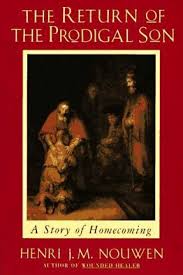
The Return of the Prodigal Son - Henri Nouwen. This is one of Nouwen's classics, but I've just gotten around to it. It is a beautiful meditation on Rembrandt's painting and Jesus parable. God loves us deeply whether we leave or whether we stay, whether we do wrong or do right for the wrong reasons. And eventually, he calls us to love others with the same open-hearted love. Very good. jjjj.


Jesus and the Undoing of Adam - C. Baxter Krueger. This is a outstanding little theology book on the Trinity and salvation. I often found myself nodding and reaching for my highlighter (but I couldn't highlight since Ron T. graciously loaned it!). I highly recommend this book for a fresh look at the Trinity and the Incarnation and salvation from the perspective that the Trinity is the center of everything. JJJJJ


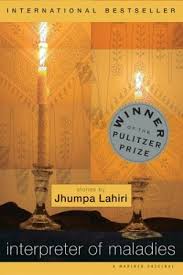
Interpreter of Maladies - Jhumpa Lahiri. This is a fabulous little book of short stories, mostly about Indian-American immigrants, but there are a few stories rooted in India as well. The stories are full of life and poingiancy. They read quickly, and I felt like I was getting to know people I really should have known all along. (Thanks for the loaner Dave.) jjjj


Spaces for Spirit: Adorning the Church - Nancy Chinn. This is by far the best book I have read in a long time. For some inexplicable reason, it is out of print. I happened to get it for free at a KNU used book give away, but I saw it listed on Amazon and other sites for $75-$150! Nancy Chinn is a professional church artist and a lay theologian. She writes with great profundity and insight about the role of art to enable the Spirit to sidestep our logic to reach the deeper parts of our hearts. Best of all, she gives advice on how to start a church arts council which will guide your church in implimenting more art in and around worship services. Our Worship Planning team loved the idea, and we are hoping to start something this winter! JJJJJ! (I would give six J's if I could.)

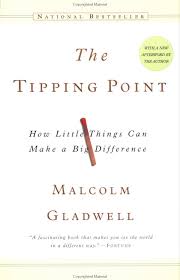
The Tipping Point - Malcom Gladwell. Beverly loaned me this book a long time ago, and it finally made it to the top of my stack. I loved it. I read it in about 2-3 days (spread over 2-3 weeks). The summation of the book is that small factors are often the difference in tipping an idea or trend or movement over the tipping point into an epidemic (something that becomes huge and sweeps through a culture or around the world). Reading this book together with Spaces for Spirit convinced me of the need for our church to become more deeply visual and artistic. We need to add "stickiness" to the message if we want it to have impact. Great read. Great thoughts. JJJJJ.

Saturday, April 5, 2008

Greatest Movie #83: Titanic

Last night Sarah and I watched the modern classic romance Titanic. (Thanks KyungRan for the loan.)
However, I have to say that this time, both Sarah and I found the movie to be more about social critique than romance. Sure there is the steamy 24 hour romance between Jack and Rose, but that is kind of an overlay on a deeper social commentary. And even that romance serves a salvation function to rescue Rose out of the dead-end, dead-life system of the upper class rich folk, with all of their arrogance, gossip, indulgence, mutual expectation, and prejudice. Jack opens her eyes to a whole new world of possibilities, a whole new realm of experiences, free from the limiting system in which she felt trapped.

The ship itself is a microcosm of society. The different levels of the ship are stunning in their representation of our world. At the top are the first class passengers. They experience the height of luxury, prestige, and arrogance. Their rooms are suites. They travel with their own armies of servants and gear. Next come the second, third, and steerage class passengers. They are the middle class folk who somehow managed a ticket on this historic venture. They share rooms in bunk beds and eat in large dining halls where social rules are nearly non-existent. Next comes the engineering level. We see stunning shots of the machinery which makes this ship go and also of the neatly uniformed people who manage these well oiled pistons and levers. Finally, in the belly of the ship are the coal ovens. Here people labor in swealtering heat shoveling coal to fuel the massive steam engines, which fuel the pistons, which turn the propellers, which enable this voyage involving such luxury hundreds of feet above. This class of people sweat and ache and struggle 12+ hours a day covered in dirt and grime for the express purpose of enabling the frivolity of the people several stories above them.
This is a humbling and sobering picture of our world. Instead of being separated by levels of a ship, we are separated by levels of society, national development, careers, education, opportunity, etc. The people on the different levels do not have different values - despite the explicit claims of the first class passengers. Yet the underclasses labor away at jobs that serve the express purpose of making luxury possible for the people who were lucky enough or well positioned enough to make it to the first class seating.

A few other metaphors struck me as I watched this movie. I won't have time to flesh them out fully, but here they are in a nutshell.
1. Jack is a Christ figure - wooing us out of our broken systems to experience true life. His venture to help us experience true life and to win our love costs him his own life, but finally wins the reward of the affection of his beloved and her freedom to experience true life.


2. The Titanic is an emblem of our broken systems, including the church. The old ship is going down. The old systems are broken, but people are complaining about the cold and noise involved in getting into the lifeboats. Also, we request that our people keep playing, keep serving brandy, and keep up all appearances that everything is OK. This desire for stability is a direct contributor to the losses we will necessarily experience for not heeding the warning signs to adapt to change and to abandon the sinking ship.

3. 2,200 people were aboard the Titanic. 700 people made it into 20 lifeboats, which could have accommodated 1,400 or more. However, after the ship sank, only 1 boat came back to collect more passengers, and that was only after so much time had passed that most of the passengers had frozen to death in the icy waters. The boats had the potential to save 700 or more additional people, but they only pulled 6 live people from the water. Most of the boats stayed away from the swimming passengers because they were afraid the other passengers would swamp their boats and sink them all. The great irony is that most of the boats were only half full, and there was little risk of them being swamped. So they stayed at a comfortable distance listening to the screams and whistles of hundreds of dying people, knowing they could help, but afraid of the potential cost to themselves. This is SOOO like our world, where we are afraid to get involved in the plight of our starving, struggling neighbors because we are afraid they will swamp our boats. "We can't save the whole world, right?" Maybe, maybe not. But there are sure hundreds of people out there in the water who can get into our boats ... if we don't wait too long.