Showing posts with label question. Show all posts

Friday, January 31, 2014

Why Doesn't God Heal Everyone Who Asks?

When I was growing up, one of my best friends was Nathan Fischner who was born with a whole in his back (spina bifida).  He could walk only with a full lower-body brace and custom crutches, but he was an expert wheel chair racer and taught me the art and joy of the stationary wheelie.  Nathan is trained as a computer scientist, but for now he is working as a gem cutter.
A few years ago, I was preaching about a story of Jesus' healing a lame man, and I remembered Nathan.  I wondered how he reads this text and how he deals with the issue of healing from the perspective of one who has a life-long handicap.  His response - which has been percolating for quite some time - is thoughtful, personal, vulnerable, and at times profound.  With his permission, I am glad to post his answer here.

Nathan Fischner: You asked me in an email some years ago why it was that one does not say, "Rise up and walk!" to one who needs healing, and then send them on their way.  Why DON'T we ALL just go around mass healing the injured, disabled, and sick.  It seems so simple... and yet so many stay as they are.  The world God has made is a very big place, in terms of the possibilities of expressing his love to those he created in his own image.  There must, therefore, be more to it than it first seems.

I say that when it is revealed to us in terms we understand, we must accept God's will as a small trusting child would, without agenda and without expectations other than he is our Father and wants the best for us.  That being said, we are taught by Jesus himself to go into a quiet, secluded room, and, by the model prayer He gave us, to think on a much larger prayer than simply a need.  One is to acknowledge Him, His greatness and authority, and to truly rejoice before Him concerning what He has done for them and what this person has seen Him do for others (thankfulness isn't just presenting a list of items you have noticed done for you).  A little child, as we are meant to envision, comes to the Father saying "Please, fix this.", because the child has reached the end of his/her own resources, and the problem is something that they don't feel they can go on past without help.

Sunday, October 13, 2013

God and Suffering

         When I was in a student in Europe, I took a midnight train from Paris to Zurich.  I was too cheap to pay for a sleeping car, so I ended up talking all night with a man named Yacov.  Yacov described himself as a secular Jew.  He grew up in Israel, where he was educated in the Jewish faith.  
However, when he saw a documentary on the Holocaust in middle school, he became an atheist.  He said to himself, “There is no such thing as God or the chosen people, or else this would not have happened.”
Yacov is not alone.  How can a good God allow so much suffering?  The Jewish prophet Habakkuk had the same question.  A few centuries before Jesus, the Greek philosopher Epicurus was wrestling with the problem of thinking of a good and strong God in a broken and bruised world.  A few centuries after Jesus, St. Augustine was still asking the same question.  He had some different answers, but he was still kicking the same can along the same street.  
How can a loving God allow so much suffering?  This question never goes away.   Everyone seems to ask this at one time or another.  Without a doubt, this is the single most common theological question voiced in movies.  “Why, God?  How could God let this happen?”

----  Let’s make this personal.  At the end of each row, you'll find some cards and pens. Take a minute and write down on the card one instance of serious suffering.  It can be global or hyper local.  You can make it as personal or impersonal as you want.  I’m not going to ask you to show it to anyone.
...
Now, hold those up.  Hold up your example of suffering.  Raise your hand high.  This is why we are talking about this.  These cards are why we have to talk about this.  We know suffering.  We need some answers for why there are all these cards in the air and why there is so much suffering in the world.

Let me give a few disclaimers before we really get started here. 
1.  The Bible does not give a complete answer to this question.   The Bible is more focused on how to overcome suffering rather than focusing on why there is suffering in the first place.
2.  There is no way that I can give a complete answer today.  You and I both will probably leave here feeling a little unsatisfied with the answers we talk about today.  However, I hope that I can at least make this issue more manageable for us.

When we face the problem of suffering in the world, it can be overwhelming.  Hurricanes, tornadoes, earthquakes, murders, poverty, starvation, cancer.  It all piles up, causing us to wonder how a loving God could allow so much suffering.  Sometimes, the mountain of pain gets bigger and bigger, and we get smaller and smaller, until we can’t see anything else but the pain.  One thing I hope to do today is to shrink that mountain so that we can move past it.  

Wednesday, December 5, 2012

How Dangerous Is Bangladesh? (Talk Back Series)

Talk Back Question:  I wonder how dangerous it might be to live or stay in Bangladesh?
[This question can in on a Talk Back card at our church.]

Well, visiting Bangladesh is pretty safe (or we wouldn’t be doing it).  However, we have to take some precautions.  For example, our teams are limited in size - so as not to attract too much attention - and we are careful to stay in safe places. Bangladesh is not a radical country.  There are almost no terrorists and few fundamentalists.  Overall, most of the dangers come from its poverty not from its religious situation. However, it sounds like your question is more related to a long-term stay.  Actually a few people from our church have contemplated a stay of 3-6 months in Bangladesh.  Our partners in Bangladesh said they would welcome longer term volunteers (as long as the visa can be obtained).  They could stay in Dhaka and volunteer at the national ministry center, or they could stay in Birganj (the town closest to the Village of Hope).   The main things for safety are not traveling at night and avoiding spending the night in isolated places.  Otherwise, it should be safe for a long-term stay.

Thursday, November 29, 2012

Do We Ever Get Forgiveness, Or Are We Always Sinners? (Talk Back Series)


Talk Back Question:  You said we are sinners looking for God's forgiveness.  Do we ever get forgiveness, or are we always to see ourselves as sinners?


[This question can in on a Talk Back card at our church. Answered by Shannon Smith and Josh Broward.]


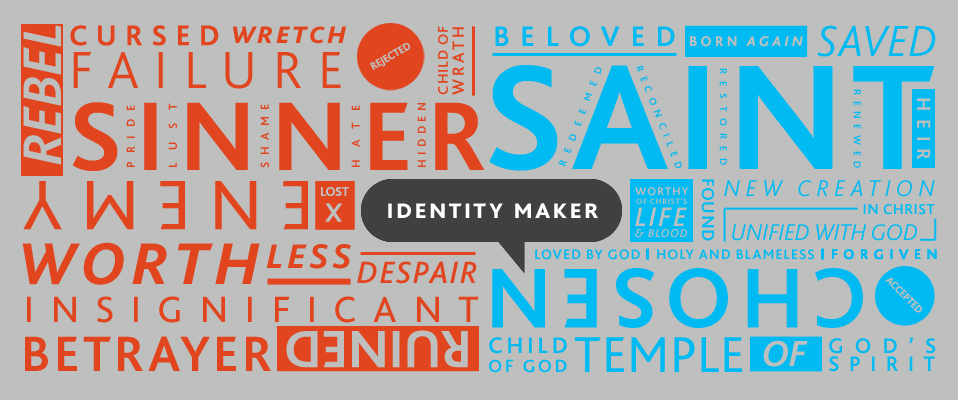
I believe we get forgiveness, but we are always sinners. Martin Luther said we are “simultaneously saint and sinner.” We have been forgiven, but we are sinners who have been saved by the grace of God. “For everyone has sinned; we all fall short of God’s glorious standard” (Romans 3:23). 
Yet at the same time, ”He has removed our sins as far from us as the east is from the west” (Psalm 103:12).  We are forgiven when we confess our sins to God and ask Him to forgive us and cleanse us.  But we still remain sinners.  
We don’t have to worry or think about whether or not we are truly forgiven. It’s easy to doubt, especially because we all know how much we have personally sinned.  But we serve a God we can trust to purify us from sin and wholeheartedly forgive us. 
And while we have this faith in a God who saves us by His mercy and grace, we are still faced with the temptation to sin daily.  Even though we are made new in Christ, we still have the capability to sin.  This is why confession and prayer are good spiritual disciplines to practice regularly. “But if we confess our sins to him, he is faithful and just to forgive us our sins and to cleanse us from all wickedness” (1 John 1:9).
The real issue here is a balance between humility (recognizing that we are broken, wounded, sinful people) and confidence (trusting in God’s love and mercy).  We are also balancing contentment (resting in God’s forgiveness) and progress (pushing on toward more holiness and Christ-like-ness).   These aren’t always easy to balance, but that’s pretty much like most things in life.


Friday, September 28, 2012

Is It Acceptable to Study on the Sabbath? (Talk Back Series)


Question: Is it acceptable to study on the Sabbath?
[This question can in on a Talk Back card at our church.]

Unless we want to be really legalistic, we can’t say that studying is NEVER allowed on the Sabbath.  But let’s think about the Ten Commandments in Exodus 20: 8-11.  God says, "Remember to observe the Sabbath day by keeping it holy.  You have six days each week for your ordinary work, but the seventh day is a Sabbath day of rest dedicated to the Lord your God.  On that day no one in your household may do any work.  This includes you, your sons and daughters, your male and female servants, your livestock, and any foreigners living among you.  For in six days the Lord made the heavens, the earth, the sea, and everything in them; but on the seventh day he rested. That is why the Lord blessed the Sabbath day and set it apart as holy."  
This passage - along with loads of others - talks about "keeping the Sabbath holy".  God created the world and everything in it in six days, but on the seventh day, he didn't work.  He rested. 
One thing we need to consider is whether or not studying is actual work.  In our sermon series on Sabbath, we have talked a lot about making sure that we don't do anything on the Sabbath that we consider to be work.  For students, school and studying is basically their job.  They work hard at it - harder in Korea than in any other developed nation.  We all need a break sometimes, and the Sabbath is the break that God knew we would need.  If students are studying on the Sabbath, are they really getting a break?  Are they really able to take time to de-stress, not worry about grades or test scores, or just have fun with their friends and family? 
In the 10 commandments, God said that not only the parents or adults who have a job are to rest from their work, but even the children, servants, animals and foreigners should observe the Sabbath.  No one was excluded from the command to rest. 

Friday, August 3, 2012

Why Did Saul Want to Kill David? Out of Jealousy? (Talk Back Question 1)


[This is the first in a new series.  Each week we're giving people at church the opportunity to ask questions about the sermon, about the Bible, or about life in general.  We'll answer some of the questions once a month, and we'll try to answer all of the questions here.  If you're a blog reader, feel free to post your question in the comments section.]

Basically, yes.  Saul was jealous of David - insanely jealous - as in he was literally crazy at times.  Because of Saul’s disobedience, God withdrew his blessing from Saul and put his blessing on David.  David began to succeed more and more, and Saul became weaker and weaker.  Apparently the event when Samuel anointed David as king was still mostly a secret, but everyone in Israel could see that David was becoming the national hero instead of Saul.  Saul became increasingly jealous and afraid.
The really difficult part of this story is that multiple times 1 Samuel says God sent “a tormenting spirit” upon Saul, which sometimes sent Saul into depression and sometimes made him “rave like a madman.”  Several times when this happened, Saul threw a spear at David - always just missing.    
In chapter 19, the story takes a turn for the worse, and Saul began to pursue David with the army.  That started a long drama of David running from Saul, yet remaining faithful and loyal to Saul all the while.  Twice David could have killed Saul but didn’t.  David only made a move to be king after Saul and Jonathan were dead.  (See 1 Samuel 16-26.)