Friday, October 21, 2011

Nazarene Heritage: Holiness

Isaiah 6:1-8
John 17:13-26
Galatians 5:13-25

    I grew up hating holiness.  I hated hearing about it.  I hated singing about it.  I hated talking about it.  I hated everything about holiness.
    That was a problem - especially for someone in the Church of the Nazarene, which is a “holiness denomination.”  We talked about holiness a lot.  We preached about it.  We sang about it.  We talked about it in Sunday School.  But I hated it.
    Then, I went to MidAmerica Nazarene University, and I discovered that I was not alone.  “Doctrine of Holiness” was required for all ministry students, and it was one of the students’ least favorite classes - right behind “History and Polity of the Church of the Nazarene.”  When special preachers came and did revival services and talked about holiness and entire sanctification, we felt this awkward tension between wanting to stand up and argue and wanting to run to the altar and repent and pray -- again -- for the hundredth time.  Any time “Holiness unto the Lord” was sung, we cringed inside and kind of turned to our neighbors with an uncomfortable smirk, like “There they go again.”  We might even swing our arms in mock joy (“Sing it, shout it, loud and long”), while inside we were scoffing at such an overplayed and under-lived song on an over-preached subject.
    What’s the deal?  Why all the resistance?  Why all the bitter feelings?  Why on earth would future pastors not want to talk about being holy?  And if the theology majors didn’t want to talk about holiness, you know everyone else was either clueless or hostile.  What happened?

Tuesday, October 18, 2011

2011 Annual Review: Making SPACE for God's NEXT

    Once a year, we spend one day talking about our life as a church - where we’ve been and where we’re going as a church.  Today is that day.  If you’re new with us, consider this a brief look into what’s going on here.  You’ll see that good things are happening.  If you’re not new, walk with me as we try to understand our history, our present, and where God is leading us for our future.

    As I’ve been thinking about this year for our church, I’ve also been thinking of a story from my Texas history class.  The key story of Texas history is their struggle for independence from Mexico.  Here’s a 30 second summary.  Texans rebelled against Mexico and had some early victories in 1835.  Yeehaw!  Mexico responded with a well-trained army under the ruthless General Santa Anna.  The small, unorganized Texas army started - as we say in Texas - gettin’ whoopped (beaten).   Under General Sam Houston, the Texas army retreated, recruited, and trained ... retreated, recruited, and trained.  They were building strength and waiting for the right time.  Finally, in 1836, the Texans attacked, captured Santa Anna, and won the war.
    On the surface, it looked like they were moving backward and getting weaker.  But they weren’t.  They were getting stronger and preparing to move forward from a position of strength.  They were preparing for victory.

Thursday, October 13, 2011

Korea Tip 116: Mr. Pizza - The Original Pizza !?!

Wednesday, October 12, 2011

"Everything that Rises Must Converge" - by Flannery O'Connor

Our small group is now discussing different articles or stories every week.  This week it's my choice, and I jumped at the chance to discuss a Flannery O'Connor story.  I'm intrigued by the concept of pointed fiction - telling a story as a way to prod people into thinking deeply about theology, spirituality, culture, and ethics. 
My choice for this week is the title work for one of her collections of short stories: "Everything that Rises Must Converge."
-----

HER DOCTOR had told Julian's mother that she must lose twenty pounds on account of her blood pressure, so on Wednesday nights Julian had to take her downtown on the bus for a reducing class at the Y. The reducing class was designed for working girls over fifty, who weighed from 165 to 200 pounds. His mother was one of the slimmer ones, but she said ladies did not tell their age or weight. She would not ride the buses by herself at night since they had been integrated, and because the reducing class was one of her few pleasures, necessary for her health, and free, she said Julian could at least put himself out to take her, considering all she did for him. Julian did not like to consider all she did for him, but every Wednesday night he braced himself and took her.
    She was almost ready to go, standing before the hall mirror, putting on her hat, while he, his hands behind him, appeared pinned to the door frame, waiting like Saint Sebastian for the arrows to begin piercing him.

Korea Tip 115: HomePlus - Shopping in New Frontiers.


Click here for the text version of this story.  I especially like the idea of just scanning something at home when it runs out.  This could put an end to shopping lists.  Very innovative.

Monday, October 10, 2011

How Overwork Happened to Me

I have preached against overwork for years.  I've condemned others (vocally and internally) for consistent overworking.  I've prided myself in my "structural preventions" for working too much.  In our house, we have a weekly sabbath, family night, and date night.  I arrogantly believed that these protected me from the increasingly common problem of overworking.

"Pride comes before the fall" (Proverbs 16:18).

As a pastor, I expect to work 50-55 hours a week.  If we expect church members to work 40 hours a week, attend worship services, hang out with church people, and volunteer, then it's fair to expect pastors to put in about the same amount of time.  I've thought for years that my structural barriers kept me at around the 50 hour mark, and that difficult weeks wouldn't push me too far overboard.

Difficult circumstances and a new baby have forced me to reexamine my schedule.  I was shocked when I counted my hours in a normal work week.  My normal - not so difficult week - totals 57 working hours.  That put a quantifiable explanation to my feelings of fatigue, depression, overload, imbalance, and inability to catch-up at home.  No wonder I've been tired.  No wonder I can't seem to do any of the things I've been wanting to do at home.  No wonder I haven't been doing any art.  No wonder I feel stressed and anxious.  I'm chronically overloaded!

How did this happen?  After preaching against overwork and being a staunch supporter of simplicity, how did I end up a victim of one of my own greatest enemies?

Friday, September 30, 2011

Art and Worship

Part 1: “Art-Full Worship”  (Exodus 31:1-11 and John 6:47-58)
    “In the beginning, God created...”  “In the beginning, God created the heavens and the earth” (Genesis 1:1).  And what a wonderful, resplendent, beautiful world God created. 
From fish to flowers ...
From atoms to Alps ...
From galaxies to germs ...
Our God has created an infinitely complex world.  From its smallest to largest dimensions, the beauty and complexity of our world staggers our minds and enraptures our hearts.  Our God creates.  Our God creates flowers that no one will ever see and stars that no one will ever reach.  Our God creates bacteria and electrons and magnetic waves and thermonuclear reactions and sea currents and black holes and nebula and more species of animals than we have even discovered.  Our God creates.  Beauty and complexity, simplicity and profundity, majesty and glory ooze from God’s very Being.  God is Creator, and creation bears God’s glory.
   
    From the beginning of time, people have worshiped God through creation.  Adam and Eve joined the creative process by naming the animals, caring for the garden, and creating more human beings.  Noah joined the Creator’s mission by creating an ark as an instrument of salvation and then building an altar as a sign of worship.   Abraham, Isaac, and Jacob all worshiped God by building altars to hold their sacrifices. 
    Creation and beauty have always been part of worship of the Creator.  Worship has always been art-full (full of art).  As people made like the Creator, we cannot help but to create when we express our worship of the Creator.  Our creation - our mutual display of beauty - draws us closer to the heart of the Creator. 

"The Plan" - by Alex Gray

This poem is by mystic artist Alex Gray, who tries to paint in a way that allows God's Spirit to work more in our world.  It is a little humanistic and New-Age-ish; I don't believe humans working together will heal our world.  However, I do believe that God heals our world partly by working through us humans.  What I really love about this poem is that it catches the essence of our role as co-creators with God.

  1. God Creates the Cosmos with Love.
  2. When we create with Love we align ourselves with the God Force.
  3. The Cosmos and our world is God’s evolving creation, an unfinished masterpiece we each co-create.
  4. Love will go to any length to fulfill its creation.
  5. We are each a finite mirror of God’s infinite creation.
  6. To see through appearances to God’s transcendent presence beatifies and transfigures our experience of God’s immanent creation.
  7. Creating sacred space mirrors God’s creation.
  8. Our challenge as co-creators is to mirror God’s love and beauty in all our creations.

Monday, September 26, 2011

Pieces of Peace

Blue skies in my heart
Deep currents in my soul
Whirlwind in my chest
- My fragmentary whole

Performance, achievement
Anxiety, depression
Laughter, love, and joy
- My loose compression

Believing and doubting
Following and turning away
Resting and Wrestling
- My drunken stumbling way

His love endures forever
His mercies know no end
His death atones for me
- My unfailing Friend

Friday, September 23, 2011

Sacraments: Channels of God's Grace


    Roughly one sixth of the world does not have a reliable supply of clean drinking water.  More than 3.5 million people die every year because of water related illness.

    Scientists and community organizers have tried to solve this problem in a variety of ways, but one of the most creative is atmospheric water generators.   AWG’s take water from the air around us.  In most environments, there is enough water in the air to provide clean drinking water for several families with a single AWG machine.  This is an amazing technology.  The water is already there.  We just have to tap into it.

    However, we also have to recognize that this is not the normal way people get water.  Normally, people go to one of three sources for their water: rivers, lakes, or wells.  For many thousands of years, most people in most places have gotten most of their water from these reliable sources - rivers, lakes, and wells.  This water is much easier to reach.


    That’s kind of how grace works.  God’s grace is all around us.  We can experience God laying in our beds or walking on a mountain or riding a subway.  Grace is in the air we breathe.  We just have to tap into it.

    This is beautiful and profound, but we are also wise to recognize that there are some “normal” ways to experience God’s grace.  There are some normal channels of grace that have proved effective means of grace, and our spiritual ancestors have been coming back to these basic channels of grace for thousands of years.

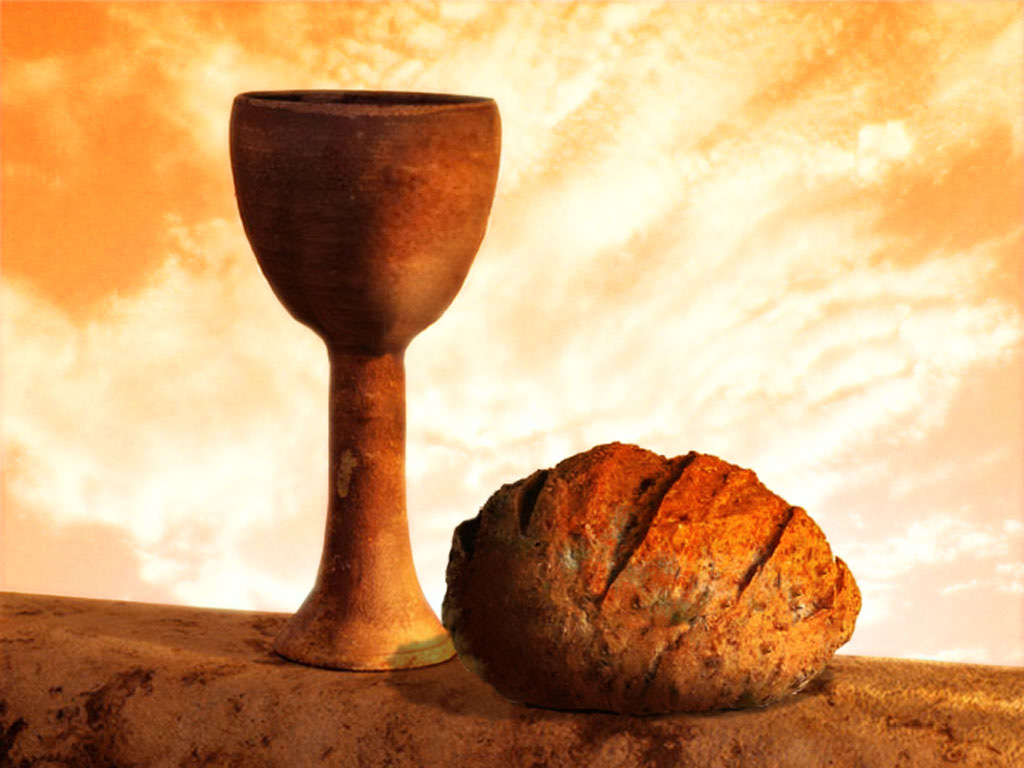
    Theologians call these “means of grace.”  Down through the years, the Church has recognized two means of grace as being especially deep and meaningful for Christians: baptism and communion.  These are often called the sacraments. 

    A sacrament is a living drama of God’s gracious action.  It is a sign pointing to grace.  In a sacrament, we remember what God has done for us through Jesus.  But in this remembering and re-enacting, we are also opening ourselves to God’s gracious action again.  It seems that we humans need to experience these very physical things - water, bread, and wine - to help us experience the fullness of God’s grace.  The physical is somehow connected to the spiritual.  The sign pointing us to grace also becomes a channel bringing grace to us.

To continue reading this post, click here. (Scroll to September 23, 2011 if necessary.)
.

Tuesday, September 20, 2011

MIB - Missing in Baby-land

If you follow this blog, you know I haven't been posting much lately.  Here are a few of the happy reasons why.

-- Just before we left for the hospital --

 -- Just before I entered the operating room.  They took Sarah in 20 minutes before me, so I had a long time of nervous pacing and strained Korean dialog with the staff.  --

 -- This is the normal way for parents to view their new babies in Korea.  One of our church members just had a baby and still hasn't held him after 3 days (because she had a C-section and they don't expect C-section moms to nurse until 5-6 days after).  However, our hospital was more flexible, and though we had to push, Sarah was able to nurse about an hour after delivery.  Also, we could get our baby pretty much any time. --

 -- I'm one proud papa.  He even opened his eyes for the camera. --

 -- Sarah's first time seeing him outside the operation room --

 -- My mom and Emma visiting the hospital on Day 1. Sarah's mom is also here, and her dad is coming tomorrow, but I don't have any other good family pics on my computer yet. --

 -- Emma's first time holding John David --

-- He started fussing a little, and happy changed to: "Uh oh, now what?" --

As I get adjusted to life in Baby-Land, I'll try to get back to more regular posts, but this will have to do for now.

Friday, September 16, 2011

Scripture and Preaching

2 Questions for Discussion
When have you really felt God speaking to you through a sermon? 
What were the main points of the last 5 sermons you heard?

    Raise your hand if you could remember at least one of the last five sermon topics?  Keep your hand up if you could remember two?  Three?  Four?  Five? 
    But I expect that almost all of us could point to at least one sermon that was a powerful spiritual event for us.  Somehow, sometimes, sermons become miracles.  Reading the Bible and talking about it becomes a transcendent event when the words on the page become the Word of God for us in our hearts. 
    This is our topic today - the role of scripture and preaching in the worship service.  You can read the Bible at home.  You can listen to sermon podcasts or read them online, but something special happens when we gather to hear from God together.  What is that?  How does that work?  How can we have more of those special, supernatural, God-filled moments when we gather on Sundays? 

    Our primary text for today is in 2 Timothy.  Timothy is Paul’s ministry student.  Paul has been training Timothy for years.  In our series on 1 Thessalonians, we saw part of this training period with Timothy serving as Paul’s assistant.  Timothy is out on his own now, in Ephesus.  Timothy is the Christian leader of the island, kind of like a bishop or lead pastor for a network of house churches.  Paul is giving his final advice to Timothy, charging him with his most important tasks as a minister.  Again and again, Paul comes back to one fundamental task: “Preach the Word of God.”  Let’s read part of Paul’s advice starting in 3:14.

Chapter 3: 14 But you must remain faithful to the things you have been taught. You know they are true, for you know you can trust those who taught you. 15 You have been taught the holy Scriptures from childhood, and they have given you the wisdom to receive the salvation that comes by trusting in Christ Jesus. 16 All Scripture is inspired by God and is useful to teach us what is true and to make us realize what is wrong in our lives. It corrects us when we are wrong and teaches us to do what is right. 17 God uses it to prepare and equip his people to do every good work.  ...


To continue reading this post, click here.
(If necessary, scroll to Friday Sept. 16, 2011.)

.

Wednesday, September 14, 2011

God Is Not a White Man

Check out this awesome, quirky, theologically astute music video by the band Gungor:

Thursday, August 25, 2011

Life's Fast Moving Opportunity - 1 Thessalonians 5

    First of all, I want to thank you for all of your care and support for our family over the past week and a half.  Many of you came to visit us.  Several offered to help or brought us meals.  John David is a blessing, but you have also been a blessing and an encouragement to us.
    Second, I want to let you show you some pictures of the newest member of our family, and this is not John David.  Let me introduce you to Elliana Renae Palmer, or Ella for short.  Ella was born on Tuesday - three weeks early.  Michael and Elizabeth went to our hospital for a check up and were holding her in their arms three hours later.   John David and Ella were born 4 days and 32 minutes apart.  Sarah and Elizabeth were in the same hospital, on the same floor, just across the hall from each other.
    These are special times - full times - full of love and meaning and opportunity.  We couldn’t have planned it like this if we tried.  This was a beautiful, serendipitous blessing.  
    But these days will not last forever.  These moments are passing.  We can only experience them now.  You know what parents say to each other: Cherish these moments.  Before you know it, he’ll be riding a bike.  Blink twice, and she’ll be entering college.  They grow up so fast. 

    This is not far from our text today.  This week, we are finishing our study on 1 Thessalonians, so we’ll read all of chapter 5.  It’s pretty long, so we’ll take it in sections.  Let’s start with just verse 1.

1 Now concerning how and when all this will happen, dear brothers and sisters, we don’t really need to write you.

    You can’t catch it very well in English, but Paul actually uses two different Greek words for time here: chronos and chairos.  Chronos is for the simple progression of time - tick, tock, tick, tock.  One second after another, one hour, one day.  Chronos is the kind of time when you say, “Their plane arrives Friday September 2 at 1:05 pm.” 
    But Chairos is a different kind of time.  Chairos is focused on the quality of time rather than the quantity of time.  Chairos is closer to the idea of an opportunity or when we look back on a particular period in our life and say, “Those were good times.”  Chairos is like that moment of opportunity when there is an opening in a horse race, and the rider has to go fast before it closes.
    To help explain the nature of Chairos, the ancient Greeks depicted Chairos as a young man moving fast, with wings on both his back and feet. He is tipping the scales in one direction for now, right now only.  One scholar explains, “His hair is long in front and bald behind; he must be grasped, if at all, by the fore-lock.”  If you want to catch Chairos, you have to get ahead of it, or it will get away.  ...

To continue reading this post, click here.

.

Wednesday, August 17, 2011

Korea Tip 114: Crazy May Have a Cause

Be careful what you call crazy.  When you enter a very different culture, some things will seem very strange - even senseless.  Korea is definitely not an exception in this category - at least not for Westerners.  I can't count the number of times I've said or heard someone else say, "That's just crazy."  Not to mention the thousand other variants.
However, one thing that dawned on me this week (once again) is that most of the unusual practices in Korea that seem crazy to me at first actually have a pretty good cause in reality.  Here are a few examples.
  • Brushing teeth after every meal.  I was shocked to meet several of the professors in my office building every day around 1:15 - brushing their teeth in the bathroom.  That seemed a little excessive to me.  That is until, I started eating in the faculty dining room.  The kimchi, onions, and garlic had me reaching for a toothbrush, too.  On occasion, I even stoop to an afternoon flossing to get those little bits of green stuff out of my teeth.
  • Last minute planning.  This is one that really drives most westerners crazy.  The plans change 3 times before the event, and then 5 more times during the event.  You can't figure out what classes you're actually teaching until the week before the classes start, and even that might not be the final say.  But, this one is kind of a vicious cycle.  It's hard to make and keep plans when everyone else is changing their plans because other people are changing their plans, too.  After reformatting the event 7 times, some people decide that the simplest thing to do is to wait until the last day - after it's almost impossible for any more notices of change to come in - and then work super hard to plan the whole event.  For Westerners, this seems terribly inefficient and stressful, but it actually kind of works in Korean culture - and may even work a little better, given the structural limitations.
  • Opening the windows in the winter.  So the heat's on full blast, and icicles are forming outside (or inside), and the windows are open - all of them.  This leaves lots of Westerners scratching their heads or angry.  Or, the first student to walk into the classroom and turns heat up to full blast.  Then, 20 minutes into class, it's crazy hot, and all the students have their coats on, so one of the students opens the window instead of turning down the heat.  Lots of cultural reasons here.  (A) The primary traditional heat sources (stoves or propane heaters) gave off noxious fumes, so fresh air was very important for health.  (B) Airing out a house is important in Confucian philosophy.  (C) With the class room scenario, the students may think the teacher turned on the heat.  Therefore, they don't have the authority to override the teacher's decision there.  However, they are sitting next to the window, so no problem with opening it to get a little more comfortable - especially considering A and B.  (D) Also, many Koreans will keep their coats on inside for lots of reasons.  Schools weren't traditionally heated well, so coats were necessary.  Taking it off just seems like too much trouble - or possibly an insult to the person who sets the classroom environment.  

I could go on and on and on and on.  The point is that there are usually good reasons for most of the things we don't understand.
What are some things you don't understand about Korea?
What are some things you have learned that have helped you understand Korea?

Monday, August 15, 2011

A Village for Widows

Our mission is to be a loving community that changes our world.  We say it every week, and we mean it.  Our church, KNU International English Church (at Korea Nazarene University), is passionately living out our calling to change our world. 

However, we understand that we can’t change the whole world all at once.  A key plank of our vision is “global change through local action.”  We serve our local community in a variety of ways, and we are partnering with Nazarenes in Bangladesh to help build a village for widows and orphans.  What follows is the story of how this partnership developed.

Missions in our DNA
As a multicultural church founded by missionaries, our church has always had missions in our DNA.  ...


READ THE REST AT: www.engagemagazine.com.

Sunday, August 14, 2011

Memories, Hopes, and Conversations - Review

Whatever image enters into a church's corporate imagination, that picture will have shaping power concerning structures, goals, schedules, finances, and practices (38).
Appreciative inquiry is built on theories that move a congregation away from deficit-based models toward the images and forces that are most life giving (39).

Memories, Hopes, and Conversations explains how to apply the process of Appreciative Inquiry to church life.  Embedded in the change process of a Japanese-American church, Mark Lau Branson uses this extended case study to walk us through the process of helping a church imagine a new future by taking an appreciative look at their past.
One of the common problems of organizational life is that we focus our attention on the negative.  As we engage in "problem-solving," we inadvertently focus our attention on the weakest and most draining parts of our systems.  This negative focus pulls us into its own vortex of negativity and often prevents any real solutions or growth from emerging.
On the other hand, Appreciative Inquiry, which has been used with great success by businesses and NGOs, uses intentional questions and interviews to focus our attention on our greatest strengths and assets.  We ask questions about the best parts of our past, our most enriching experiences then and now.  Then, we also ask questions about our desires and hopes for the future.  After we collect all the information from a broad-based interview process, we begin imagining together how we could grow into our strengths and expand them to enrich our church more fully.
Built on the basic philosophy of gratitude, Appreciate Inquiry is both hopeful and realistic.  This approach acknowledges that how we frame our questions and discussions impacts our energy and our outcomes.
 After struggling many times to address our churches blessings and challenges with multiculturalism, we are starting to try an appreciative inquiry approach.  I'm asking our leaders to interview people with basic questions about their positive experiences with multiculturalism.  My hope is that this will point us in the direction of the things we do best and how to do more of them.
This is a good book, a needed book.  However, there was something lacking which I can't quite identify.  The Josh rating: JJJJ.

Friday, August 12, 2011

The Last Juror - Review

Grisham veers a little from his traditional courtroom style, but not too far.  A legal drama is still a major factor in the story, but the lead character in this story is a kid fresh out of college (without graduating) who stumbles into the ownership of a small town newspaper.  His paper reports mercilessly on a hideous murder by a member of the county's most notorious criminal family, and he is wrapped up into the drama.
Outside the courtroom, we see a young man struggling to come into his manhood. We also get a fresh look at the racial tensions of the deep south in the 1970s.  However, this is refreshingly rendered through the lens of a hyper successful black family with eight kids and seven PhD's.
The Last Juror walks a fine line between gentle story telling and compelling suspense, and that seems to be exactly what Grisham is aiming for - just enough suspense to keep us interested in the main story: a positive image of small town America - even with its weaknesses and faux paus.  As Willie Traynor, a yankee at heart, adapts to life in rural Mississippi, the readers kind of get the feel that they too could make a home there.
Good, enjoyable reading, but not ground breaking or can't-put-it-down.  The Josh rating: JJJ.

Stronger through Sharing (1 Thessalonians 3)


       Tomorrow is 광복절 (Korea’s Liberation Day).  For more than forty years, the Korean people resisted Japanese colonization.  Sometimes, this resistance was public as in the March 1st, Declaration of Independence in 1919.  More often though, the resistance was through guerilla warfare, covert meetings, secret newspapers delivered at night, and hidden educational gatherings.  
Throughout the resistance movement, one thing remained constant.  The resistance became stronger when people bound together.  Isolation led to weakness, but communal sharing led to strength.  As long as people felt that they were alone in their desire to be free and alone in their faith that freedom is possible, then their courage to resist grew weak.  But when people realized that they are not alone, that others stand together with them, that others also share the faith that freedom is possible, then their courage to resist became stronger.  
Isolation leads to weakness.  Communal sharing leads to strength.  This is the message under the text of 1 Thessalonians 3.  Let’s read it now.
 1 Finally, when we could stand it no longer, we decided to stay alone in Athens, 2 and we sent Timothy to visit you. He is our brother and God’s co-worker in proclaiming the Good News of Christ. We sent him to strengthen you, to encourage you in your faith, 3 and to keep you from being shaken by the troubles you were going through. ...


To continue reading this post, click here.  (If necessary, scroll to the post on August 12, 2011.)


.

Monday, August 8, 2011

Preaching Naked

Preaching naked
I bare my soul
No hidden motives
Nothing in reserve
My heart on my sleeve
My insides spilling out
Through my open mouth
Preaching naked
I bare my soul
Like me
Love me
Hate me
Don't ignore me
Preaching naked