[Preface: Sometimes, we just need to let the Bible speak for itself. This is one of those times. "Following" is a huge deal in the Bible. Just think about these passages, which will be read by different readers from our church.]
Matthew 14:22-33 (SeongHwan) “Immediately after this, Jesus insisted that his disciples get back into the boat and cross to the other side of the lake, while he sent the people home. After sending them home, he went up into the hills by himself to pray. Night fell while he was there alone.
Meanwhile, the disciples were in trouble far away from land, for a strong wind had risen, and they were fighting heavy waves. About three o’clock in the morning Jesus came toward them, walking on the water. When the disciples saw him walking on the water, they were terrified. In their fear, they cried out, ‘It’s a ghost!’
“But Jesus spoke to them at once. ‘Don’t be afraid,’ he said. ‘Take courage. I am here!’
“Then Peter called to him, ‘Lord, if it’s really you, tell me to come to you, walking on the water.’
“‘Yes, come,’ Jesus said.
“So Peter went over the side of the boat and walked on the water toward Jesus. But when he saw the strong wind and the waves, he was terrified and began to sink. ‘Save me, Lord!’ he shouted.
“Jesus immediately reached out and grabbed him. ‘You have so little faith,’ Jesus said. ‘Why did you doubt?’
“When they climbed back into the boat, the wind stopped. Then the disciples worshiped him. ‘You really are the Son of God!’ they exclaimed.”
Numbers 14:24 (Chaplin) “But because my servant Caleb has a different spirit and follows me wholeheartedly, I will bring him into the land he went to, and his descendants will inherit it.”
Deuteronomy 13:1-4 (SooHee) “If a prophet, or one who foretells by dreams, appears among you and announces to you a miraculous sign or wonder, and if the sign or wonder of which he has spoken takes place, and he says, "Let us follow other gods" (gods you have not known) "and let us worship them," you must not listen to the words of that prophet or dreamer. The LORD your God is testing you to find out whether you love him with all your heart and with all your soul. It is the LORD your God you must follow, and him you must revere. Keep his commands and obey him; serve him and hold fast to him.”
To continue reading this sermon, click here.
.
Friday, February 26, 2010


Thursday, February 11, 2010
The Gospel and the Church (Gospel Series: Week 4)
 February 14, 2010
Isaiah 2:1-5; 1 Peter 2:9-12; Matthew 5:1-16
This week, we are finishing our series on the Gospel. Maybe this is a good time for a little review. First, we need to read the Bible forwards, not backwards. And when we do read the Bible forward, understanding each new step in the context of the building story, an amazing picture emerges. The Gospel is that God is on a mission to heal the whole world, and God is starting by healing us - even though we don’t deserve it. Amazingly, God wants us to help! We can become farmers of the Gospel. Through service to the poor, loving friendships, planting seeds of truth, waiting, and watering, we can help the Gospel grow and take root in our world.
This week we are exploring what it means for us as the Church to live the Gospel. To help us understand this, I need to describe two other communities first.
We usually spend time with Sarah’s family in Iowa every summer. A few years ago, we visited the Iowa Living History Farm. Through volunteers and paid staff, they re-enact what life was like on farms in Iowa throughout history. It’s pretty cool.
We were overwhelmed with sensory experiences. We could see with our eyes what a village street was like. We could hear the sound of our own feet on the village board walk. We could go in and out of different stores: the drug store, the doctor’s office, the post office, the general mercantile, the lawyer’s office, and town hall.
We smelled the cookies baking in the oven. (But they wouldn’t let us have any cookies because then their 18th century kitchen would have to meet 21st century health code standards. That was torture!)
We could smell hay in the barn and touch the hot sweaty side of a horse after he plowed a field. We could stand in the hay and feel it poking at our ankles.
We could taste old fashioned root beer and rock candy.
We could go into the black smith’s work shop and hear the pounding of his hammer on the metal. We could feel the heat of his fires on our skin. Just standing in his workshop made us sweat!
We were also able to get even more personal through explorative action. We discovered that back in the day, one of Iowa’s biggest crops was broom corn. We actually got to use some of their 200 year old machines to practice making brooms. (It was fun, but I think I’ll stick to preaching.)
To continue reading this sermon, click here.
.
Wednesday, January 27, 2010
Gospel and Salvation (Week 2 of Gospel Series)
Learning Experience:
People gather in groups of 3-4 to put together the pieces of the puzzle. However, the pieces they are given don’t match the picture on the envelope.
Reflection:
What happened?
When you realized that the pieces didn’t fit the picture, what did you do?
Were you more committed to the pieces or to the picture on the envelope?

People gather in groups of 3-4 to put together the pieces of the puzzle. However, the pieces they are given don’t match the picture on the envelope.
Reflection:
What happened?
When you realized that the pieces didn’t fit the picture, what did you do?
Were you more committed to the pieces or to the picture on the envelope?
The picture on your envelope is called “The Bridge Illustration.” It works like this. We are the person on the left. God wants us to have life and joy and peace. But we sinned and made a huge gap between us and God. Because we sinned, and because “the wages of sin are death,” death is coming our way. We live a life that isn’t really life, and when we die, we’ll go to hell for eternal death.
Most of us try to bridge the gap. We try to do good things, to help other people. Maybe we go to church or give money to the poor. We try to get closer to God, but we can never be good enough. We always fall short.
But here’s the good news. Jesus died on the cross for our sins. He died instead of us. He made a bridge for us to be close to God. Now we can put our faith in Jesus to forgive our sins so that we can live with God again. Now we can have life with God in heaven.
I grew up with the Bridge Illustration. I have probably drawn it 100 times to explain the gospel to others. The beauty is that it is simple. It is easy to draw and easy to understand.
But over the past few years, I have begun to feel like this picture is too simple. At first, I started to make changes to the picture. I added an arrow for faith – showing that we put our trust in Jesus and cross the bridge. I drew a community of people on the side with God to show that we’re part of the church.
But finally, I decided that I couldn’t make enough changes to this picture to really describe the Gospel that we find in the Bible. This picture of salvation was too small, too individualistic, too much like a business transaction, to stagnant. After the person puts their faith in Jesus, they are done. That’s the end of the picture. They cross over. They become a Christian. The end.
That’s not what I read in the Bible. Becoming a Christian is the beginning of a journey, not the end. When we become a Christian, we still have a lot of work and learning left to do. We need a new picture. We need a new way of thinking about the Gospel and salvation. ...
To continue reading this post, click here.
.
Thursday, January 21, 2010
The Gospel and The Bible (Gospel Series: Week 1)

When I was growing up in the 1980’s, there was a huge controversy about backmasked messages in rock music. Conservative Christian groups began accusing various famous rock bands of having secret backward messages in their music that would entice people to follow Satan, use drugs, or have illicit sex.
Ÿ Led Zeplin’s song “Stairway to Heaven” is alleged to have the backward message: “Here’s to my sweet Satan.”
Ÿ Queen was accused of including “It’s fun to smoke marijuana,” backmasked in their famous song, “Another One Bites the Dust.”
Most bands vigorously denied these claims. However, as the fury and controversy over backmasking raged in the 1970s and 1980s, some bands joined the backmasking trend with some funny messages.
Ÿ In 1979, Pink Floyd backmasked the message: “Congratulations! You’ve just found the secret message.”
Ÿ Weird Al Yankovic hid the message: “Wow, you must have an awful lot of free time on your hands.”
There are hundreds of real or alleged backmasked messages. Some of these backward messages are funny. Some are strange, and some are scary. But the simple truth is: when you play something backwards, sometimes you get an entirely different message.
Most of us here today really start reading the Bible at the end. We start with the book of Revelation and its dramatic pictures of heaven and hell. Heaven will be streets of gold and pearly gates and everyone will be filled with joy worshiping God, no tears, no pain, no sadness. Hell will be fiery furnaces and pits of sulfur and ash and eternal torment day and night. Of course, we all want to go to heaven and avoid hell. But how?
To continue reading this post, click here.
.
Thursday, January 14, 2010
The Exiled King - Isaiah 62

Isaiah 62
Once upon a time, there was a great King, who was just and fair and humble. The motto of his Kingdom was: LOVE AND JUSTICE FOR ALL. He taught his people how to live well. The King helped his people to love each other and to help each other. He taught them that everyone is connected, that one person’s success is a victory for all of us, and that another person’s suffering is a wound in all our hearts. He taught people to live with kindness and mercy – helping the weak, befriending the lonely, hugging the children, celebrating with joy, and encouraging the good in all to flourish and grow. His Kingdom grew, and his people prospered.
However, as is often the case, some powerful people wanted more power. They didn’t like this love and justice philosophy. They believed in the survival of the fittest. They believed that everyone gets what they deserve. The strong should get stronger, and the weak … Well, who cares about them anyway.
This group of power-hunger Powerfuls led a coup d’etat. In a quiet revolt, they sent the King into exile and imposed a new government. Their motto was: FREEDOM AND HAPPINESS FOR ALL. They filled the streets with their propaganda: “Let us throw off those ancient social norms. Let us rid ourselves of the shackles of concern for others. Live free. Pursue happiness above all else. If you want it, do it. If you like it, buy it. If you can’t afford it, work for it and work some more. Anyone can have anything they want if they only work hard enough or smart enough.
Most people gladly accepted this new government and their message about life. It is not easy always being concerned about others. Often that means putting aside what we want – at least for a while. This new way of life was much easier. It was such a relief simply to be concerned about yourself. There was a time of celebrating and revelry in the streets. Wine and women moved freely.
But carnival cannot last forever...
To continue reading this sermon, click here.
.
Wednesday, January 6, 2010
Precious - Isaiah 43:1-7

Josh Broward
A few years ago YoungMin told us a story about Tommy Walker, a Christian worship leader. When Tommy was traveling, his group regularly visited inner city ministries that were serving poor children. They would just go and hang out with the kids.
At one ministry center, there was a little girl named Jenny. She sat next to Tommy and picked up a crayon and said, “My name is Jenny. What’s your name?”
Later, on the swings, she said, “Hi! Do you remember my name?”
Tommy said, “Yeah, hi Jenny.”
Later, while they were eating some snacks, she looked at Tommy and said, “Do you remember me? What’s my name?” He said, “Yeah, you’re Jenny. Want another cookie?” Again and again throughout the day, Jenny found Tommy and asked him: “Do you remember my name? What’s my name? Do you remember my name?”
Tommy asked the local workers what was going on, “Why does she keep asking me if I remember her name?”
They said lots of people come in and out of that ministry center. Many of them don’t really bother to learn the kids’ names since they won’t be staying very long. When they come back and they don’t remember the kids’ names, the kids feel hurt. They feel like they don’t really matter, like they’re not really important. Jenny was trying to make sure that Tommy remembered her. She was trying to make sure that she mattered.
That really impacted Tommy. He thought about Jenny and all of the other kids in all of the other poor communities he had visited. He realized that there are lots of Jenny’s in the world – lots of kids nobody remembers, lots of kids who feel like they don’t matter, lots of kids for whom nobody knows their names. He realized that he couldn’t reach all of those kids. He couldn’t love them all. He couldn’t help them all. He couldn’t remember all of their names.
But he also realized that there is someone who can. He went home and wrote the song “He Knows My Name,” about the God who loves us, remembers us, and deeply values each one of us.
I have a Maker
He formed my heart
Before even time began
My life was in his hands
I have a Father
He calls me His own
He'll never leave me
No matter where I go
He knows my name
He knows my every thought
He sees each tear that falls
And He hears me when I call
To continue reading this post, click here.
.
Thursday, December 31, 2009
Help-Portrait
I just read a great article about a new group called Help-Portrait. It is founded by some professional photographers who are also Christians and felt called to use their skills and passions to help others. Help-Portrait is calling all photographers (professions, hobbyists and amateurs) to put those cameras to good use by taking a special portrait shot of someone in need and then giving them a nice large printout of the photo as an encouraging reminder that they are special and valuable people.
It's not huge, but it's good. Some people will also give food, blankets, and friendship with the photos, and people will be changed in small ways.
The coolest part is that this is a group of people who are doing what they are already passionate about doing in a way that helps others. How can we help more people connect their passions with the world's needs?
Monday, December 28, 2009
GOD (a poem)
Like sand slipping through our fingers
or little grains stuck for days in our hair.
Like a cold mist we can't see up close
yet clouds our glasses as soon as we walk in the door.
Like a sunrise that won't fit in the frame
and is kind enough to follow us home.
Like diving into a crystal blue lake
then taking a drink for the hike.
Like that poignant moment we just can't explain
but still makes us smile and cry.
Like whale watching on the Alaskan coast
and the Alaskan snow globe collecting dust.
Like a forest fire, melting trucks, exploding trees
and a candle flame waving in the wind of my breath.
Like time that always gets away from us
but is with us every minute of every day.
(Josh Broward, 12.28.2009)
or little grains stuck for days in our hair.
Like a cold mist we can't see up close
yet clouds our glasses as soon as we walk in the door.
Like a sunrise that won't fit in the frame
and is kind enough to follow us home.
Like diving into a crystal blue lake
then taking a drink for the hike.
Like that poignant moment we just can't explain
but still makes us smile and cry.
Like whale watching on the Alaskan coast
and the Alaskan snow globe collecting dust.
Like a forest fire, melting trucks, exploding trees
and a candle flame waving in the wind of my breath.
Like time that always gets away from us
but is with us every minute of every day.
(Josh Broward, 12.28.2009)
Friday, December 18, 2009
Messiah in the Margins (Micah 5:2-5a)
Micah 5:2-5a
Have you ever felt like that? Have you ever been in one of those conversations? “It sucks to be me.” “Oh, no, it really sucks to be me.” “Well, if you think that’s bad, let me tell you how much my life sucks.” This is normal life for us. My job sucks. My apartment stinks. My husband never helps around the house. My mom drives me crazy. My bosses keep changing everything. I have a cold. My back hurts.
What is this a contest or something? Do we really want to win this game? “Yeah, it really sucks to be you! Whew, you’re life is terrible!”
“See! I told you!”
But sometimes, we really do feel pretty terrible. This week, I sat at my computer pouting, with my bottom lip sticking out like a little kid who just dropped his ice cream. Sometimes, we just feel like joining the song, “It sucks to be me!”
Israel would understand. Israel was a small fish in a big sea with sharks all around. The biggest shark of all was Assyria. Assyria was pressing down upon Israel like a lion on a mouse. It seemed to be only a matter of time before Assyria would annex Israel like it had already done to all the other nations. They would lay siege Jerusalem, and if they won, they would make the king of Israel stand in the town square. The commander of the Assyrian army would take a rod and smack Israel’s king in the face with it, maybe knock a few teeth out. When Israel looked into the future, they saw defeat and public humiliation. So, yeah, they were singing, “It sucks to be me.”
But God answers Israel in a surprising way. ...
To continue reading this post, click here.
.
Have you ever felt like that? Have you ever been in one of those conversations? “It sucks to be me.” “Oh, no, it really sucks to be me.” “Well, if you think that’s bad, let me tell you how much my life sucks.” This is normal life for us. My job sucks. My apartment stinks. My husband never helps around the house. My mom drives me crazy. My bosses keep changing everything. I have a cold. My back hurts.
What is this a contest or something? Do we really want to win this game? “Yeah, it really sucks to be you! Whew, you’re life is terrible!”
“See! I told you!”
But sometimes, we really do feel pretty terrible. This week, I sat at my computer pouting, with my bottom lip sticking out like a little kid who just dropped his ice cream. Sometimes, we just feel like joining the song, “It sucks to be me!”
Israel would understand. Israel was a small fish in a big sea with sharks all around. The biggest shark of all was Assyria. Assyria was pressing down upon Israel like a lion on a mouse. It seemed to be only a matter of time before Assyria would annex Israel like it had already done to all the other nations. They would lay siege Jerusalem, and if they won, they would make the king of Israel stand in the town square. The commander of the Assyrian army would take a rod and smack Israel’s king in the face with it, maybe knock a few teeth out. When Israel looked into the future, they saw defeat and public humiliation. So, yeah, they were singing, “It sucks to be me.”
But God answers Israel in a surprising way. ...
To continue reading this post, click here.
.
Wednesday, December 2, 2009
Malachi's Christmas (Malachi 2:17 - 3:5)

Christmas is my favorite holiday. I loved the relaxed time, spending all day together with my family for several days in a row. For many of us Christmas means family time.
But food always goes together with family. In my house there was always more food than we could possibly eat: turkey, honey-baked ham, stuffing, mashed potatoes, gravy, green bean casserole, cranberry sauce (sometimes still shaped like the can), and best of all pumpkin pie with whipped cream and pecan pie with old-fashioned vanilla ice cream. (I know I’m making myself hungry, too!) Nothing says Christmas like the sin of gluttony!
And of course there are presents. My mom has two great spiritual gifts: giving and shopping. Christmas at our house overflowed with all of my mom’s bargain gifts. Christmas gift-giving is such an important image in American culture that economists gauge the health of the entire economy based on Christmas shopping.
And the presents have to go under a Christmas tree. Through some accident of history, green triangle shaped trees have become one of the world’s most recognizable symbols of the holiday celebrating the birth of Jesus.
In
Some people think mostly about the songs and the movies. Rudolf the Red Nosed Reindeer, Frosty the Snowman, Jingle Bells, The Twelve Days of Christmas. Miracle on 34th Street, It’s a Wonderful Life, The Charlie Brown Christmas.
For Christians, the primary images of Christmas are often a little different (at least when we’re thinking about church stuff). We usually think about Christmas carols and special Christmas Choir Cantatas. We think about the classic Christmas songs: “Away in a Manger,” “Silent Night,” “Joy to the World,” and others. These songs are always full of joy and appreciation for God’s greatest gift to the world – Jesus.
And of course, the single greatest image of Christmas for Christians is the baby in the manger – or feeding trough. Most Sunday School kids can draw that baby in the wooden box with the X-shaped legs and hay. We might even add a nice yellow glow of light coming from the quiet little baby in the hay.
Our images of God’s coming into the world are overwhelmingly positive. We think of joy and peace, family and friends, comfort and abundance. Even when we think theologically, our thoughts are deeply positive: light and salvation and grace and peace for the world and good news for all humankind.
Many of the Bible’s texts do lead us in this direction. But not today’s text. Today’s text is from the prophet Malachi – the last prophet recorded in the Old Testament. Listen as Malachi explains God’s coming into the world. This is Malachi’s Christmas.
To continue reading this sermon, click here.
.
Friday, November 27, 2009
Family Groups
 We're restarting a conversation in our church.
A few years ago, Adam, Elisa, Jackie, and a few others helped us start thinking about house churches. The basic idea was that once a month, we wouldn't have a regular worship service. Instead, we would have smaller groups meet in homes around town. There were two basic motivations: 1) To shake up the concept of "church" as a worship service or a place, and 2) To help people get to know each other more deeply.
But this idea seemed so difficult to get started logistically and conceptually, that it kind of faded away.
At our November pastors meeting, Matt, SuJin, and I resurrected this basic concept under a new heading: FAMILY GROUPS. We are thinking of a few little changes that might make it more workable. 1) We would actually meet in the Nazarene Building (the same building where we worship together every Sunday). We would just divide up into classrooms. 2) We would only do it every other month. 3) We would still meet in a big group to sing together. Then we would split into the different classrooms.
We still have to work out the logistics about how to divide people up into the different family groups, but we have some ideas on how to do that.
The basic structure would be that each family group would have a team of 4-6 hosts. Then we will add people to each group, trying to keep each group diverse in age, sex, and culture. The hosts will be responsible for preparing the food, leading the activities and discussions, making announcements, etc. Each family group will have a brunch-style meal together - something like breads, fruits, and drinks. They will spend some time just chatting. Then there will be a discussion about a Bible text and maybe a video on a connected theme. Then, they will share honest prayer requests with each other and pray for each other right then and there. And that's pretty much it. Hopefully, the hosts will do some follow-up care as well.
The basic goals would be:
1) Knowing and being known,
2) Praying for and with each other,
3) Mixing generations and cultures,
4) Increasing participation and ownership.
If anybody out there has any thoughts on this, I'd be happy to hear what you have to say. Also, if your church does something like this (or if you know of one that does), please post a comment.
Monday, November 23, 2009
Adoption Standstill
 Well, we have hit a concrete wall 10 feet thick in terms of adoption. It seems that international law is solidly against us - for now. Because we don't live in our country of citizenship, we are not eligible to adopt a child from any country!
This is very frustrating for us. We've spent almost two years working on this, and we've spent quite a bit of money as well. Sarah especially has invested a great deal of time in research, applications, and gathering documents.
However, for now, we are facing the reality that unless something changes - either the law or our location, we will not be able to adopt. Since we don't anticipate either of those changing in the next few years, we are going to stop trying until something does change.
That leads us to start pursuing other options. We still want to have more children, so maybe we'll have to make room in the womb for another guest.
Saturday, November 21, 2009
Reviews
Sexual Character - Marva Dawn. I didn't actually get to finish this one. Somehow I left it on the plane from DC to St. Louis in October. Here is one of the highlights from the first half. Our culture is trying to solve our pain of fragmentation and isolation (the break up of the community and family) through sexual intercourse. But this is the wrong medicine. It only makes it worse because sexual intimacy without commitment only makes us feel more fragmented and isolated in the end.
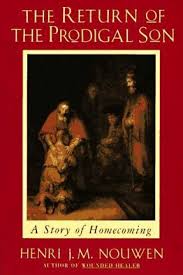
The Return of the Prodigal Son - Henri Nouwen. This is one of Nouwen's classics, but I've just gotten around to it. It is a beautiful meditation on Rembrandt's painting and Jesus parable. God loves us deeply whether we leave or whether we stay, whether we do wrong or do right for the wrong reasons. And eventually, he calls us to love others with the same open-hearted love. Very good. jjjj.
Jesus and the Undoing of Adam - C. Baxter Krueger. This is a outstanding little theology book on the Trinity and salvation. I often found myself nodding and reaching for my highlighter (but I couldn't highlight since Ron T. graciously loaned it!). I highly recommend this book for a fresh look at the Trinity and the Incarnation and salvation from the perspective that the Trinity is the center of everything. JJJJJ
Interpreter of Maladies - Jhumpa Lahiri. This is a fabulous little book of short stories, mostly about Indian-American immigrants, but there are a few stories rooted in India as well. The stories are full of life and poingiancy. They read quickly, and I felt like I was getting to know people I really should have known all along. (Thanks for the loaner Dave.) jjjj
Spaces for Spirit: Adorning the Church - Nancy Chinn. This is by far the best book I have read in a long time. For some inexplicable reason, it is out of print. I happened to get it for free at a KNU used book give away, but I saw it listed on Amazon and other sites for $75-$150! Nancy Chinn is a professional church artist and a lay theologian. She writes with great profundity and insight about the role of art to enable the Spirit to sidestep our logic to reach the deeper parts of our hearts. Best of all, she gives advice on how to start a church arts council which will guide your church in implimenting more art in and around worship services. Our Worship Planning team loved the idea, and we are hoping to start something this winter! JJJJJ! (I would give six J's if I could.)
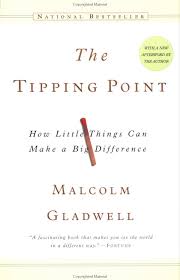
The Tipping Point - Malcom Gladwell. Beverly loaned me this book a long time ago, and it finally made it to the top of my stack. I loved it. I read it in about 2-3 days (spread over 2-3 weeks). The summation of the book is that small factors are often the difference in tipping an idea or trend or movement over the tipping point into an epidemic (something that becomes huge and sweeps through a culture or around the world). Reading this book together with Spaces for Spirit convinced me of the need for our church to become more deeply visual and artistic. We need to add "stickiness" to the message if we want it to have impact. Great read. Great thoughts. JJJJJ.
The Return of the Prodigal Son - Henri Nouwen. This is one of Nouwen's classics, but I've just gotten around to it. It is a beautiful meditation on Rembrandt's painting and Jesus parable. God loves us deeply whether we leave or whether we stay, whether we do wrong or do right for the wrong reasons. And eventually, he calls us to love others with the same open-hearted love. Very good. jjjj.
Jesus and the Undoing of Adam - C. Baxter Krueger. This is a outstanding little theology book on the Trinity and salvation. I often found myself nodding and reaching for my highlighter (but I couldn't highlight since Ron T. graciously loaned it!). I highly recommend this book for a fresh look at the Trinity and the Incarnation and salvation from the perspective that the Trinity is the center of everything. JJJJJ
Interpreter of Maladies - Jhumpa Lahiri. This is a fabulous little book of short stories, mostly about Indian-American immigrants, but there are a few stories rooted in India as well. The stories are full of life and poingiancy. They read quickly, and I felt like I was getting to know people I really should have known all along. (Thanks for the loaner Dave.) jjjj

Spaces for Spirit: Adorning the Church - Nancy Chinn. This is by far the best book I have read in a long time. For some inexplicable reason, it is out of print. I happened to get it for free at a KNU used book give away, but I saw it listed on Amazon and other sites for $75-$150! Nancy Chinn is a professional church artist and a lay theologian. She writes with great profundity and insight about the role of art to enable the Spirit to sidestep our logic to reach the deeper parts of our hearts. Best of all, she gives advice on how to start a church arts council which will guide your church in implimenting more art in and around worship services. Our Worship Planning team loved the idea, and we are hoping to start something this winter! JJJJJ! (I would give six J's if I could.)

The Tipping Point - Malcom Gladwell. Beverly loaned me this book a long time ago, and it finally made it to the top of my stack. I loved it. I read it in about 2-3 days (spread over 2-3 weeks). The summation of the book is that small factors are often the difference in tipping an idea or trend or movement over the tipping point into an epidemic (something that becomes huge and sweeps through a culture or around the world). Reading this book together with Spaces for Spirit convinced me of the need for our church to become more deeply visual and artistic. We need to add "stickiness" to the message if we want it to have impact. Great read. Great thoughts. JJJJJ.
I Kissed Sex Goodbye

OK, well actually I just kissed talking about sex goodbye for now. Last Sunday, I finished my last sermon in our series on human sexuality. (Matt is preaching tomorrow on porn.) I have never been happier to finish a series! This was tough. Sexuality touches the core of who we are, and we have such divergent perspectives and experiences. I was always walking the line between stretching people without causing so much offense that they started throwing tomatoes or stones.
I think it has gone well so far. The feedback has been mostly good. Best of all, people are saying that lots of people are talking about sex. That was one of my biggest hopes - to decrease the secrecy and shame surrounding the topic of sex, to bring the topic into the light so that we can talk together about the best ways to be sexual.
In short, I'm glad we did this, but I don't want to do it again any time soon!
Sunday, November 15, 2009
Homosexuality: Reframing the Discussion (Sex Series - Week 3)

Today we run the risk of misunderstanding each other. I want to begin by reading part of the statements on human sexuality in The Manual of the Church of the Nazarene and by our Board of General Superintendents:
The Church of the Nazarene views human sexuality as one expression of the holiness and beauty that God the Creator intended for His creation. It is one of the ways by which the covenant between a husband and a wife is sealed and expressed.
The Church of the Nazarene believes that every man or woman should be treated with dignity, grace, and holy love, whatever their sexual orientation. However ... We stand firmly on the belief that the biblical concept of marriage, always between one man and one woman in a committed, lifelong relationship, is the only relationship within which the gift of sexual intimacy is properly expressed.
This month we are trying to understand our sexuality in all its God-given beauty. Today, we are continuing to teach the holy love for God and for people which the Church of the Nazarene has always upheld. I just want to make that clear at the beginning.
I have been preparing for this sermon for more than a year. Throughout this process of reading and studying and praying, I have also thought about my friends and family members who are gay.
Sarah’s uncle is gay and lives with his partner in a long-term, loving relationship. We have stayed in their home more than once, and they showed our family great kindness and hospitality.
My cousin is gay. Her “wife” experienced severe and sustained sexual abuse by men. Now, as an adult, she is physically unable to eat foods that remind her of sex with men. Pickles, hotdogs, and mayonnaise all make her vomit!
To help us think about real people, I want to stop and hear a story from “Michelle.” Michelle no longer attends our church, but she sent us a letter telling us her story.
To continue reading this sermon, click here.
.
Sex Myths: Marriage and Singleness (Sex Series - Week 2)

Kevin Leman is a Christian marriage counselor. He often travels around giving marriage seminars. One of his lectures is called, “What Every Parent Ought to Know about Sex.” He always begins this seminar by asking a very simple, straightforward question: “What do we call penises in our society?”
Silence … dead silence. Leman says once a lady on the front row elbowed her husband and asked, “Bill, is he talking about piano players or what?”
Leman keeps pushing: “Come on, what do we call penises in our society? Better yet, what did your mother call your penis, men?” You know when she was giving you a bath, and it was time to wash that part, what did she call it?
So, he starts asking for a show of hands: “How many people called it a ding dong when you were growing up? A pecker? A wiener?”
Eventually the awkwardness starts wearing off and people start shouting out words: peter, pokey, the thing, ying-yang, dork, dink, pee-wee, boy part, private part, schlong, junk, piece, unit, rod, pee-pee, tee-tee, thing-a-majig. If he were in Korea, somebody would say 고추 (or pepper).
By this time, people are laughing so hard they are crying. And then, Leman reads a quote from another psychologist. “There is no reason ‘that a male [child], who points to various parts of his body and ears his parents say, “nose,” “eye,” “hand,” “toe,” should suddenly hear strange [evasive words] when he points to his genital area and hears “pee-pee,” “pee-wee,” “wienie,” “teapot,” … to cite only a few. Then he soon discovers that he is never to use the word around anyone outside the home.’”
All of these cute, funny names for a penis (and let’s not even get started with talking about the names we give to the “girl-parts”) – all of this sends a message to our children and to us that sex is dirty or secret or shameful. Sex is not something we can talk about. We can’t say the real names of our body parts, much less talk about what they do.[1]
Today, we are continuing our series on sex by talking about marriage and singleness. I want to do some myth busting today. We are going to talk about the top 10 sex myths in today’s world and what the real truth is.
Sex Myth #1: We can’t talk about sex. After last week’s sermon, we got two main comments: (1) That was interesting, and (2) That was really awkward. Honestly, I felt a little awkward, too. I pretty much never get nervous preaching anymore, but I was really nervous last week. It seems that we are basically out of practice when it come to talking about sex.
Truth: We need to talk about sex. . . . .
To continue reading this sermon, click here.
.
Repenting of My Suit

My Dad fed me Dress for Success with my morning cereal. Barely out of pee-wee football, I could tell when someone was underdressed for an event.
Just when I was beginning to get pimples, I was also mastering which ties were classics and acceptable (diagonal stripes, dots, and paisleys), which were fashionable but unwise (plaids, abstract shapes, and stripes in any direction other than diagonal), and which were downright poor taste (pictures of any kind).
By Driver’s Ed, I could tell the difference between a 100% cotton shirt and “synthetics,” and I could tie my own tie at the right length.
In university, when I began to preach, I was a model “disciple” of my father’s rabbinical teaching of John Malloy’s Dress for Success philosophy. When I carried my Bible to the pulpit, I was never lacking my conservative tie, perfect suit, over-the-calf black socks, and wingtips.
After graduating from seminary, I landed in
Throughout my first several years here, I donned a suit and tie with almost daily regularity. I repeated to myself some of my Dad’s maxims: You only get one chance to make a first impression. What you wear determines whether people will trust what you say. It may not be fair, but this is how it is. You can work with reality or break yourself against it.
But slowly, I began to chafe under the formality. Why am I doing this? What are we trying to say with these suits and ties? Why do we put on a coat in the middle of the summer?
I read Jesus’ critique of the Pharisees and saw startling parallels between their “extra long tassels” and my own neckties. The only purpose of a necktie (year round) and a suit coat (in warm weather) is to give the impression of a certain level of power and importance. The exact purpose of these clothes is to separate the powerful and important people from those without power or social significance. I couldn’t help judging myself and my peers as hypocrites who were trying to show off our status of power.
I also began to question the immense cost of this formal attire. Although I got most of my clothes on the cheap, I knew that many of my peers and our leaders spend thousands of dollars a year on these symbols of power. A sense of injustice grew in me. I was participating in a system of waste, excess, and self-promotion, which sucks millions of dollars from some of our most generous pockets.
I was particularly haunted by an experience from my university years. I invited my working-class cousins to go to church with me. After several requests, they reluctantly joined me in attending a conservative megachurch in an upper-middle class neighborhood. They felt woefully out of place in their T-shirts and blue jeans among suits and fancy dresses. The experience was such a disaster, that I didn’t even discuss church or God with them for a very long time. Years later, when I was attending a more relaxed church, I thought they might have a better chance of fitting in enough to actually hear the message. However, they rebuffed my offer with the claim that they had nothing to wear. They only consented to join me when I promised to wear blue-jeans as well.
I read biographies of Mother Theresa and was struck by her intentional decision to don the simple cotton clothing of the poor in her city. For a time, I seriously considered forming an “order neveaux” that chose to wear only blue shirts and khakis, as a form of public dissent against both the formal and high-fashion cultures.
I prayed. I read. I sought advice from others. My parents were predictably against the idea. My wife wisely stood on the sidelines and let me process all my conflicting thoughts and desires and fears. On more than one occasion I stood in front of my closet with the resolution to throw out every suit and tie I owned.
When our church decided to make several changes at once, changing our location and meeting time all in one move, I decided to add a wardrobe change for myself. When I walked into the new place, I left the suit and tie behind.
For another year or so, I continued to wear suits into my English classrooms at KNU. I reasoned that while I am in an official university role, I should go along with the formal Korean culture. So it was suits on class days and semi-casual wear on church days.
However, I began to feel dichotomous – like I was presenting two selves to the world. Also, my decision not to wear suits to church still did not resolve my participation in the “suit-system” during the week. I still felt like I was participating in a social system built on hypocrisy and contributing to global injustice.
About 4 years after taking my first pastorate and committing to the daily “uniform” of pastors and professors, I purged my closet of all but two suits and a handful of ties. My wife finally voiced her opinion and talked me into wearing suits for weddings and funerals. I am still not sure how this jives with my desire to be consistent at all times. For now, I agree with her advice that some special occasions seem to call for special clothing, and further that I should avoid giving offense if at all possible.
I may not be finished making adjustments in my clothing ethics, but for me, this process of intentional dress is a key component in my discipleship of Jesus. I want everything I do to help me follow him more, to be closer to his example. I want to be as simple and honest as I can manage. At the same time, I want to create as few barriers between myself as others as possible.
I don’t want to impose my clothing ethic on others, and I don’t want to judge all suit-wearers as Pharisaical hypocrites. But I do believe that questioning our motives and even our cultures is a healthy practice for all of us – especially those of us who long to follow our countercultural Messiah.
Subscribe to:
Posts (Atom)