Wednesday, March 16, 2011

Robinson Crusoe Review

Sarah and I just finished reading Daniel Defoe's classic adventure novel, Robinson Crusoe.  This is considered the first full-length novel to be written in the English language, and its story has captured the imagination of the world for almost 300 years. 
The basic story line is well known.  However, a few details significantly enrich the plot.  Crusoe's father encouraged him to settle down for a quiet but satisfying middle-class life.  However, Crusoe's hunger for adventure sent him sailing the seas.  He was captured by Moroccan pirates and made into a slave.  He managed to escape by boat, lost his bearings, and became adrift at sea.  A Portuguese vessel rescued him and took him to Brazil, where he settled and began developing a prosperous plantation.  However, greed pushed him to make an illegal slave trading mission to Africa.  On the way, his boat was shipwrecked and he was the lone survivor on an uninhabited island near Trinidad.
At this point the more familiar story begins.  Crusoe must learn to survive alone and without most of the technology he knows.  Slowly and falteringly, which much labor and struggle and trial and error, he becomes master of his island.  Also, with only the Bible to read, he has a deep spiritual awakening.  His one great complaint is loneliness.
Eventually, he discovers that South American cannibals occasionally visit his island for feasts of the meat of prisoners of war.  From this point forward, he lives in constant fear of his life.  However, he eventually manages to rescue one prisoner of war, whom he names Friday.  Friday immediately commits himself body and soul to Crusoe. 
Later, Friday and Crusoe are able to rescue others from certain death, and these rescues combine to provide a way off the island and back to Europe for Crusoe.  After almost 30 years of being "lost," Crusoe discovers that his Brazilian plantation, which he left in trust with his partners has prospered and he is now a man of some wealth. 
Through it all, he gives persistent credit to God for his provision and miraculous protection and mercy.  We were both surprised at the spiritual elements of this story.  However, we were also put off by Crusoe's open prejudice against the South American natives and willing acceptance of slavery.  It was strange to read of spiritual awakenings on one page and desires to slaughter savages (because of their cannibalism) on the next page.  However, I guess that's often how our life goes.  Even as we get light in one area of our lives, we remain blind in another.
This is a thrilling and intriguing story.  However, the details of his struggles for technological innovation and his long stay on the island grew monotonous in the middle section of the book.  The introduction warned us of this, though, so we pushed through and the pace picked up quite a bit once Crusoe saw the first footprint of another human on his island.
This is a great read, and it only looses one J because of its slow pace in the middle: JJJJ.

Tuesday, March 15, 2011

All About Eve - #28 Greatest Movie of All Time

We are loving that Itunes is carrying more of the old classics.  Last week, we watched All About Eve, #28 on AFI's greatest movies of all time list.  I was surprised to learn that this movie shares (with Titanic) the record for most Oscar nominees, and it is the only movie in history to have four women nominated for Oscars (two each for lead actress and supporting actress).  Marylin Monroe also has a small part, which was cool to watch.
This movie is fun, enjoyable, well-scripted, and painful.  The characters are believable, vulnerable, and easy to connect with.  The story line, even while including a few key twists and turns, also makes sense. 
In the end, this is a story about people who make their careers their lives and then find the emptiness of that choice.  A few characters seem to make a turn at the end toward relationship and valuing others.  One in particular (with a beautiful twist) enters into her own traps. 
It has been a while since Sarah and I have genuinely liked a movie on the top 100 list.  We usually appreciate their artistic quality, but often don't find them matching our personal taste.  However, this one hit the mark.  I give it a strong: JJJJ.  (Not 5, only because it lacked some of the moral punch I'd like to see.)

Monday, March 14, 2011

Stories of the Kingdom

I believe in stories.  We are narrative people in an intensely narrative time.  Stories shape and guide us.  As we retell the story of the Kingdom of God, we are drawn into that story and propelled forward into its ending. 
Every once in a while, one of my sermons is completely narrative - modern parables.   I have made a new blog collecting these stories together in one place: www.storiesofthekingdom.blogspot.com.
Check it out. 

Sunday, March 13, 2011

Not Nada

For some reason, I went to sleep last night thinking about Ernest Hemmingway's refrain in The Sun Also Rises, which I read in high school.  Then, I wrote this when I woke up.

Nada, nada, y mas nada.
I won't tolerate any of that sentimental B.S.
These are the words of one who has exhausted pleasure.
These are the words of one who has become lost in his own recesses and can't see past the fog of his own being.
These are the words of one who has turned away from our hurting, singing, bleeding, laughing, loving world.
These are the worlds of one who has become lost in the rot of war, lost in the endless train of adventure, lost in the rejection of morals for personal pleasure, lost and without hope of ever finding one's way again.
These are the words of one who does not know God or experience his True North or feel his arms of love or see his flow of grace through us and to another and back again.
These are the words of one who has no hope of final justice and goodness.

No, not: nada, nada, y mas nada.

But beauty and joy and pain and healing.
   Justice and redemption and restoration.
   Peace and grace and mercy.
   Amor, amor, y mas amor.

Tuesday, March 8, 2011

Chopsticks, Factories, and Hospitality

(This story is also featured at Engage Magazine.)
They come for the 3-D jobs Dangerous, Dirty, and Difficult.  People from all over South-East and Central Asia are flocking to South Koreas factories and manual labor jobs. 
However, when they arrive, they have more adjustments than using chopsticks and eating kimchi (Koreas spicy fermented cabbage).  Korea is one of the most homogeneous nations on earth.  With 98% of the population being ethnically Korean and a strong emphasis on homogeneity, being an outsider can be difficult.
Korea Nazarene University is reaching out to the growing multicultural community of Cheonan, South Korea.  Last year, the Social Welfare department of KNU hosted a seminar on multiculturalism and ministry to people of different cultures living in Korea.
KNU International English Church, with people from 10 different countries, is a gathering place for international students, English teachers, international professors, migrant workers, and globally minded Koreans.  They offer annual workshops on culture shock and support international students and teachers. 
Cheonan Migrant Shelter, sponsored by KNU International English Church, serves the migrant workers and families of the Cheonan area.  Because Moon-Shik Park, director of CMS, lived in Indonesia for several years, he knows firsthand the difficulties of living in a foreign culture, and because of his fluency in Bahasa Indonesian, CMS has developed a strong reputation for helpfulness among Koreas Indonesian community.  Moon-Shiks wife, Jenny, works for the Indonesian Embassy in Korea and helps at CMS on the weekends. 
CMS aims to help immigrants adjust to life in Korea and to share Gods love through simple acts of kindness and hospitality.  CMS provides translation, cultural assistance, banking and postal services, Korean and English lessons, employment mediation, and Bible studies.  Immigrants can even find a taste of home at CMSs Asian food market, which stocks hard to find items like mutton, coconut milk, and peanut sauce.
In our globalizing world, the nature of missions is also changing.  We still need people to cross oceans and national lines, but we can also reach formerly hard-to-reach people simply by crossing the street.
To find out more about how to study or to teach at KNU, go to: http://eng.kornu.ac.kr/.  To find out about KNU International English Church, check out: www.knuchurch.com

Friday, March 4, 2011

Doing It - Matthew 7:15-28


Read Matthew 7:15-28.

    Every preacher has stories of sermons gone wrong or heard wrong.  I have my share.  “Ooh, didn’t mean it to come out that way” or “I’m pretty sure I didn’t say that” or the occasional sermon that just bombs.  But as far as I know, I’ve only had someone walk out on me once, and that was when I was preaching from today’s text. 
    It’s a hard passage.  Jesus says three really hard things.  1) Some people will be thrown into the fire.  2) Some people who think they deserve heaven will get locked out, and 3) Some people will find their whole lives come crashing down around them.
    Three years ago, on Easter Sunday, I was going to preach from this text, and I introduced myself to a new person during the greeting time.  I reached out my hand to her and she held up the sermon copy and said, “Haven’t you ever read the verse: ‘Judge not lest ye be judged’?!” 
    I said, “Umm ... yes ... actually I preached on that text last week.”
    She had angry tears in her eyes, and she said, “Well that is certainly not reflected in this sermon!” 
    I don’t remember the rest of the conversation, but I do remember that I got out my pen and made some quick edits to the sermon during the song time.  I also remember that this lady was gone before it was time for me to speak.
    Obviously, I’ve thought a lot about this experience this week.  Why didn’t I ask Matt to preach this one?  So in honor of Ms. Walker-outer, I want to make sure we all see the connections between the beginning of chapter 7 “Do not judge others and you will not be judged” and the end of chapter 7 with burning branches, closing doors, and collapsing houses.

To continue reading this post, click here.

.

Judging Judging - Matthew 7:1-5

(I preached this sermon February 27, 2011.)

Matthew 7:1-5    
Do not judge others, and you will not be judged. 2 For you will be treated as you treat others. The standard you use in judging is the standard by which you will be judged.
 3 “And why worry about a speck in your friend’s eye when you have a log in your own? 4 How can you think of saying to your friend, ‘Let me help you get rid of that speck in your eye,’ when you can’t see past the log in your own eye? 5 Hypocrite! First get rid of the log in your own eye; then you will see well enough to deal with the speck in your friend’s eye.

One of my favorite podcasts tells of a fictional small town in the northern USA called “Lake Wobegon.”  At the end of every podcast, Garrison Keillor, the story teller, says, “And that’s the news from Lake Wobegon, where all the women are strong, all the men are good looking, and all the children are above average.”
    Think about that.  How can ALL the children be above average?  We have an almost unstoppable tendency to overrate ourselves and our children.  This is called the Lake Wobegon Effect or Illusory Superiority.   Most of us think we are better than most other people.  For example ...

  • 68% of the professors at the University of Nebraska (in the USA) said that they are in the top 25% of professors at University of Nebraska.
  • 87% of the MBA students at Stanford University said they were in the top half of MBA students at Stanford.


To continue reading this post, click here.

.

Tuesday, March 1, 2011

Like the Sea

How can it be
That problems and trouble
Roll like the sea?
Now they surge and double;
Now they wane and flee.
With or without my failure,
They rise with fearsome froth.
With or without my succor,
They sink with silky sloth.
Why do I fear the waves
When I know I'll see them go?
Why fear the critics and knaves
When they too will ebb and flow?
Maker, Master, Captain of the Sea,
If waves must roar, at least calm me.

Trading Up

The gold of all the hills,
The flower on every stem,
The view from countless sills,
The splendor of every gem,
I would trade for thee
And still the richer be.


2-28-2011

(By the way, this is my own picture from Siquijor, Philippines.)

Thursday, February 17, 2011

Initial Reflections on South Asia Trip #2.

I just returned from our second mission trip to the same South Asian country, where our church has a long term partnership building a village for widows and orphans.  (We aren't allowed to state the name of the country on the web.)  I don't have long to write, but I want to share a few brief reflections.
1. The long-term aspect here is crucial.  The relationships with among the leaders were exponentially deeper on this second trip than the first trip.  One evidence of this is that the staff gave us a huge discount on our lodging expenses.
2. Face to face meetings are extremely important in some cultures.  I received both good and bad news that our partners were uncomfortable sharing by email.
3. Mission trips are transformational - maybe more so for the participants who go.  I realized that I keep doing this trips - just as much for the people who go with me as for the people we help or for myself.
4. Service is SOOOO much more meaningful than tourism.  It's hard to imagine being a regular tourist, but I think I'll be a regular mission tripper for the rest of my life.
5. The first step out of poverty is much smaller than we think.  It is a step of millimeters rather than even inches.
6. My personal income is 20 times that of one of my friends in this country, and he is basically middle class.  Our family income is something like 40 times his.  I'm still trying to wrap my head around that and what it means for me and our family.
7. I want to go back.
8. We need many more of our church leaders to go.  If this is going to be an authentic partnership owned by our church, then we need many of our leaders to go, not just me and random groups of people from our church.  Also, I am hoping that someone else will plan the next trip, and I will function as a coach.
9. I want to bring Emma.  Sarah can't go, since she's pregnant, but I hope I can bring Emma the next time I head south.
10. We are kind of coaching the leaders of this nation in how to be effective partners.  We're all learning together really, but one of the big benefits of our partnership could be helping them develop the skills and the systems to be more effective partners with others. 
11. Our partners are working on organizing a child sponsorship program for the orphans.  It will cost at least $100 a month to sponsor one kid.  That's significantly more than normal sponsorship programs because they are complete orphans, not just needy kids living with families.  However, as the village becomes more self-sustaining, the costs will go down, hopefully enough to maintain the $100 sponsorship cost despite the nation's high inflation.
12. I don't want a permanent tattoo on my forearm.  We did henna tattoos, and while I like them, I felt really conspicuous walking around with short sleeves - especially with a red cross on my arm in a nation with 0.5% Christians.
13. We got positive feedback on developing an online site that could allow us to do fund raising on the web, where people can donate via credit card.   If we get final approval on that, I'll do a post on how you can help out.

OK, so those are some semi-random thoughts while they are fresh.  Maybe I can post more later.

Monday, January 31, 2011

The Curious Incident of the Dog in the Night-Time

My brother-in-law, Michael, recommended this book to me.  I was a little skeptical at first.  The narrator is a teenage autistic boy.  The chapters are numbered via prime numbers rather than the normal 1, 2, 3, 4.
However, it's quirkiness offers an exquisite look into the mind of an autistic person.  At the same time it offers a compelling picture of families dealing with special-needs children and all of the stress that entails. 
The narrative is sharp and (at times) biting.  It is also witty, heart-warming, and heart-wrenching.  The story reads quickly.  I finished the whole book in less than a week, and that's really fast for me.
I highly recommend this book.  Everyone ought to read it, but for people who live or work near special needs individuals, this is a must-read.
The Josh rating: JJJJ.

Sunday, January 30, 2011

Brothers Karamazov - Review

I love Dostoyevsky and Tolstoy, but this was one of the most difficult books I've read in a long, long time. 
First of all, it's really long - 940 pages!  That alone is pretty intimidating.
Second, in Russian style, each character has about 4-5 versions of their names.  I had a hard time keeping track of who was who until about 1/3 of the way into the book.
Third, it covers so many characters and so many themes that it's hard to follow (or even to identify) the main theme.

However, with those difficulties noted, I'm glad I read The Brothers Karamazov.  There are some absolutely beautiful scenes - notably Ivan's parable about the Inquisition. 
Also, after about half-way through the book, the action and pace increased quite a bit.  It took me about 6 months (and several stops and starts) to read the first half, but it only took a few weeks to read the second half.
In the end, I guess the theme of the book is that selfishness really screws up your life one way or another.  The only character who comes out happy is the one who is always trying to help others.

I'm reluctant to rate a classic this low.  However, because of the difficulty I experienced in the reading process and the lack of clarity for the over all theme, I'll give this only: JJJ.  But, I still recommend it.  It's hard, but it's worth the effort.

Wednesday, January 26, 2011

Korea Tip #102 - 3 Great New Places in SsangYong Dong

SsangYong Dong (the neighborhood around Korea Nazarene University) is really developing.  Recently, three great little places have popped up.
First, Pasta Noodle Office (파스타 ë©´ 사무소) is a chic little Italian place, next to Tom N Toms above McDonald's.  It offers great specialty pizzas and tasty pasta dishes.  The prices range from 7,000 won to 15,000 won.  My first impression is that this is the best Italian place in the neighborhood.
Second, Mama's Table is a quiet little cafe above Cara Cara Sauna.  It has excellent sandwiches on real whole wheat bread, with good side salads, and coffee.  They also have real cheese cake and soft homemade cookies (even oatmeal raisin - my favorite!).  Go out the KNU main gate up the hill toward the mountain.  Take the first left and follow that street as it makes an L to the right.  Mama's Table is almost at the end of the street on the left.
Third, A Twosome Place is a gourmet cafe chain based out of Seoul.  I was delighted to see this at the end of the Lotte Mart street.  It has great sandwiches and a wide variety of specialty coffees and deserts.  Think Starbucks crossed with Panera (almost).  From the KNU area, walk past Lotte Mart, go under the walkway under the main road, and keep going straight.  A Twosome Place will be on your right almost at the end of the street.
And by the way, don't miss Lower Garden (a quaint little coffee shop with simple but tasty sandwiches and Signore's Pizza (pizzas are baked in a real clay oven with a wood fire) - both are behind the post office. 
Enjoy!

Friday Night Lights - Season 2 - Review

We're behind on this one, but we just finished Friday Night Lights Season 2.  We have mixed feelings about this series.
On one hand, it's kind of a soap opera - with the unusual element that it's centered around a high school football team.  With this downside, we see all the high school, soap-opera type elements - drinking parties, sleeping around, etc.
On the other hand, this series is refreshingly realistic.  It is honestly and courageously dealing with real issues, and that's why I keep watching.  The depiction of the coach and his wife is raw, painful, and heartwarming.  Most characters are genuinely trying to overcome their difficult lot in life (four of whom have almost zero fatherly influence and very difficult living situations).  Christianity is fairly often depicted, and usually in a neutral or positive light.
Friday Night Lights poignantly tells the story of the struggle for meaning, love, and significance, and that's why we keep watching (that and the Texas football). This season was OK, but I've heard the next seasons get better.  For season 2, the Josh rating is: JJJ (with hopes of better luck next season).

Jujitsu Love - Matthew 5:38-48

 Jujitsu is a Japanese martial art.  “Ju” means the “gentle art” or the “yielding technique.”  During a surprise attack, one unarmed warrior might do battle with a fully armed attacking warrior.  They quickly learned that indirect combat is the best way to defeat a more powerful opponent.  Use his own force against him.  When the other guy swings his sword, you duck.  When he lunges, move to the side and give a little push so that he smashes into the wall.  The aggressor will destroy himself with his own violence.  This strategy is jujitsu.
    In our passage today, Jesus advocates jujitsu love.  It is not a surrender to violence.  It is a subversion of violence.  Listen carefully to how Jesus advocates a subtle defeat of violent actions or attitudes through jujitsu love.

Read Matthew 5:38-48. 

Our epistle lesson today gives us a fair summary of this passage: “Do not let evil conquer you, but conquer evil by doing good” (Romans 12:21).  Conquer evil with love.  Love’s creative power erodes the power of evil.  ...


To continue reading this post, click here.

.

Sunday, January 23, 2011

Friendly Korea Tip #101 - Hangul Word Processor Online Viewer

So if you live in Korea, someone has probably emailed you a .hwp document.  This is a document created in Hangul Word Processor, Korea's most popular word processor (popular because it was specifically made for the Korean market - instead of just translated into Korean).  However, most westerners don't have HWP.  To further complicate the problem it has zero conversion capacity.  It can't be opened in Word, Open Office, or Mac's Pages.   Most people either go to a Korean computer to open the document or ask the person to send it again in Word. 
However, I recently discovered a new option.  HWP has created a free online site that will allow you to view any HWP doc and/or convert it into a pdf doc which you can download to your own computer.  I have used it twice now, and it works splendidly.  Go to www.thinkfree.com to try it out. 

Thursday, January 20, 2011

Dangerously Biblical (Matthew 5:17-45)


    In Greek mythology, Pandora was given a beautiful golden box as a wedding gift from the gods.  The gods told her never to open it.  However, on her wedding day, she was also given the beautiful/horrible gift of curiosity.  This was all Zues’s cruel plan for personal revenge.
    Eventually, Pandora could no longer keep herself from the box.  She opened the lid, just a little bit, and all the evils of the world spilled out:  greed, theft, lies, jealousy, sickness, death - every evil thing imaginable poured out into the air and into the world before Pandora could close her box.

    In our Gospel lesson today, Jesus tells us that the real God has also given us a kind of box - the Bible. 

Read Matthew 5:17-45.

    So here is the Bible, this box that God has given us.  It is beautiful and valuable, but how does it work?  And how do we work with it?  And how does the Old Testament fit with the New Testament?  And how does the Bible fit with our lives today?
    But here’s the real difficulty in understanding this box that we have as the Bible.  Jesus seems to contradict himself.  ...


To continue reading this post, click here.


.

Wednesday, January 19, 2011

Lassie Come-Home - Book Review

Emma and I read together almost every night.  She gets more or less books based on how quickly she gets ready for bed.  (We've found that this kind of reward system takes most of the stress out of the nighttime rituals, by putting the responsibility on her and by having a reward that really matters to her.)
I've started insisting on one chapter out of a chapter book as one of the "books" for each night.  So far we've finished lots of Magic Tree House books, The Wizard of Oz, and now Lassie Come-Home by Eric Knight. 
This book was far too difficult for Emma to read alone - lots of big vocabulary and English or Scottish accents.  Sometimes, I had to rephrase some of the difficult parts or check for comprehension, but mostly she was able to follow along quite well.  When we got down to the last 50 pages or so, she was super excited to read every night. 
Eric Knight shows an incredible knowledge of both dogs and humans.  As Lassie makes her long journey home, we are treated to a tour of humanity and British culture between the World Wars.  We see gripping scenes of families struggling with poverty and yet maintaining a great generosity of spirit, but we also see other individuals or groups who have hard hearts and quick hatred. 
For all with elementary children, or for anyone who wants a good heart-warming story, I gladly recommend Lassie Come-Home.  It's not earth shaking, but it is very good.  The Josh rating: JJJJ.

Tuesday, January 18, 2011

Already Gone - Book Review

This book was definitely outside my normal reading box.  On one hand, I found the statistics to be unnerving and yet very believable.  On the other hand, I found the diagnosis and recommended cure to be frustratingly off-base.
First some of the most pertinent statistics.
  • 2/3 of people who were active in church as children or teenagers will not be active in church during their 20s.
  • Of those 20-somethings who used to attend church but now don't, 95% attended regularly during elementary and middle school, 55% attended regularly during high school, and only 11% attended regularly during their early college years.  This means that we're losing our young people in high school and college.
  • When these 20-somethings were asked why they dropped out of church, the reasons listed were: 
  1. Boring worship services
  2. Legalism
  3. Hypocricy
  4. Churches are too political
  5. Self-righteous people
  6. Distance from home
  7. Not relevant to personal growth
  8. God wouldn't condemn me to hell for not going to church.
  9. The Bible is not relevant or practical.
  10. I couldn't find my preferred denomination in my area.
Notice that only #8 and #9 are belief based issues.  The top 5, which make up 54% of the respondents are all complaining about human behavior issues in the church.

However, the most surprising statistics related to Sunday School.  According to the surveys in this book, Sunday School seems to be counterproductive (at least as currently operated).  20-something church drop-outs who had regularly attended Sunday School as kids or teenagers were MORE likely to ...
  • Not believe that all the stories in the Bible are true.
  • Defend premarital sex.
  • View the church as hypocritical.
  • Become specifically anti-church (hostile instead of just not attending).
  • Feel that the Church is irrelevant to their needs today.
It's unclear why Sunday School seems to be having this effect.  At this point, all we can do is theorize.
However, There were a few statistical hints of hope.
  • 51% of the church dropouts still attend worship services at Christmas or Easter.
  • 38% expect to attend regularly again after having kids, and 30% aren't sure if they will or not.
Now, let me be clear here.  I'm not saying that attending a worship service makes someone a Christian.  I'm also not saying that not attending worship services regularly makes someone a non-Christian.  However, I do believe in the Church and in local churches.  I know the millions of faults to be found in our institutions and individuals.  However, I believe that churches are absolutely necessary and good for the world.  Therefore, I'm concerned that a growing number of young people find local churches to be irrelevant, unnecessary, boring, or even distasteful.  This is a major problem for the Church and for local churches.
Unfortunately, in my maybe not-so humble opinion, Ken Ham and Britt Beemer do a fairly poor job of addressing this problem and recommending a cure.  They seem to completely overlook the basic statistics that most young people who have quit church have quit because of the behavior and attitudes of the church.
Instead, Ham (the driving writer) pounds on fundamental beliefs as the cure, and his take on fundamental beliefs is an extremely literal interpretation of Genesis 1-11.  While I think such a literal interpretation is possible, I don't think it is necessary, and in some cases (like the comparison of sequence in Genesis 1 and 2), strict literalism is not even logical.   What shocks me the most is the blind insistence on right beliefs above all else.
For example, in the entire book, Ham never mentions (even once) the church's mandate to care for the poor.  In all of his calls to defend the Word and to live the Word, he never once calls our Western materialism into question.   In fact, when he does call for people to live the Word, he gives precious little guidance as to what that might look like.  Once he even says that living the Word is believing that the whole Bible is the literal Word of God (a belief statement).  For me this is evidence that many well meaning people in our church have an unnatural and unhealthy fixation on right belief, while turning a blind eye to right behavior.
However, for someone so conservative, I was surprised to read Ham's chapter attacking traditionalism.  He rightly argued that much that we consider "traditional" is not in fact Biblical.  I was shocked when Ham suggested that we should give 20-somethings who are still in the church the freedom to reinvent the church in more interesting and relevant ways.  Ham said that older, mature believers should stand by as advisers and allow the young folks to take us into a new way of being the church.  He even suggested that these new ways of being church may not feel much like "church" to older folks because they are not "traditional" but may still bear all of the essential elements of a Biblical church.  Mr. Ham (Mr. Uber-Conservative), I tip my hat to you on that one.
 So, that's a long review, of a so-so book.  At the least, the book raised some good points and sparked some good discussion among Sarah and I (and hopefully among the readers here).  Also, these authors see a genuine problem and are honestly trying to understand and to solve it.  For that I give them lots of credit.  For theology, perspective, methodology, and writing style, not so much.  The Josh rating: JJ.

Monday, January 17, 2011

A Covenant of Kindness

We have lost the skills of civil discourse. We have forgotten how to be kind to those with whom we disagree.
The Board of General Superintendents of the Church of the Nazarene is attempting to recall us to basic Christian kindness in our conversations and debate. They have released a "Covenant of Kindness."
As the debates on the net and in our home communities have been overheated at times, I rejoice that more people are speaking out on behalf of mutual respect and genuine humility in conversation. May this be part of our collective healing.

Sunday, January 16, 2011

American Graffitti (#63 Greatest Movie) Review

This weekend Sarah and I watched American Graffitti, AFI's 63rd greatest movie of all time.  Produced by Francis Ford Coppola, co-written and directed by George Lucas, and staring big names like Ron Howard, Harrison Ford (one of his first), and Richard Dreyfus, we had high hopes.  However, we were sadly disappointed.
The whole movie takes place in about 15 hours of time, from evening to morning the next day.  It is set in the early 1960s with a group of kids in (or just out of) high school cruising the strip of their local town. 
I'm guessing this movie meant a lot more to people, for whom "cruising" was a major part of their childhood.  As I watched, I remembered vaguely some of my mom's stories for this sort of thing.  However, for Sarah and I the whole story seemed kind of slow and pointless. 
It's billed as a "coming of age story," but it didn't feel like much maturation actually happened.  The main characters exhibited a fair amount of angst and confusion, but the resolution was rather slim. 
Also there was this weird bit at the end, with text based follow-ups on the main characters in a "where are they now" format.  It gave the impression that this was a true story, but from what I can tell, Lucas just made this up from his own similar experiences.  It seemed out of sync and also pointless.
The final scene (before the weird text follow ups) was a fanciful but artful and slightly poignant wrap-up on the night.  As the white Thunderbird drove along the road, I wasn't sure if the message was that happiness is always just out of reach or that happiness is out there and worth pursuing.
Alas, sometimes even the "greatest" movies are duds for us.  I guess beauty is indeed in the eye of the beholder.  The Josh rating: a dismal 2 Js - JJ.

Thursday, January 13, 2011

Becoming Real (Matthew 5:1-16)

During “Common Time” over the next two months, we are studying Jesus’ most famous teaching, “The Sermon on the Mount” in Matthew 5, 6, and 7.  If you want to know what it means to follow Jesus in your common, ordinary, everyday life, this is the place to start.  Jesus is answering some basic questions.  What does it mean for the Kingdom of God to become real in our world?  What does it mean to be a real follower of Jesus?  What does it mean to be a real human?

    Before we start reading today’s text, I want to talk about someone else who explored what it means to become real.  In my opinion he was one of the greatest psychologists of the 20th century.  Abraham Maslow studied what he considered to be the top 1% of humanity.  He wanted to discover what helps people reach the highest limits of their potential.
    Maslow’s great contribution to human understanding was his Hierarchy of Needs.  The basic concept is that we need to have our most basic needs met before we can move upward to the next level of needs.


    We all start at the bottom with physical needs: food, water, air, sleep, shelter, etc.  We have to have this stuff to live.  That last one on the list is kind of funny: excretion.  That means pooping and peeing.  That may not seem like such a big deal, until you think of a time when you really, really, really had to pee but couldn’t find a bathroom.  You weren’t thinking high and lofty thoughts about how to become a better person or make our world a better place.  All you could think was, “I’ve got to PEEEEE!” 
    The next level is safety.  We all want security.  We need physical health, a safe home, safety for our possessions, income security, etc.  A year or two ago, one of our church members experienced a robbery, while she was at home, in her bed.  Safety became one of her dominant concerns. 
    When our basic needs are met, and we feel basically safe in the world, we start to focus our attention on love and belonging.  We want friendship and family.  We want to fall in love and get married.  We want to have sex, and not just any sex - good sex, intimate sex that connects us heart and soul with another person.  (And by the way, I don’t think sex actually belongs on that bottom level of most basic human needs.  Nobody ever dies from lack of sex.  We are designed to have sex.  It is good to have sex in the right kind of relationship, but we CAN live without it.)
    When we feel love and belong to a close community, we move on to the next set of aspirations, those focused on esteem or respect.  Notice here that love and belonging precede self-esteem and achievement.  We need to love and be loved before we can really feel good about ourselves or anything we accomplish.  This level of needs is all about significance. 
    Finally, we get to self-actualization.  According to Maslow, the highest aim of humanity is to become our true selves.  We have an accurate and honest understanding of ourselves and our world.  We have come to peace with ourselves and what we have to offer our world, and yet we work to solve key problems in our world.  Self-actualized people are people of integrity, joy, passion, honesty, and creative action.  They are fulfilling their potential.  They have become - or are becoming - their REAL (or actual) SELF, the person God made them to be.  This is the ultimate blessing.
    When we look at this, pyramid of needs, we intuitively connect with this.  The basic premise here is intuitively and obviously true.  We look at this and say, “Yeah, that’s about right.”  We might want to adjust this or that, but over all we say, “Yes, this is obviously true.”

    So with this hierarchy of needs in mind, let’s read the introduction to Jesus’ most important sermon.  Read Matthew 5:1-16. 

    Is anyone else confused?   ...

To continue reading this post, click here.

.

Wednesday, January 5, 2011

Cool Church Videos

During my sermon research, I've found some pretty cool church videos I want to share.  Enjoy.


Thursday, December 30, 2010

Purple Magnolia

I've been trying to draw a good magnolia for Sarah all year.  Finally, we spent a few hours looking through google images, and we came up with a photo of these flowers.  I was pretty intimidated by the whites and the double blossom - both new attempts for me.  I've been working on this for months.  It was such detailed work that I could only bear doing one or two petals at a time. 
The flower on the left has mostly colored pencils and pastels.  Half-way through this piece, Elizabeth introduced me to chalks, and I love how easy it is to shade and to fix mistakes with chalks.  The flower on the right is mostly color pencils for the basic colors and then chalks for shading.  The background is all chalks.  I also went over the flower on the left with some additional chalk-shading. 
This is probably my favorite of all the flowers I've done so far.  I like adding in the backgrounds.  I think I'll be working with chalks for a while to come.  It goes so much faster and makes the shading so much smoother. 

SONflower

This is one of my first experiments with color-pastels (earlier in 2010).  I call it SONflower.  The brown area is supposed to double as the crown of thorns and the flower's center.  I was thinking about how Christ's suffering is also beautiful and life-giving.  It's not fabulous art, but I kind of like it.

Wednesday, December 29, 2010

The S.S. Work and the Call of Grace


Their people had rebelled against the King and started their own nation in the Land of Sin.  The King called them back to the Land of Righteousness.  He wanted to make peace with them. 
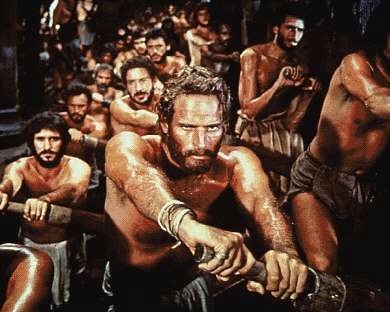
Some brave souls built a boat called the SS WORK, and they began to row their way to the Land of Righteousness.  “Row.  Row.  Row!”
They rowed until sweat dripped from their faces.  They rowed until their arms and shoulders ached.  They rowed through waves and wind and storms.  “Row.  Row.  Row!”
After days and weeks, they could still see the dock.  “Work harder!”  They rowed day and night.  “Row.  Row.  Row!”
After months and months, they could still see their own land, and they started to fight. 
“Why are you resting?” 
“Don’t tell me what to do.” 
“If you didn’t take so many breaks, we’d be there by now.”  
After years and years, they had traveled no more than a few miles on a journey of a thousand miles.  They were out of food, out of water, out of supplies.  The storms continued to come, and the ship slowly began to fall apart.  They kept rowing the desperate hope that they would somehow make it if they just kept rowing.  Row.  Row.  Row!!”
Then, one young lady heard a sound coming from outside the ship.  “I hear something.” 
“Shut up.  Row.  Row.  Row!” 
“I hear something ... a horn ... people calling.”
“You’re just dreaming.  Row.  Row.  Row!”
“I’m going up to see.”
“No!  Everyone has to row!  That’s our only chance.  Row.  Row.  Row!!”
She went up to the deck and blinked in the sun.  She could see a big, beautiful ship.  The Captain called out, “Ahoy, there SS WORK.  The King sent out a mayday call on your behalf.  We’ve come to rescue you.  The SS GRACE can hold your whole crew, but you’ll have to leave your boat.”
“Why?!  Why do you want to rescue us?”
The Captain rushed to the railing.  “The King loves you.  We are here to take you home.”
She rushed back into the inside of the boat. 
“Welcome back.  Now, get to work.  Row.  Row.  Row!”
A timid “no.”
“What?!  Row.  Row.  Row!”
“No” - with a little more courage.  “We don’t have to row anymore.”
“Of course we have to row.  Row.  Row.  Row!”
“No, there’s a different way.”
“Rowing is the only way.  Row.  Row.  Row!”
“There’s a ship here to save us.  It’s called the SS GRACE.”
“Grace - what does that mean?  Row.  Row.  Row!”
“Come and see for yourself.”
Then, one person stood, “I’ve heard of the SS GRACE, but I thought it was a fairy tale.  I’ll go.”
“Somebody shut her up before she gets somebody else to stop rowing.” 
The two seekers went up on deck, and they stared in amazement at the SS GRACE.  They saw the kindness of the Captain.  They saw the sails of the SS GRACE and noticed that there were no oars on that ship.  There was plenty of work to do, helping the ship catch the Wind, but none of the back breaking rowing of the SS WORK.  The crew of the SS GRACE moved with joy and purpose. 
This was enough to convince these seekers.  They returned inside their own ship, “It’s true!”
“Shut up.  Row.  Row.  Row!”
“The King has sent the SS GRACE to save us.”
“Why would the King do that?  This is the only way.  Row.  Row.  Row!”
“The King made us, and He sent the Captain to bring us back.  He came on a sailboat.  It doesn’t even have oars.”
“No oars?!!  How does it move?  Row.  Row.  Row!”
“It’s powered by the Wind of the Spirit.”
“I can’t imagine life without rowing.  Row.  Row.  Row!  Let’s just work harder.  Row.  Row.  Row!”
“This ship is going down.  You’ll never make it by working harder.”
“I’m not sure I want to be saved.  I don’t want to be pulled from the water like some drowning rat.  Row.  Row.  Row!”
“Maybe the SS GRACE came for you, but it didn’t come for me.  Row.  Row.  Row!!”
“The Captain said he’ll take everyone who will put their trust in the SS GRACE.  Who is coming with us?”
About half the crew of the SS WORK waded through the water to go on deck.  When they stepped into the sunlight, the rescue team of the SS GRACE gave them blankets and led them to the bridge between the two ships.  The rest of the crew stood at the railing cheering wildly as each person was rescued. 
As each person stepped onto the SS GRACE, the Captain hugged and kissed them.  Then, he sent them inside the ship to rest, to eat, to heal. 


(This story will be published in The Standard, a compliment to the Adult Sunday School curriculum for the Church of the Nazarene, in January of 2012.  To read the original, full-length story, click here.)

Birthing a Royal - Luke 2:1-20


Read Luke 2:1-20.

    The Roman Emperor called for a census, so Mary and Joseph took a trip.  Trips are not always easy.  When my family travels back to the USA, it usually takes us more than 24 hours to get from our front door to our family’s front door.  It is stressful, tiring, and not very much fun. 
    Mary and Joseph had to take a much longer trip - at least in terms of time, and Mary was very, very pregnant.  Doctors suggest that pregnant women should not travel in the last month or two of their pregnancy.  There are two reasons why pregnant women should not travel.  First, it’s not safe for the mother and baby.  Second, it’s not safe for the dad!  Have you ever been around a pregnant woman?

    When my mom was 9 months pregnant with my sister, Dad was driving them to church.  A few minutes away from the church, Mom started crying wildly.  My dad looked over at her, confused: “What’s wrong?”  
    “My dress doesn’t fit.  It hangs crooked.”  Her belly was so big that the dress didn’t go down as far in the front as it did in the back.
    Dad said, “You’re 9 months pregnant.  Your dress is supposed to hang crooked.”
    “Take me home!”
    “But we’ll miss church.”
    “Take me home!!”
    “Can’t you just sit in the back?”
    “TAKE ME HOME NOW!!!”
    “OK.”

    I’m telling you it’s not safe to be around a pregnant lady. ...

To continue reading this post, click here.

.

Sunday, December 26, 2010

Cold


The cold nips at my face
Like a dog at play.
See me.  See me.
Feel me.  Feel me. 
Know that I am here
And that you are alive.

Wednesday, December 22, 2010

Pansie

This was my first experiment with chalks.  We were having dinner at Elizabeth (Sarah's sister) and Michael's, and Elizabeth suggested that I try out her chalks.  I found this Pansie in a magazine and knocked out this picture in about an hour (making a chalky mess all over the table).  I loved how easy it is to rework the shading with chalks.  I went out and bought my own set and started incorporating them into the final touches of a magnolia I'm making for Sarah using mostly colored pencils.  (For some reason it has loaded sideways, but it the green line should be horizontal.)

Christmas 2010 - Darkness to Light


This sermon is part of a unique Christmas service, moving from darkness to light.  The service will begin in darkness.  While some Old Testament prophecies about the Messiah scroll across the screen, a single candle will enter as a sign of the Christ-light entering the world as a small, fragile child.  Slowly, throughout the service, the room will get lighter and lighter.  All the while, a series of artists will be adding a few strokes at a time to a single picture of Advent Candles and the Christ-Light.  We will finish with each person holding a lit candle and singing "Joy to the World."  The sermon is in three parts, with three different preachers.

Part 1: The Beginning  (Josh Broward)

    This is not the beginning.  Christmas is not the beginning.  We usually think of Christmas as the beginning of the Jesus Story.  This is when Jesus was born.  But this is not when Jesus began.
    Jesus is the very Logic of the universe.  Jesus is the Fiber of our global cloth and the Stitching at the seems of the universe.  Jesus is the Glue between the atoms.  Jesus is the foundation on which the mountains were set.  Jesus is the metaphysical Space in which the stars were hung.  Jesus is the Supreme Contractor of creation and at the same time the one and only Construction Supply Company.  Jesus is the Math before math, the Science before science, the Art before art, the Word before words.

John 1:1-15
1 In the beginning the Word already existed.  The Word was with God, and the Word was God. ...


To continue reading this post, click here.


.

Sunday, December 19, 2010

First Bird of Spring

And Joy returns
Like the first
Songbird of Spring.
She twitters among
The snow-covered
Twigs of my heart
And beckons the Sun
From her long Sojourn South
To linger longer
And banish the shadows
From my cold sky.
Joy flits about
Singing her song of Spring
Awakening my
Long-slumbering earth.
Her simple symphony
Coaxes forth
Buds and flowers,
Grasses and leaves,
And, yes, even me,
The long-buried me.

Friday, December 17, 2010

Flower Art from 2001

These are the first real art pieces I've done as an adult.  I drew these four as a Valentines Day Present for Sarah just before we got married in 2001.
The one on the left here is the first one.  It is IRIS, and I actually used an Herbal Essence Shampoo bottle as my model for this one.  This one is probably my favorite so far.


The one the right is DAISY.  I can't remember exactly what I used as a model for this one - something from a book, I think.   I didn't have enough variety of colors, so I wasn't happy with the shading of the actual pedals, but the shape is cool.


This next one is probably the most realistic - at least that's what my artist sister-in-law Elizabeth says.  It is SUNFLOWER.  I guess I drew it in February of 2001.


The last one in this set is special.  On Valentines Day, Sarah and I went to Barnes and Noble.  Sarah looked through some gardening magazines and chose this flower.  Then, we sat at a rickety table for 2 hours while I drew it.  It is BELL FLOWER.


I didn't do any art again until this past year.  I'll try to get some of that up next.

Monday, December 13, 2010

My Role

I am not
an independent contractor
hired by God to complete a building.
I am not
a mercenary soldier
paid to fight for a battle
that is not my own.
I am not
a freelance journalist
writing my own stories
and then selling them to God.
I am not
an outside consultant
talking to people
I do not know and do not love.

I am
a willing slave
bought and paid for
body and soul.
I am
a simple servant
taking my daily post
in the house of my Master.
I am
an errand boy
delivering messages, not my own,
in the King's great army.
I am
a child of the Father
joyfully obedient
exhuberantly loved
passionately home.

Walk in the Mist

The misting sky
sprinkles miniscule
peppering droplets
of heaven-chilled rain,
glossing every surface
with sheen and shine,
chasing away
the casual strollers,
paving silky streets
thick with solitude,
fogging the air
with whispering peace,
calling my soul
to venture forth
out of its cave
in my battered breast,
wooing my heart
to rest outside
safe in the
sea-spray of life.

Friday, December 10, 2010

The MORE Myth - Luke 1:36-59


Read Luke 1:39-56.

    Today, I am going to get some help from some other pastors.  I’m going to call in a pinch-hitter, if you will.  Listen to what Ron Lewis and Andrew Edwards have to say about Christmas and God’s upside down Kingdom.  (The video frames may be a little off, but the videos seem to be playing OK.)


    So Mary’s Song is the great, global myth buster - our global, universal myth of more. ...


To continue reading this post, click here.


.

Monday, December 6, 2010

The Gospel in a Pluralist Society - Review

Lesslie Newbigin's The Gospel in a Pluralist Society is one of the best ministry books I've read in a long time.  It starts out kind of heavy as he addresses epistemology and the deep philosophical issues of pluralism and multiculturalism.  However, once he lays the foundation, it really picks up steam about half-way through.
He has a few basic premises:
1. A pluralist society is a natural given - in terms of multicultural diversity.  We have lots of different cultures, religions, preferences, and perspectives.  This is just how it is, and it's probably never going to change.

2. Pluralism as a philosophy or religious perspective is illogical.  It is (and has been for 30-40 years) vogue to say that all religious belief is subjective.  "It may be true for you, but that doesn't mean it's true for me."  "All religions are equal or equally true."  The problem works back to the logical problem with relativism.  "All truth is relative - except of course the truth that all truth is relative."  It is impossible for mutually contradictory religions to be equally true.  Assuming the position of a pluralist is assuming a position of arrogance, one who stands above all conflicting truth claims from a superior moral or intellectual position.  This is making the biggest truth claim of all.  We always make truth claims.  We always advocate a non-relative truth (even if we are advocating relativism). 

3. All belief systems are founded upon some unprovable beliefs that are simply taken as assumed truths.  We have to start somewhere, and that somewhere is a point of faith.  Even the sciences take certain faith points as their beginning (for example, that the universe is logical and discoverable). 

4. Truth exceeds cultures, but all expression of truth is cultural.  We cannot think or communicate anything without culture.  Any use of words or ideas is embedded in a particular culture.  Therefore, there is no "truth" and no "gospel" that can be expressed in a culture-free fashion.  The gospel is always embedded in a culture.  There is no other way.  However, the gospel itself is able to root in any culture.  The gospel is not limited by our cultural wrappings.  It can be wrapped in any culture, and it equally challenges every culture to reform in the light of the gospel.

5.  Jesus provides the clue for history.  The unifying point that can make sense of all of our plurality.  This may seem deeply arrogant.  However, it only seems that way.  Actually, if we remember that all truth claims begin with a faith stance and move forward calling for total acceptance, then Christianity's quest to gather the world under Jesus is not so different.  Also, claiming Jesus as the center point of history cuts the legs out of all truth-related power moves.  The center of history is a crucified man.  His power comes through voluntary suffering for the benefit of others.

6. Christianity converts individuals as well as cultures.  We cannot neglect either of these and be faithful to the gospel.  The gospel challenges every part of our society and every individual in society to align with the Lord and Messiah Jesus.  The greatest difficulty for Christians is to become aware of how Jesus challenges those beliefs and attitudes which our culture blindly accepts as natural faith points (as just the way it is).   Becoming a Christian is the life-long process of reorienting our worldview around Jesus instead of the pivot points of our local culture.

7. The Church is the best proof and explanation of the gospel.  Because the gospel is so thorough, so permeating, so deeply challenging, so different from our normal way of life, there is only way people can really see and understand what the gospel truly is - and that is sustained contact with a community that both believes and lives the gospel thoroughly.  We prove the truth of the gospel by living it in our daily lives.  This is how the Church functions as "the priesthood of believers." 

8. The gospel must always be expressed through word and deed.  Jesus always taught and healed, preached and helped.  The gospel is not a set of truths but a way of life and the power for life.  We must always both preach and live the gospel.

I joyfully recommend this book.  Without reservation, I give it a strong JJJJJ!

For Me

For me, for me
Why is it so hard
for me, for me
I have preached
I have taught
I have counseled
Truth and Trust
Love and Grace
Peace and Patience
So why is it so hard
for me for me

Alas
Grace remains
Necessary for me
I cannot escape it
cannot avoid it
cannot live without it
Yet freely it is here
Necessary for me
Grace remains
Grace remains
Grace remains
Alas
And yet
Grace remains
For me


(11-22-2010)

The Prophet Cries

When the prophet cries
Who will change their lives?
Who will recognize
The truth of their lies?

When the prophet cries
Who will wipe his tears?
Who will calm his fears
As the months drag into years?

When the prophet cries
Who will listen?
Who will hear?
Who will care?

When the prophet cries
In the desert
In the city
Does anyone hear?
Does anyone care?

When the prophet cries
Because he cannot be silent
Because he cannot not
What place inside him dies?
And what place explodes to life
Like a cactus to bloom
At the first drop of rain?

When the prophet cries
Alone
At night
While others sleep
Where is the comfort?
Where is the Comforter?

When the prophet cries
And people leave
And his heart rips in two
And it feels so personal
Does it help to remember
the prophets in prison
or sawed in two
or chained and gagged
or beaten ad whipped
or crucified?

When the prophet cries
And the prophet cries
What is normal?
How can one return to that?

When the prophet cries
Why do the NO's
Sound so much louder
Than the YES's?

When the prophet cries
Who knows the prophet's pain?
When the prophet cries
Who else dies?


(This one is from a while back when I was going through a hard time and struggling with my role as a pastor/prophet.  I guess enough of the pain has worn off now, so that I feel more comfortable sharing it.)

Friday, December 3, 2010

The God Gamblers - Luke 1:26-38

KNU International English Church
Josh Broward
December 5, 2010

    William Carey was born in 1761 to a simple family in Paulerspury, England.  His father was a weaver, and when Carey was 14, he became an apprentice of a shoemaker.
    In his 20s, he transitioned from shoemaking to being the local schoolmaster, and soon after, he became the pastor of a local Baptist church.  He lived in a simple cottage with a thatch (or grass) roof, but he taught himself Greek, Hebrew, Italian, Dutch, and French. 
    As he read about the adventures of Captain Cook (one of the first great English explorers), he felt a growing passion for world missions.  He realized that there are whole lands, whole nations out there who have never heard about Jesus and God’s amazing grace.  One day, he heard the missionary calling in the quiet of his workshop, and he answered with tears in the words of Isaiah, “Here am I; send me.” (See Isaiah 6:8.)
    However, his fellow Christians and even his fellow pastors were not all that supportive.  In one pastors meeting in 1786, Carey raised a challenging question.  He asked if Jesus’ command to “go and make disciples of all nations” still applies to us today.  (See Matthew 28:19.)  One Dr. Ryland snarked back: "Young man, sit down: when God pleases to covert the heathen, He will do it without your aid or mine."
    We don’t know if Carey sat down in that meeting, but Carey did not give up.  In 1792, he wrote a book about the history of Christian missions, the current state of the world, and a basic plan for establishing a missionary sending organization.  Later that year, when the Baptist Missionary Society was formed, Carey was so poor that he could only promise that he would give the profits from his book. 
    In the same year, Carey preached a sermon that sparked the modern missionary movement.  Throughout the sermon, he repeated one line again and again: “Expect great things from God; attempt great things for God.”
    In 1793, Carey and his family left for India.  However, they didn’t get very far.  The British government stopped their boat because they feared the missionary activities would endanger the trade interests of the British East India Company.  A few months later, they found a Dutch ship willing to carry them to India.
    Carey was a God Gambler.  ...


To continue reading this post, click here.


.

Friday, November 26, 2010

God's Beautiful, Broken Drama - Luke 1:5-26

Josh Broward
November 28, 2010
KNU International English Church


Do you ever feel confused about life and God?
Do you ever wish God would show himself more clearly?
Do you ever wonder if God cares about you and your life?
Do you ever feel like you’re just going through the motions?  Wake up.  Go to work.  Go home.  Sleep.  Wake up.  Go to work.  And on and on and on.
Do you wonder if your life has any larger meaning?  Is there something in life that is bigger than us?   Is there a larger plot that gives meaning to our little dramas and comedies?
Do you ever feel like nothing is ever going to change?
Do you struggle to obey God or to maintain active faith in God? 
Do you ever feel like God and the Bible are so far from our natural world that it’s difficult to see the connection, or at least difficult to live in a connected way?
Do you ever feel disappointed with the way your life has turned out?
Do you ever feel like you’re too human, too sinful, too broken for God to really use you in a significant way?  Do you ever feel like real Christianity is for those other people who are holier or smarter or have easier jobs?
Do you ever feel that church is boring or irrelevant or maybe even corrupt?
Do you ever feel that it’s hard to connect with what’s going on here when we gather on Sundays?  Maybe there are just too many happy people for you.  Maybe you don’t believe everyone is actually this happy, and that puts you off.  Maybe the style of music or sermon or whatever is not what you want. 
Do you ever wonder if you’ll ever find a church that feels right for you? 
Do you ever wonder if you even want to be part of a church at all?

    If you ever feel like any of this, then today’s story is for you. ...


 To continue reading this post, click here.


.

Tuesday, November 23, 2010

Engage Magazine

Engage Magazine is a webbased, missions magazine for the Church of the Nazarene.  They recently posted two of my articles.
First is "Our Asian Jesus," a reflection on the Jesus Film showing we witnessed on our trip to South Asia this summer.  (I have been asked not to use the name of the country, for security reasons.)  I was surprised at several points during the showing, and this process removed some of my scepticism about how the Jesus Film is used. 
The second, is "Culture Shock: Surviving, Thriving, and Helping."  This one is an adaptation of a sermon I preached last year on culture shock here in Korea.  If you're a newby or are friends with a newby, this is a must read. 

Sunday, November 21, 2010

For Whom the Bell Tolls - Movie - Review

I thought this was on AFI's top 100 movies of all time, but it's just an old classic.  It's a good classic though.
The movie is based on Ernest Hemingway's novel by the same name.  Hemingway was involved in the production of the movie, even choosing Ingrid Bergman and Gary Cooper for the leading roles.  However, Hemingway was reportedly unhappy with the movie because it removed most of the political content associated with its context in the Spanish Civil War.
The lead character, "Roberto" is an American voluntarily assisting the guerrilla, mountain bandits fighting for "the Republic" of Spain -- against "the Nationalists" or fascists who began a military coup and civil war.  Before the war, he was a Spanish professor in the USA, but now, he travels by the name "Ingles" (English man) as an explosives expert, blowing up bridges and trains on secret missions.
This movie shows many of the painful realities of war, especially for the underdogs.  However, it also offers a complex set of characters.  Although, the over-all plot is fairly straightforward and predictable, the individual character development (especially of the supporting roles) is beautifully complex and surprising.  For example, a woman ends up being the unspoken, then spoken, chief of the mountain bandits, and she is exceedingly loving in her rough and tough, lonely way.  Also, the former chief continually alternates between good and bad, so that at the end of the movie, the audience is still left with ambiguous feelings about him.
Incidentally, after seeing Ingrid's hairdo, Sarah said, "Now, I see why all the grandmas have short, curly hair."  That is what the ladies of highest fashion were wearing when they were young, so that image is etched in their minds as beautiful.  It makes me wonder if our generation will stick to the styles of today's stars even in 40-50 years.
Overall, I would say this movie is a good watch.  However, be prepared to stay a while; it's almost 3 hours long!  But, it lacks some elements of greatness (largely in it's predictable plot, and partly in some of the cheesiness of the romantic dialog).  I give it 3J's: JJJ.

Monday, November 15, 2010

Jekyll and Hide - Review

Sarah and I are on a classics kick, and we recently finished (reading aloud) Robert Louis Stevenson's The Strange Case of Dr. Jekyll and Mr. Hyde.  It was well worth the time and energy. 
Most of you know the basic story.  There is one guy with two personas - one good and one evil.  However, I had forgotten (or never learned) some of the details. 
Dr. Jekyll invented a concoction that would actually change his physique as well as his psyche to express his inner evil side.  Hyde was shorter, younger, and uglier than Jekyll.  Hyde was supposed to be the pure physical and mental expression of the evil nature of Jekyll.  While Jekyll was the combination or moderation of his own evil and good sides, Hyde was unfiltered evil.
Dr. Jekyll had already been leading somewhat of a double life before the invention of the concoction.  In public, Jekyll was an upstanding citizen and philanthropist.  In secret, he was a different person, giving over to his temptations.  The concoction only allowed the bifurcation of his nature to become more extreme and more physical.
Over time, after repeated use of the concoction, Dr. Jekyll could no longer control when he turned into Dr. Hyde.  In fact, eventually it was a great effort to maintain his status as Dr. Jekyll, and the potions were used only to return him to his original state.  Though he wanted to be "good," he no longer found it within his power to be the person he wanted to be.
Obviously all of this has great implications theologically and morally.  This story represents the downward slide into evil that is possible for all of us.  If we try to live a double life - good outside and bad in secret - then we will often find that the bad is slowly taking over.  Slowly, like Jekyll we become addicted, making the transition to evil actions and attitudes more frequently.  Later, to our horror, we discover that we have lost control.  Evil overtakes us in the worst possible times and ways.  Without outside help (from God and loving community) we are lost in our own depravity.
I know that sounds really theological and preachy, but nonetheless, I think it's true. 
So for a good story AND a good point, I give this book a strong 4J's: JJJJ.  The only weakness was the somewhat anticlimactic ending.

Sunday, November 14, 2010

The Godfather (Part 3) - Review

This weekend, Sarah and I finally finished The Godfather trilogy.  We were surprised by several things. 
1.  Part 1 was filmed in 1972, and Part 2 in 1974.  However, Part 3 was filmed 16 years later - in 1990.  The writer and director originally wanted to call this "The Death of Michael Corleone," which gives more meaning to the final scene.  However, for marketing reasons the studio insisted that it be called "The Godfather - Part 3."  That makes sense.  However, the original title gives a good frame for understanding the movie.
2. Mary was actually Copolla's (the director) daughter.  Julia Roberts was originally cast in the role, but she backed out.  The quality of Sophia  Copolla's acting is much disputed, with some claiming her simple style ruined the movie for them.  Sarah like her, but I thought her character was a little stilted.  However, that could have been the fault of the script itself.
3. The scandals related to the Catholic Church are loosely based on actual historical events.  The writers just mixed the Corleone family's story into that network of events.
4. Godfather 3 is consistently rated lower than Godfather 1 and 2.  However, I definitely liked it more than 2 and maybe about as well as 1.
5. More than any of the other Godfather movies, this movie deals with spiritual themes.  It tells the story of Michael Corleone's original intentions to "legitimize" the family business - in other words to get them out of the mafia ... and his subsequent failure to do so.  He is drawn back in as he seeks revenge for the attack on his father. 
There is a poignant and theologically deep scene in which Michael Corleone is talking with his ex-wife about how he did everything with the mafia and the killings to protect his family, but it was these actions in particular which caused him to lose his family.  To me, this is a beautiful and painful picture of how when we turn to violence and greed to get what we want, we end up losing what we care about most.
There is also a beautiful scene in which Michael is talking with a Catholic bishop, and the bishop convinces Michael to do a confession.  Michael feels that he is beyond redemption, but the Bishop says that Michael could in fact still be redeemed if only he were willing.

Overall, this is a very good movie.  I'm still uncomfortable with the violence which a mafia movie basically necessitates, so that costs it a J in my book.  I give it a strong 4Js: JJJJ.