I've been trying to draw a good magnolia for Sarah all year. Finally, we spent a few hours looking through google images, and we came up with a photo of these flowers. I was pretty intimidated by the whites and the double blossom - both new attempts for me. I've been working on this for months. It was such detailed work that I could only bear doing one or two petals at a time.
The flower on the left has mostly colored pencils and pastels. Half-way through this piece, Elizabeth introduced me to chalks, and I love how easy it is to shade and to fix mistakes with chalks. The flower on the right is mostly color pencils for the basic colors and then chalks for shading. The background is all chalks. I also went over the flower on the left with some additional chalk-shading.
This is probably my favorite of all the flowers I've done so far. I like adding in the backgrounds. I think I'll be working with chalks for a while to come. It goes so much faster and makes the shading so much smoother.
Thursday, December 30, 2010
SONflower
This is one of my first experiments with color-pastels (earlier in 2010). I call it SONflower. The brown area is supposed to double as the crown of thorns and the flower's center. I was thinking about how Christ's suffering is also beautiful and life-giving. It's not fabulous art, but I kind of like it.
Wednesday, December 29, 2010
The S.S. Work and the Call of Grace
Their people had rebelled against the King and started their own nation in the Land of Sin. The King called them back to the Land of Righteousness. He wanted to make peace with them.
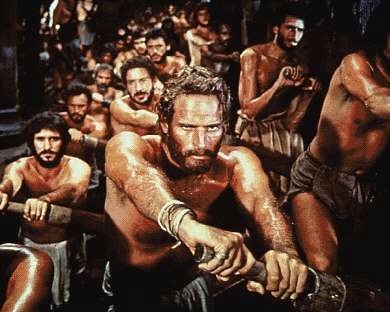
Some brave souls built a boat called the SS WORK, and they began to row their way to the Land of Righteousness. “Row. Row. Row!”
They rowed until sweat dripped from their faces. They rowed until their arms and shoulders ached. They rowed through waves and wind and storms. “Row. Row. Row!”
After days and weeks, they could still see the dock. “Work harder!” They rowed day and night. “Row. Row. Row!”
After months and months, they could still see their own land, and they started to fight.
“Why are you resting?”
“Don’t tell me what to do.”
“If you didn’t take so many breaks, we’d be there by now.”
After years and years, they had traveled no more than a few miles on a journey of a thousand miles. They were out of food, out of water, out of supplies. The storms continued to come, and the ship slowly began to fall apart. They kept rowing the desperate hope that they would somehow make it if they just kept rowing. Row. Row. Row!!”
Then, one young lady heard a sound coming from outside the ship. “I hear something.”
“Shut up. Row. Row. Row!”
“I hear something ... a horn ... people calling.”
“You’re just dreaming. Row. Row. Row!”
“I’m going up to see.”
“No! Everyone has to row! That’s our only chance. Row. Row. Row!!”
She went up to the deck and blinked in the sun. She could see a big, beautiful ship. The Captain called out, “Ahoy, there SS WORK. The King sent out a mayday call on your behalf. We’ve come to rescue you. The SS GRACE can hold your whole crew, but you’ll have to leave your boat.”
“Why?! Why do you want to rescue us?”
The Captain rushed to the railing. “The King loves you. We are here to take you home.”
She rushed back into the inside of the boat.
“Welcome back. Now, get to work. Row. Row. Row!”
A timid “no.”
“What?! Row. Row. Row!”
“No” - with a little more courage. “We don’t have to row anymore.”
“Of course we have to row. Row. Row. Row!”
“No, there’s a different way.”
“Rowing is the only way. Row. Row. Row!”
“There’s a ship here to save us. It’s called the SS GRACE.”
“Grace - what does that mean? Row. Row. Row!”
“Come and see for yourself.”
Then, one person stood, “I’ve heard of the SS GRACE, but I thought it was a fairy tale. I’ll go.”
“Somebody shut her up before she gets somebody else to stop rowing.”
The two seekers went up on deck, and they stared in amazement at the SS GRACE. They saw the kindness of the Captain. They saw the sails of the SS GRACE and noticed that there were no oars on that ship. There was plenty of work to do, helping the ship catch the Wind, but none of the back breaking rowing of the SS WORK. The crew of the SS GRACE moved with joy and purpose.
This was enough to convince these seekers. They returned inside their own ship, “It’s true!”
“Shut up. Row. Row. Row!”
“The King has sent the SS GRACE to save us.”
“Why would the King do that? This is the only way. Row. Row. Row!”
“The King made us, and He sent the Captain to bring us back. He came on a sailboat. It doesn’t even have oars.”
“No oars?!! How does it move? Row. Row. Row!”
“It’s powered by the Wind of the Spirit.”
“I can’t imagine life without rowing. Row. Row. Row! Let’s just work harder. Row. Row. Row!”
“This ship is going down. You’ll never make it by working harder.”
“I’m not sure I want to be saved. I don’t want to be pulled from the water like some drowning rat. Row. Row. Row!”
“Maybe the SS GRACE came for you, but it didn’t come for me. Row. Row. Row!!”
“The Captain said he’ll take everyone who will put their trust in the SS GRACE. Who is coming with us?”
About half the crew of the SS WORK waded through the water to go on deck. When they stepped into the sunlight, the rescue team of the SS GRACE gave them blankets and led them to the bridge between the two ships. The rest of the crew stood at the railing cheering wildly as each person was rescued.
As each person stepped onto the SS GRACE, the Captain hugged and kissed them. Then, he sent them inside the ship to rest, to eat, to heal.
(This story will be published in The Standard, a compliment to the Adult Sunday School curriculum for the Church of the Nazarene, in January of 2012. To read the original, full-length story, click here.)
Birthing a Royal - Luke 2:1-20
Read Luke 2:1-20.
The Roman Emperor called for a census, so Mary and Joseph took a trip. Trips are not always easy. When my family travels back to the USA, it usually takes us more than 24 hours to get from our front door to our family’s front door. It is stressful, tiring, and not very much fun.
Mary and Joseph had to take a much longer trip - at least in terms of time, and Mary was very, very pregnant. Doctors suggest that pregnant women should not travel in the last month or two of their pregnancy. There are two reasons why pregnant women should not travel. First, it’s not safe for the mother and baby. Second, it’s not safe for the dad! Have you ever been around a pregnant woman?
When my mom was 9 months pregnant with my sister, Dad was driving them to church. A few minutes away from the church, Mom started crying wildly. My dad looked over at her, confused: “What’s wrong?”
“My dress doesn’t fit. It hangs crooked.” Her belly was so big that the dress didn’t go down as far in the front as it did in the back.
Dad said, “You’re 9 months pregnant. Your dress is supposed to hang crooked.”
“Take me home!”
“But we’ll miss church.”
“Take me home!!”
“Can’t you just sit in the back?”
“TAKE ME HOME NOW!!!”
“OK.”
I’m telling you it’s not safe to be around a pregnant lady. ...
To continue reading this post, click here.
.
Sunday, December 26, 2010
Cold
The cold nips at my face
Like a dog at play.
See me. See me.
Feel me. Feel me.
Know that I am here
And that you are alive.
Wednesday, December 22, 2010
Pansie
This was my first experiment with chalks. We were having dinner at Elizabeth (Sarah's sister) and Michael's, and Elizabeth suggested that I try out her chalks. I found this Pansie in a magazine and knocked out this picture in about an hour (making a chalky mess all over the table). I loved how easy it is to rework the shading with chalks. I went out and bought my own set and started incorporating them into the final touches of a magnolia I'm making for Sarah using mostly colored pencils. (For some reason it has loaded sideways, but it the green line should be horizontal.)
Christmas 2010 - Darkness to Light
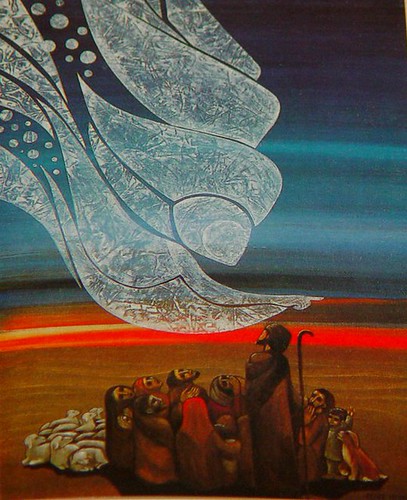
This sermon is part of a unique Christmas service, moving from darkness to light. The service will begin in darkness. While some Old Testament prophecies about the Messiah scroll across the screen, a single candle will enter as a sign of the Christ-light entering the world as a small, fragile child. Slowly, throughout the service, the room will get lighter and lighter. All the while, a series of artists will be adding a few strokes at a time to a single picture of Advent Candles and the Christ-Light. We will finish with each person holding a lit candle and singing "Joy to the World." The sermon is in three parts, with three different preachers.
Part 1: The Beginning (Josh Broward)
This is not the beginning. Christmas is not the beginning. We usually think of Christmas as the beginning of the Jesus Story. This is when Jesus was born. But this is not when Jesus began.
Jesus is the very Logic of the universe. Jesus is the Fiber of our global cloth and the Stitching at the seems of the universe. Jesus is the Glue between the atoms. Jesus is the foundation on which the mountains were set. Jesus is the metaphysical Space in which the stars were hung. Jesus is the Supreme Contractor of creation and at the same time the one and only Construction Supply Company. Jesus is the Math before math, the Science before science, the Art before art, the Word before words.
John 1:1-15
1 In the beginning the Word already existed. The Word was with God, and the Word was God. ...
To continue reading this post, click here.
.
Sunday, December 19, 2010
First Bird of Spring
And Joy returns
Like the first
Songbird of Spring.
She twitters among
The snow-covered
Twigs of my heart
And beckons the Sun
From her long Sojourn South
To linger longer
And banish the shadows
From my cold sky.
Joy flits about
Singing her song of Spring
Awakening my
Long-slumbering earth.
Her simple symphony
Coaxes forth
Buds and flowers,
Grasses and leaves,
And, yes, even me,
The long-buried me.
Like the first
Songbird of Spring.
She twitters among
The snow-covered
Twigs of my heart
And beckons the Sun
From her long Sojourn South
To linger longer
And banish the shadows
From my cold sky.
Joy flits about
Singing her song of Spring
Awakening my
Long-slumbering earth.
Her simple symphony
Coaxes forth
Buds and flowers,
Grasses and leaves,
And, yes, even me,
The long-buried me.
Friday, December 17, 2010
Flower Art from 2001
These are the first real art pieces I've done as an adult. I drew these four as a Valentines Day Present for Sarah just before we got married in 2001.
The one on the left here is the first one. It is IRIS, and I actually used an Herbal Essence Shampoo bottle as my model for this one. This one is probably my favorite so far.

The one the right is DAISY. I can't remember exactly what I used as a model for this one - something from a book, I think. I didn't have enough variety of colors, so I wasn't happy with the shading of the actual pedals, but the shape is cool.
This next one is probably the most realistic - at least that's what my artist sister-in-law Elizabeth says. It is SUNFLOWER. I guess I drew it in February of 2001.

The last one in this set is special. On Valentines Day, Sarah and I went to Barnes and Noble. Sarah looked through some gardening magazines and chose this flower. Then, we sat at a rickety table for 2 hours while I drew it. It is BELL FLOWER.
I didn't do any art again until this past year. I'll try to get some of that up next.
The one on the left here is the first one. It is IRIS, and I actually used an Herbal Essence Shampoo bottle as my model for this one. This one is probably my favorite so far.

The one the right is DAISY. I can't remember exactly what I used as a model for this one - something from a book, I think. I didn't have enough variety of colors, so I wasn't happy with the shading of the actual pedals, but the shape is cool.
This next one is probably the most realistic - at least that's what my artist sister-in-law Elizabeth says. It is SUNFLOWER. I guess I drew it in February of 2001.
The last one in this set is special. On Valentines Day, Sarah and I went to Barnes and Noble. Sarah looked through some gardening magazines and chose this flower. Then, we sat at a rickety table for 2 hours while I drew it. It is BELL FLOWER.
I didn't do any art again until this past year. I'll try to get some of that up next.
Monday, December 13, 2010
My Role
I am not
an independent contractor
hired by God to complete a building.
I am not
a mercenary soldier
paid to fight for a battle
that is not my own.
I am not
a freelance journalist
writing my own stories
and then selling them to God.
I am not
an outside consultant
talking to people
I do not know and do not love.
I am
a willing slave
bought and paid for
body and soul.
I am
a simple servant
taking my daily post
in the house of my Master.
I am
an errand boy
delivering messages, not my own,
in the King's great army.
I am
a child of the Father
joyfully obedient
exhuberantly loved
passionately home.
an independent contractor
hired by God to complete a building.
I am not
a mercenary soldier
paid to fight for a battle
that is not my own.
I am not
writing my own stories
and then selling them to God.
I am not
an outside consultant
talking to people
I do not know and do not love.
I am
a willing slave
bought and paid for
body and soul.
I am
a simple servant
taking my daily post
in the house of my Master.
I am
an errand boy
delivering messages, not my own,
in the King's great army.
I am
a child of the Father
joyfully obedient
exhuberantly loved
passionately home.
Walk in the Mist
The misting sky
sprinkles miniscule
peppering droplets
of heaven-chilled rain,
glossing every surface
with sheen and shine,
chasing away
the casual strollers,
paving silky streets
thick with solitude,
fogging the air
with whispering peace,
calling my soul
to venture forth
out of its cave
in my battered breast,
wooing my heart
to rest outside
safe in the
sea-spray of life.
sprinkles miniscule
peppering droplets
of heaven-chilled rain,
glossing every surface
with sheen and shine,
chasing away
the casual strollers,
paving silky streets
thick with solitude,
fogging the air
with whispering peace,
calling my soul
to venture forth
out of its cave
in my battered breast,
wooing my heart
to rest outside
safe in the
sea-spray of life.
Friday, December 10, 2010
The MORE Myth - Luke 1:36-59
Read Luke 1:39-56.
Today, I am going to get some help from some other pastors. I’m going to call in a pinch-hitter, if you will. Listen to what Ron Lewis and Andrew Edwards have to say about Christmas and God’s upside down Kingdom. (The video frames may be a little off, but the videos seem to be playing OK.)
So Mary’s Song is the great, global myth buster - our global, universal myth of more. ...
To continue reading this post, click here.
.
Monday, December 6, 2010
The Gospel in a Pluralist Society - Review
Lesslie Newbigin's The Gospel in a Pluralist Society is one of the best ministry books I've read in a long time. It starts out kind of heavy as he addresses epistemology and the deep philosophical issues of pluralism and multiculturalism. However, once he lays the foundation, it really picks up steam about half-way through.
He has a few basic premises:
1. A pluralist society is a natural given - in terms of multicultural diversity. We have lots of different cultures, religions, preferences, and perspectives. This is just how it is, and it's probably never going to change.
2. Pluralism as a philosophy or religious perspective is illogical. It is (and has been for 30-40 years) vogue to say that all religious belief is subjective. "It may be true for you, but that doesn't mean it's true for me." "All religions are equal or equally true." The problem works back to the logical problem with relativism. "All truth is relative - except of course the truth that all truth is relative." It is impossible for mutually contradictory religions to be equally true. Assuming the position of a pluralist is assuming a position of arrogance, one who stands above all conflicting truth claims from a superior moral or intellectual position. This is making the biggest truth claim of all. We always make truth claims. We always advocate a non-relative truth (even if we are advocating relativism).
3. All belief systems are founded upon some unprovable beliefs that are simply taken as assumed truths. We have to start somewhere, and that somewhere is a point of faith. Even the sciences take certain faith points as their beginning (for example, that the universe is logical and discoverable).
4. Truth exceeds cultures, but all expression of truth is cultural. We cannot think or communicate anything without culture. Any use of words or ideas is embedded in a particular culture. Therefore, there is no "truth" and no "gospel" that can be expressed in a culture-free fashion. The gospel is always embedded in a culture. There is no other way. However, the gospel itself is able to root in any culture. The gospel is not limited by our cultural wrappings. It can be wrapped in any culture, and it equally challenges every culture to reform in the light of the gospel.
5. Jesus provides the clue for history. The unifying point that can make sense of all of our plurality. This may seem deeply arrogant. However, it only seems that way. Actually, if we remember that all truth claims begin with a faith stance and move forward calling for total acceptance, then Christianity's quest to gather the world under Jesus is not so different. Also, claiming Jesus as the center point of history cuts the legs out of all truth-related power moves. The center of history is a crucified man. His power comes through voluntary suffering for the benefit of others.
6. Christianity converts individuals as well as cultures. We cannot neglect either of these and be faithful to the gospel. The gospel challenges every part of our society and every individual in society to align with the Lord and Messiah Jesus. The greatest difficulty for Christians is to become aware of how Jesus challenges those beliefs and attitudes which our culture blindly accepts as natural faith points (as just the way it is). Becoming a Christian is the life-long process of reorienting our worldview around Jesus instead of the pivot points of our local culture.
7. The Church is the best proof and explanation of the gospel. Because the gospel is so thorough, so permeating, so deeply challenging, so different from our normal way of life, there is only way people can really see and understand what the gospel truly is - and that is sustained contact with a community that both believes and lives the gospel thoroughly. We prove the truth of the gospel by living it in our daily lives. This is how the Church functions as "the priesthood of believers."
8. The gospel must always be expressed through word and deed. Jesus always taught and healed, preached and helped. The gospel is not a set of truths but a way of life and the power for life. We must always both preach and live the gospel.
I joyfully recommend this book. Without reservation, I give it a strong JJJJJ!
He has a few basic premises:
1. A pluralist society is a natural given - in terms of multicultural diversity. We have lots of different cultures, religions, preferences, and perspectives. This is just how it is, and it's probably never going to change.
2. Pluralism as a philosophy or religious perspective is illogical. It is (and has been for 30-40 years) vogue to say that all religious belief is subjective. "It may be true for you, but that doesn't mean it's true for me." "All religions are equal or equally true." The problem works back to the logical problem with relativism. "All truth is relative - except of course the truth that all truth is relative." It is impossible for mutually contradictory religions to be equally true. Assuming the position of a pluralist is assuming a position of arrogance, one who stands above all conflicting truth claims from a superior moral or intellectual position. This is making the biggest truth claim of all. We always make truth claims. We always advocate a non-relative truth (even if we are advocating relativism).
3. All belief systems are founded upon some unprovable beliefs that are simply taken as assumed truths. We have to start somewhere, and that somewhere is a point of faith. Even the sciences take certain faith points as their beginning (for example, that the universe is logical and discoverable).
4. Truth exceeds cultures, but all expression of truth is cultural. We cannot think or communicate anything without culture. Any use of words or ideas is embedded in a particular culture. Therefore, there is no "truth" and no "gospel" that can be expressed in a culture-free fashion. The gospel is always embedded in a culture. There is no other way. However, the gospel itself is able to root in any culture. The gospel is not limited by our cultural wrappings. It can be wrapped in any culture, and it equally challenges every culture to reform in the light of the gospel.
5. Jesus provides the clue for history. The unifying point that can make sense of all of our plurality. This may seem deeply arrogant. However, it only seems that way. Actually, if we remember that all truth claims begin with a faith stance and move forward calling for total acceptance, then Christianity's quest to gather the world under Jesus is not so different. Also, claiming Jesus as the center point of history cuts the legs out of all truth-related power moves. The center of history is a crucified man. His power comes through voluntary suffering for the benefit of others.
6. Christianity converts individuals as well as cultures. We cannot neglect either of these and be faithful to the gospel. The gospel challenges every part of our society and every individual in society to align with the Lord and Messiah Jesus. The greatest difficulty for Christians is to become aware of how Jesus challenges those beliefs and attitudes which our culture blindly accepts as natural faith points (as just the way it is). Becoming a Christian is the life-long process of reorienting our worldview around Jesus instead of the pivot points of our local culture.
7. The Church is the best proof and explanation of the gospel. Because the gospel is so thorough, so permeating, so deeply challenging, so different from our normal way of life, there is only way people can really see and understand what the gospel truly is - and that is sustained contact with a community that both believes and lives the gospel thoroughly. We prove the truth of the gospel by living it in our daily lives. This is how the Church functions as "the priesthood of believers."
8. The gospel must always be expressed through word and deed. Jesus always taught and healed, preached and helped. The gospel is not a set of truths but a way of life and the power for life. We must always both preach and live the gospel.
I joyfully recommend this book. Without reservation, I give it a strong JJJJJ!
For Me
For me, for me
Why is it so hard
for me, for me
I have preached
I have taught
I have counseled
Truth and Trust
Love and Grace
Peace and Patience
So why is it so hard
for me for me
Alas
Grace remains
Necessary for me
I cannot escape it
cannot avoid it
cannot live without it
Yet freely it is here
Necessary for me
Grace remains
Grace remains
Grace remains
Alas
And yet
Grace remains
For me
(11-22-2010)
Why is it so hard
for me, for me
I have preached
I have taught
I have counseled
Truth and Trust
Love and Grace
Peace and Patience
So why is it so hard
for me for me
Alas
Grace remains
Necessary for me
I cannot escape it
cannot avoid it
cannot live without it
Yet freely it is here
Necessary for me
Grace remains
Grace remains
Grace remains
Alas
And yet
Grace remains
For me
(11-22-2010)
The Prophet Cries
When the prophet cries
Who will change their lives?
Who will recognize
The truth of their lies?
When the prophet cries
Who will wipe his tears?
Who will calm his fears
As the months drag into years?
When the prophet cries
Who will listen?
Who will hear?
Who will care?
When the prophet cries
In the desert
In the city
Does anyone hear?
Does anyone care?
When the prophet cries
Because he cannot be silent
Because he cannot not
What place inside him dies?
And what place explodes to life
Like a cactus to bloom
At the first drop of rain?
When the prophet cries
Alone
At night
While others sleep
Where is the comfort?
Where is the Comforter?
When the prophet cries
And people leave
And his heart rips in two
And it feels so personal
Does it help to remember
the prophets in prison
or sawed in two
or chained and gagged
or beaten ad whipped
or crucified?
When the prophet cries
And the prophet cries
What is normal?
How can one return to that?
When the prophet cries
Why do the NO's
Sound so much louder
Than the YES's?
When the prophet cries
Who knows the prophet's pain?
When the prophet cries
Who else dies?
(This one is from a while back when I was going through a hard time and struggling with my role as a pastor/prophet. I guess enough of the pain has worn off now, so that I feel more comfortable sharing it.)
Who will change their lives?
Who will recognize
The truth of their lies?
When the prophet cries
Who will wipe his tears?
Who will calm his fears
As the months drag into years?
When the prophet cries
Who will listen?
Who will hear?
Who will care?
When the prophet cries
In the desert
In the city
Does anyone hear?
Does anyone care?
When the prophet cries
Because he cannot be silent
Because he cannot not
What place inside him dies?
And what place explodes to life
Like a cactus to bloom
At the first drop of rain?
When the prophet cries
Alone
At night
While others sleep
Where is the comfort?
Where is the Comforter?
When the prophet cries
And people leave
And his heart rips in two
And it feels so personal
Does it help to remember
the prophets in prison
or sawed in two
or chained and gagged
or beaten ad whipped
or crucified?
When the prophet cries
And the prophet cries
What is normal?
How can one return to that?
When the prophet cries
Why do the NO's
Sound so much louder
Than the YES's?
When the prophet cries
Who knows the prophet's pain?
When the prophet cries
Who else dies?
(This one is from a while back when I was going through a hard time and struggling with my role as a pastor/prophet. I guess enough of the pain has worn off now, so that I feel more comfortable sharing it.)
Friday, December 3, 2010
The God Gamblers - Luke 1:26-38
KNU International English Church
Josh Broward
December 5, 2010
William Carey was born in 1761 to a simple family in Paulerspury, England. His father was a weaver, and when Carey was 14, he became an apprentice of a shoemaker.
In his 20s, he transitioned from shoemaking to being the local schoolmaster, and soon after, he became the pastor of a local Baptist church. He lived in a simple cottage with a thatch (or grass) roof, but he taught himself Greek, Hebrew, Italian, Dutch, and French.
As he read about the adventures of Captain Cook (one of the first great English explorers), he felt a growing passion for world missions. He realized that there are whole lands, whole nations out there who have never heard about Jesus and God’s amazing grace. One day, he heard the missionary calling in the quiet of his workshop, and he answered with tears in the words of Isaiah, “Here am I; send me.” (See Isaiah 6:8.)
However, his fellow Christians and even his fellow pastors were not all that supportive. In one pastors meeting in 1786, Carey raised a challenging question. He asked if Jesus’ command to “go and make disciples of all nations” still applies to us today. (See Matthew 28:19.) One Dr. Ryland snarked back: "Young man, sit down: when God pleases to covert the heathen, He will do it without your aid or mine."
We don’t know if Carey sat down in that meeting, but Carey did not give up. In 1792, he wrote a book about the history of Christian missions, the current state of the world, and a basic plan for establishing a missionary sending organization. Later that year, when the Baptist Missionary Society was formed, Carey was so poor that he could only promise that he would give the profits from his book.
In the same year, Carey preached a sermon that sparked the modern missionary movement. Throughout the sermon, he repeated one line again and again: “Expect great things from God; attempt great things for God.”
In 1793, Carey and his family left for India. However, they didn’t get very far. The British government stopped their boat because they feared the missionary activities would endanger the trade interests of the British East India Company. A few months later, they found a Dutch ship willing to carry them to India.
Carey was a God Gambler. ...
To continue reading this post, click here.
.
Josh Broward
December 5, 2010
William Carey was born in 1761 to a simple family in Paulerspury, England. His father was a weaver, and when Carey was 14, he became an apprentice of a shoemaker.
In his 20s, he transitioned from shoemaking to being the local schoolmaster, and soon after, he became the pastor of a local Baptist church. He lived in a simple cottage with a thatch (or grass) roof, but he taught himself Greek, Hebrew, Italian, Dutch, and French.
As he read about the adventures of Captain Cook (one of the first great English explorers), he felt a growing passion for world missions. He realized that there are whole lands, whole nations out there who have never heard about Jesus and God’s amazing grace. One day, he heard the missionary calling in the quiet of his workshop, and he answered with tears in the words of Isaiah, “Here am I; send me.” (See Isaiah 6:8.)
However, his fellow Christians and even his fellow pastors were not all that supportive. In one pastors meeting in 1786, Carey raised a challenging question. He asked if Jesus’ command to “go and make disciples of all nations” still applies to us today. (See Matthew 28:19.) One Dr. Ryland snarked back: "Young man, sit down: when God pleases to covert the heathen, He will do it without your aid or mine."
We don’t know if Carey sat down in that meeting, but Carey did not give up. In 1792, he wrote a book about the history of Christian missions, the current state of the world, and a basic plan for establishing a missionary sending organization. Later that year, when the Baptist Missionary Society was formed, Carey was so poor that he could only promise that he would give the profits from his book.
In the same year, Carey preached a sermon that sparked the modern missionary movement. Throughout the sermon, he repeated one line again and again: “Expect great things from God; attempt great things for God.”
In 1793, Carey and his family left for India. However, they didn’t get very far. The British government stopped their boat because they feared the missionary activities would endanger the trade interests of the British East India Company. A few months later, they found a Dutch ship willing to carry them to India.
Carey was a God Gambler. ...
To continue reading this post, click here.
.
Friday, November 26, 2010
God's Beautiful, Broken Drama - Luke 1:5-26
Josh BrowardNovember 28, 2010
KNU International English Church
Do you ever feel confused about life and God?
Do you ever wish God would show himself more clearly?
Do you ever wonder if God cares about you and your life?
Do you ever feel like you’re just going through the motions? Wake up. Go to work. Go home. Sleep. Wake up. Go to work. And on and on and on.
Do you wonder if your life has any larger meaning? Is there something in life that is bigger than us? Is there a larger plot that gives meaning to our little dramas and comedies?
Do you ever feel like nothing is ever going to change?
Do you struggle to obey God or to maintain active faith in God?
Do you ever feel like God and the Bible are so far from our natural world that it’s difficult to see the connection, or at least difficult to live in a connected way?
Do you ever feel disappointed with the way your life has turned out?
Do you ever feel like you’re too human, too sinful, too broken for God to really use you in a significant way? Do you ever feel like real Christianity is for those other people who are holier or smarter or have easier jobs?
Do you ever feel that church is boring or irrelevant or maybe even corrupt?
Do you ever feel that it’s hard to connect with what’s going on here when we gather on Sundays? Maybe there are just too many happy people for you. Maybe you don’t believe everyone is actually this happy, and that puts you off. Maybe the style of music or sermon or whatever is not what you want.
Do you ever wonder if you’ll ever find a church that feels right for you?
Do you ever wonder if you even want to be part of a church at all?
If you ever feel like any of this, then today’s story is for you. ...
To continue reading this post, click here.
.
Tuesday, November 23, 2010
Engage Magazine
Engage Magazine is a webbased, missions magazine for the Church of the Nazarene. They recently posted two of my articles.
First is "Our Asian Jesus," a reflection on the Jesus Film showing we witnessed on our trip to South Asia this summer. (I have been asked not to use the name of the country, for security reasons.) I was surprised at several points during the showing, and this process removed some of my scepticism about how the Jesus Film is used.
The second, is "Culture Shock: Surviving, Thriving, and Helping." This one is an adaptation of a sermon I preached last year on culture shock here in Korea. If you're a newby or are friends with a newby, this is a must read.
First is "Our Asian Jesus," a reflection on the Jesus Film showing we witnessed on our trip to South Asia this summer. (I have been asked not to use the name of the country, for security reasons.) I was surprised at several points during the showing, and this process removed some of my scepticism about how the Jesus Film is used.
The second, is "Culture Shock: Surviving, Thriving, and Helping." This one is an adaptation of a sermon I preached last year on culture shock here in Korea. If you're a newby or are friends with a newby, this is a must read.
Sunday, November 21, 2010
For Whom the Bell Tolls - Movie - Review
I thought this was on AFI's top 100 movies of all time, but it's just an old classic. It's a good classic though.
The movie is based on Ernest Hemingway's novel by the same name. Hemingway was involved in the production of the movie, even choosing Ingrid Bergman and Gary Cooper for the leading roles. However, Hemingway was reportedly unhappy with the movie because it removed most of the political content associated with its context in the Spanish Civil War.
The lead character, "Roberto" is an American voluntarily assisting the guerrilla, mountain bandits fighting for "the Republic" of Spain -- against "the Nationalists" or fascists who began a military coup and civil war. Before the war, he was a Spanish professor in the USA, but now, he travels by the name "Ingles" (English man) as an explosives expert, blowing up bridges and trains on secret missions.
This movie shows many of the painful realities of war, especially for the underdogs. However, it also offers a complex set of characters. Although, the over-all plot is fairly straightforward and predictable, the individual character development (especially of the supporting roles) is beautifully complex and surprising. For example, a woman ends up being the unspoken, then spoken, chief of the mountain bandits, and she is exceedingly loving in her rough and tough, lonely way. Also, the former chief continually alternates between good and bad, so that at the end of the movie, the audience is still left with ambiguous feelings about him.
Incidentally, after seeing Ingrid's hairdo, Sarah said, "Now, I see why all the grandmas have short, curly hair." That is what the ladies of highest fashion were wearing when they were young, so that image is etched in their minds as beautiful. It makes me wonder if our generation will stick to the styles of today's stars even in 40-50 years.
Overall, I would say this movie is a good watch. However, be prepared to stay a while; it's almost 3 hours long! But, it lacks some elements of greatness (largely in it's predictable plot, and partly in some of the cheesiness of the romantic dialog). I give it 3J's: JJJ.
The movie is based on Ernest Hemingway's novel by the same name. Hemingway was involved in the production of the movie, even choosing Ingrid Bergman and Gary Cooper for the leading roles. However, Hemingway was reportedly unhappy with the movie because it removed most of the political content associated with its context in the Spanish Civil War.
The lead character, "Roberto" is an American voluntarily assisting the guerrilla, mountain bandits fighting for "the Republic" of Spain -- against "the Nationalists" or fascists who began a military coup and civil war. Before the war, he was a Spanish professor in the USA, but now, he travels by the name "Ingles" (English man) as an explosives expert, blowing up bridges and trains on secret missions.
This movie shows many of the painful realities of war, especially for the underdogs. However, it also offers a complex set of characters. Although, the over-all plot is fairly straightforward and predictable, the individual character development (especially of the supporting roles) is beautifully complex and surprising. For example, a woman ends up being the unspoken, then spoken, chief of the mountain bandits, and she is exceedingly loving in her rough and tough, lonely way. Also, the former chief continually alternates between good and bad, so that at the end of the movie, the audience is still left with ambiguous feelings about him.
Incidentally, after seeing Ingrid's hairdo, Sarah said, "Now, I see why all the grandmas have short, curly hair." That is what the ladies of highest fashion were wearing when they were young, so that image is etched in their minds as beautiful. It makes me wonder if our generation will stick to the styles of today's stars even in 40-50 years.
Overall, I would say this movie is a good watch. However, be prepared to stay a while; it's almost 3 hours long! But, it lacks some elements of greatness (largely in it's predictable plot, and partly in some of the cheesiness of the romantic dialog). I give it 3J's: JJJ.
Monday, November 15, 2010
Jekyll and Hide - Review
Sarah and I are on a classics kick, and we recently finished (reading aloud) Robert Louis Stevenson's The Strange Case of Dr. Jekyll and Mr. Hyde. It was well worth the time and energy.
Most of you know the basic story. There is one guy with two personas - one good and one evil. However, I had forgotten (or never learned) some of the details.
Dr. Jekyll invented a concoction that would actually change his physique as well as his psyche to express his inner evil side. Hyde was shorter, younger, and uglier than Jekyll. Hyde was supposed to be the pure physical and mental expression of the evil nature of Jekyll. While Jekyll was the combination or moderation of his own evil and good sides, Hyde was unfiltered evil.
Dr. Jekyll had already been leading somewhat of a double life before the invention of the concoction. In public, Jekyll was an upstanding citizen and philanthropist. In secret, he was a different person, giving over to his temptations. The concoction only allowed the bifurcation of his nature to become more extreme and more physical.
Over time, after repeated use of the concoction, Dr. Jekyll could no longer control when he turned into Dr. Hyde. In fact, eventually it was a great effort to maintain his status as Dr. Jekyll, and the potions were used only to return him to his original state. Though he wanted to be "good," he no longer found it within his power to be the person he wanted to be.
Obviously all of this has great implications theologically and morally. This story represents the downward slide into evil that is possible for all of us. If we try to live a double life - good outside and bad in secret - then we will often find that the bad is slowly taking over. Slowly, like Jekyll we become addicted, making the transition to evil actions and attitudes more frequently. Later, to our horror, we discover that we have lost control. Evil overtakes us in the worst possible times and ways. Without outside help (from God and loving community) we are lost in our own depravity.
I know that sounds really theological and preachy, but nonetheless, I think it's true.
So for a good story AND a good point, I give this book a strong 4J's: JJJJ. The only weakness was the somewhat anticlimactic ending.
Most of you know the basic story. There is one guy with two personas - one good and one evil. However, I had forgotten (or never learned) some of the details.
Dr. Jekyll invented a concoction that would actually change his physique as well as his psyche to express his inner evil side. Hyde was shorter, younger, and uglier than Jekyll. Hyde was supposed to be the pure physical and mental expression of the evil nature of Jekyll. While Jekyll was the combination or moderation of his own evil and good sides, Hyde was unfiltered evil.
Dr. Jekyll had already been leading somewhat of a double life before the invention of the concoction. In public, Jekyll was an upstanding citizen and philanthropist. In secret, he was a different person, giving over to his temptations. The concoction only allowed the bifurcation of his nature to become more extreme and more physical.
Over time, after repeated use of the concoction, Dr. Jekyll could no longer control when he turned into Dr. Hyde. In fact, eventually it was a great effort to maintain his status as Dr. Jekyll, and the potions were used only to return him to his original state. Though he wanted to be "good," he no longer found it within his power to be the person he wanted to be.
Obviously all of this has great implications theologically and morally. This story represents the downward slide into evil that is possible for all of us. If we try to live a double life - good outside and bad in secret - then we will often find that the bad is slowly taking over. Slowly, like Jekyll we become addicted, making the transition to evil actions and attitudes more frequently. Later, to our horror, we discover that we have lost control. Evil overtakes us in the worst possible times and ways. Without outside help (from God and loving community) we are lost in our own depravity.
I know that sounds really theological and preachy, but nonetheless, I think it's true.
So for a good story AND a good point, I give this book a strong 4J's: JJJJ. The only weakness was the somewhat anticlimactic ending.
Subscribe to:
Posts (Atom)