Friday, May 28, 2010

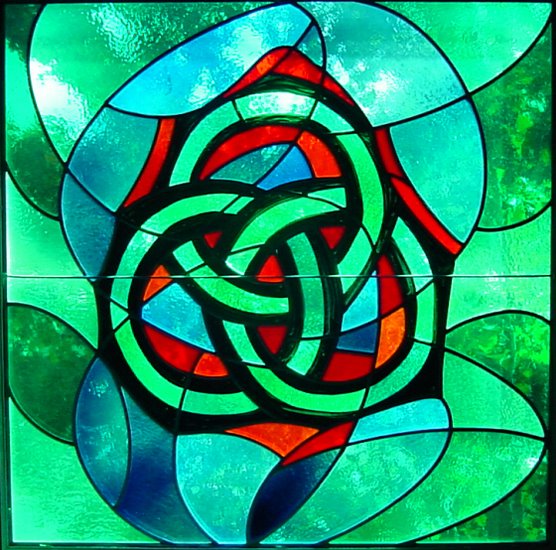
Attending to the Trinity

May 30, 2010
Josh Broward

Proverbs 8:1-11, 17, 22-23, 29-31
Romans 5:1-5
John 16:5-7, 12-15

Today is Trinity Sunday. Our belief in the Trinity was born out of the experiences and teachings of Jesus the Messiah. When he was raised from the dead, his disciples faced the unlikely truth that God had come to them as a human being. On Pentecost, the disciples experience the Spirit of God like never before, and our understanding of God as Trinity was unstoppably begun.
Followers of Jesus began to see hints of the Trinity in the Old Testament. For example, we read the description of “Wisdom” in Proverbs 8 today. Theologians debate whether this is a reference to Jesus or to the Holy Spirit, but there is clearly some “part” of God that “was born before the oceans were formed” and that participated in creation.
The combination of Christian experience, the life and teachings of Jesus, and the hints in the Old Testament led Christians to the doctrine of the Trinity. The word “Trinity” was first used by Theophilus of Antioch in about 170 A.D. About 150 years later in 325, the Council of Nicea declared the doctrine of the Trinity to be fundamental to Christianity. Now, we say with Christians around the world, “We believe in one God the Father Almighty ... We believe in one Lord, Jesus Christ ... We believe in the Holy Spirit, the Lord, the giver of life.” We believe in the Trinity.

But what does it mean? What is the point? What difference does the Trinity make for us? Well, it makes lots and lots of difference for us, and it means lots and lots of things. However, today, I want to narrow our focus to one point. GOD IS IN US. ...


To continue reading this post, click here.

.

Tuesday, May 18, 2010

Prayer (Community Basics - Week 5)

Once upon a time, there were a group of cooks who never ate. They met together to cook. They made the most incredible dishes - adding just the right spices and holding the pan over the heat just so. But each week after they finished cooking their masterpieces, they tossed them into the trash bins and returned home.

Once upon a time, there was a Manchester United fan club. They all had the Man-U shirts and hats. They new all of the players’ names and statistics. They had autographed balls and photos. Their fan club met every week, but they never talked about soccer. They never watched any Man-U games. They weren’t even interested in the celebrity gossip about the Man-U players. Externally, they were the biggest fans in the world, but internally, their club had very little to do with Manchester United.

Once upon a time, there was an artists’ guild that didn’t do art. Artists from around the city met together to talk about the art of art. They discussed brush strokes and the tools for chiseling marble. They had heated debates about the best kind of paper to use when painting with water colors. However, the curious thing was that none of these art experts ever did any art.
...


To continue reading, click here.


.

Wednesday, May 12, 2010

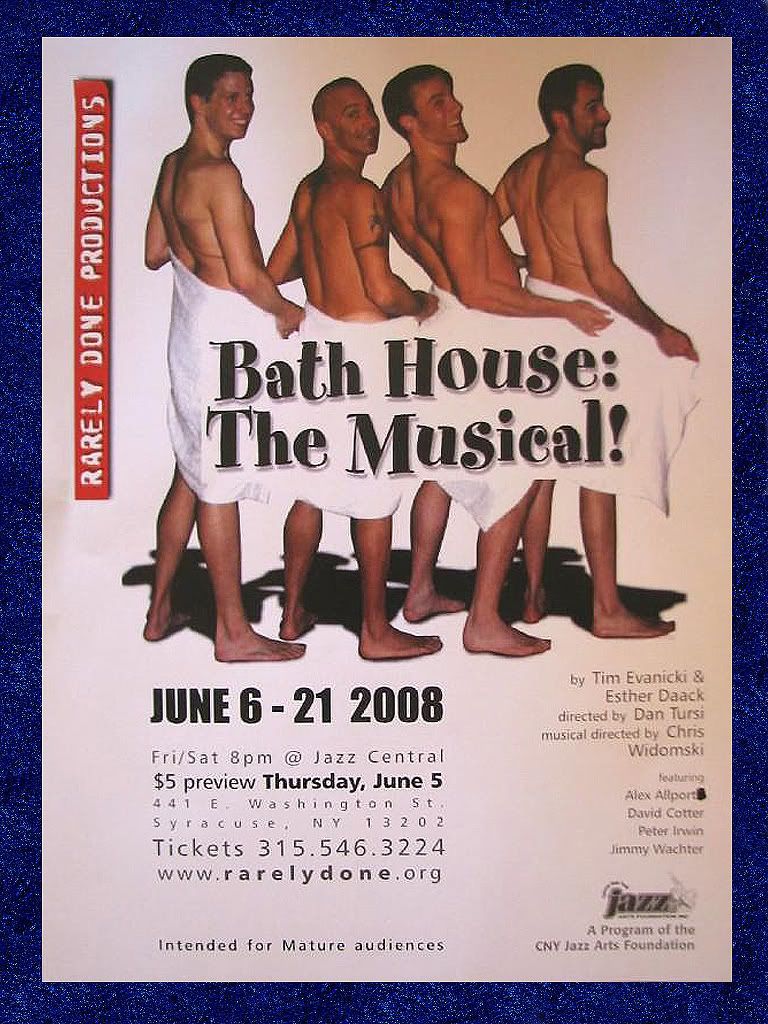
Bath House with the Pastors

Yesterday, I went to a meeting of Cheonan pastors. After lunch, we played soccer at a field across town. I asked if I'd be able to make it back for my 5pm appointment. "No problem. We finish at 4pm."
We had a nice game on a short field with side walls and a back net thing that kept the ball in play. No big fouls and two goals (one off the goalie's butt!). Nice day for a defender.

After the game, everyone decides to go to the public bath house for a "quick 15 minute shower." I enjoy the shower, hot tub, sauna, and postlude shower. Then one of the other pastors asks me to scrub his back - not kidding - and remember, we're completely naked. This is actually a sign of friendship and care. It's common to see father and son pairs giving each other a good scrub down. After a few minutes, he offered to scrub my back. It actually felt pretty good.

After about an hour, we finally left, and I was 30 minutes late for my appointment. But ... good times.

Recent Reviews

I have recently finished a few books and movies that deserve reviews.

1. FOLK TALES FROM KOREA. This is a fun collection of folk tales - mostly from oral sources. I had a few surprises as I read. Many of the tales have people turning into animals or animals turning into humans - mostly foxes and tigers - always evil figures. After many of the stories, I found myself scratching my head saying, "And the point was ...?" There is a great emphasis on respect for elders, finding out hidden truths, and success of underdogs. Some of the stories would make great movies (as I'm sure they already have). Some were just plain silly and fun, like the story of General Pumpkin who decimated whole armies with his flatulence (powered by massive consumption of pumpkins)!

2. NORTH KOREA. This book, written by Korean scholar Bruce Cummings, left me very sad at how badly the USA has messed up our relationship with North Korea. After reading this book, I feel like I have a much deeper understanding of our neighbors to the North. In many ways, their actions and attitudes are very understandable given our mostly hostile stance toward them. I was deeply surprised that atomic weapons were a regular part of our war strategy in Korea clear through the 90's (and maybe still - though there are no nuclear weapons on US bases in South Korea now). I highly recommend this book for anyone who wants to understand Korea (North or South).

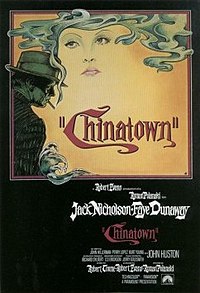
3. CHINATOWN (#21 on AFI's top 100 movies of all time). This is a very good tragedy, staring Jack Nicholson and Faye Dunaway. It's kind of a story about how messed up life can be sometimes. Sometimes, despite our best intentions and noble actions, everything goes wrong and the bad people get just what they want. That sucks, but it's true. This story is beautifully crafted and poignantly depicted. However, it still lacks the moral power that I really want in a movie, so it loses a star on that count. I'll give it 4Js.

(Only 4 movies left out of the top 25. Making progress.)

Thursday, April 29, 2010

Thunder Farting Leadership (And Other Ways to Change the World): Community Basics


KNU International English Church
May 2, 2010
Josh Broward


Today, we are continuing our series on Community Basics. We come to a basic issue: Leadership. (You’ll have to wait till the end to understand this title. That should keep you interested!)
Leadership is a must in any organization, but we often get confused about what leadership really is. Leadership is influence. Leadership is affecting change. Leaders are not always at the front or at the “top.” Influence and change can come from anywhere in the organization, family, or system. Leadership is not constant. It shifts and moves. Sometimes one person exercises more leadership. Sometimes another person steps forward with a special gift or moment of leadership. Leadership happens in different measures all at the same time. Everyone shares some influence in every environment.
In some ways, we’re all leaders. In fact, there are some basic forms of leadership to which we are all called.

1. EXAMPLE: This is the most fundamental truth of leadership. We are all leaders through our example. ...


To read the rest of this story, click here.


.

Monday, April 19, 2010

Reconciliation: Community Basics - Week 2

KNU International English Church
April 18, 2010
Josh Broward

Today we continue our series on the basics of Christian community, and I need to start with a disclaimer. In any church of our size, there are usually some conflicts brewing or hiding below the happy smiles and handshakes. Over the past few months, I have talked with some of you about various kinds of conflicts. Today, you might feel like I’m preaching at you in particular. You might feel like I’m aiming my pastoral guns right at your heart. You need to know that I chose this sermon topic in November of last year, and I already had in mind in November most of what I’m going to say today. This topic isn’t because of you. We’re talking about reconciliation because this is a fundamental issue for Christian community. We always need reconciliation.
Jesus died for reconciliation.
The most important Jewish prayer is about the unity of God: “Hear, O Israel, the Lord our God, the Lord is one” (Deuteronomy 6:4). There is one God, one Creator. There is one creation made by one God to live in one whole, loving relationship.
The great tragedy of our world is the breaking of this oneness. We have become fragmented. We are disconnected from God. We are disconnected from others. We are disconnected from our environment. We are disconnected from our very selves.
Jesus died for reconciliation. God died to bring us back to God’s essential oneness - whole and loving relationship.
Reconciliation is the heart of the Gospel. What is broken can be healed. What is separated can be rejoined. Enemies can become friends. Rebels can become sons and daughters again.
Jesus died for reconciliation.


To continue reading this post, click here.

.

Tuesday, April 6, 2010

Easter 2010 - Stories of Resurrection


Josh Broward
April 4, 2010

1 Corinthians 15:12-20

SoYoung’s Story
Gu SoYoung was my friend and neighbor. She was Emma’s piano teacher. She was a member of our church’s Advisory Council. She went with us to Tanzania in 2008. She was beautiful, and she loved beauty. She was an outstanding piano player, and she taught herself how to play the violin at the age of 30. She loved new foods and new experiences. She was full of joy and life. Her smile was always contagious.
In the last months of 2008, SoYoung began having stomach aches and digestive problems. In January of 2009, she was diagnosed with terminal liver cancer. There was nothing the doctors could do. Her health declined quickly over the next few months.
SoYoung spent the last month or so in a hospice out in the countryside on the east side of Cheonan. As we drove out to visit her, we could see the trees and fields and flowers slowly emerging with the new life of spring, and yet, each day, we also watched the life fade out of our dear friend.
SoYoung died on the morning of April 4 at about 6 a.m. Sarah and I quickly went out to the hospice to join the family. We passed the word to the church, and we held a quiet memorial service at the funeral home on Sunday night.
That was a difficult and extremely painful season for her family and for many in our church. Many of us still miss SoYoung deeply.
This winter has been one of the longest winters I can remember. Many people have said that it feels like winter will never end. The gray skies, cold weather, and snow have seemed to last forever. Just when we think they are gone, they come back again.
Our world is in a long winter of death. Death was never part of God’s plan, but it is here, and we can’t stop it for now. Sometimes, the gray skies and pains of death seem like they will last forever. Just when we think they are gone, they come back again. Someone else dies. We lose another loved one. There is another senseless killing or disease. This long winter of death seems like it will go on forever. It seems like we will never escape all of this dying and waiting for more dying.
Last week, it was still cold. I was wearing my winter coat, and I had my hands shoved into my pockets because they felt like ice. I was walking past the Owens Building, and I saw something that encouraged my heart.
I saw the first buds of spring. ...


To continue reading this post, click here.


.

Love (Christian Basics: Week 6)


March 28, 2010
Josh Broward


Throughout the Season of Lent, we have been thinking and talking about the Christian basics. What does it really mean to be a Christian? Well, here in our last week, we come to the most basic part of being a Christian: love. Love is the goal of Christianity. Our mission is to be a loving community that changes our world, and the first part of our vision is to be renewed by God’s love so that we love God, ourselves, and others. Love is fundamental to who we are as Christians and as members of this church.
I love how John Wesley explains this: “If you look for anything more than love, you are looking wide of the mark, you are getting out of the royal way, and when you are asking others, ‘Have you received this or that blessing?’ if you mean anything but more love, you mean wrong; you are leading them out of the way, and putting them upon a false scent. Settle it then in your heart, that ... you are to aim at nothing more than that love described in [1 Corinthians 13]. You can go no higher than this, till you are called to” heaven.1
Well, then, let’s read 1 Corinthians 13:

1 If I could speak all the languages of earth and of angels, but didn’t love others, I would only be a noisy gong or a clanging cymbal. 2 If I had the gift of prophecy, and if I understood all of God’s secret plans and possessed all knowledge, and if I had such faith that I could move mountains, but didn’t love others, I would be nothing. 3 If I gave everything I have to the poor and even sacrificed my body, I could boast about it; but if I didn’t love others, I would have gained nothing.
4 Love is patient and kind. Love is not jealous or boastful or proud 5 or rude. It does not demand its own way. It is not irritable, and it keeps no record of being wronged. 6 It does not rejoice about injustice but rejoices whenever the truth wins out. 7 Love never gives up, never loses faith, is always hopeful, and endures through every circumstance.
8 Prophecy and speaking in unknown languages and special knowledge will become useless. But love will last forever! 9 Now our knowledge is partial and incomplete, and even the gift of prophecy reveals only part of the whole picture! 10 But when full understanding comes, these partial things will become useless.
11 When I was a child, I spoke and thought and reasoned as a child. But when I grew up, I put away childish things. 12 Now we see things imperfectly as in a cloudy mirror, but then we will see everything with perfect clarity. All that I know now is partial and incomplete, but then I will know everything completely, just as God now knows me completely. 13 Three things will last forever—faith, hope, and love—and the greatest of these is love.
Of all the Christian basics, love is the greatest. Love is more important than faith or the Bible or hope or anything else. Love is supreme. Without a life filled with love, everything else is beside the point. Everything God wants for us is summarized in one word: love.
Then, why do we find it so difficult to love? Why is it so hard to be patient and kind? Why is it that, no matter how much we pray, we still find ourselves being jealous or boastful or proud? Why do we demand our own way? Why are we so irritable with each other? Why do we keep mental records of the wrongs others have done to us - especially our bosses? Why do we give up on relationships so easily? Why do we find ourselves turning again and again toward selfishness and away from love?

Because we are buried alive. ...


To continue reading this post, click here.


.
Tuesday, March 23, 2010

Pleasure and Pang

Thank you God
for this body
of joy and pain,
pleasure and pang
nameless and named.

March 13, 2010
(actually written in the bathtub!)

Beloved God

O beloved God, let me every moment live
And all your treasures love and share and give.
O beloved God, let love soak me through and through
And flow to others, and so return to you.


March 13, 2010
(actually written in the bathtub!)

Little Treasures


Walking in the rain
Near TaeJo San
Cold mist on my face
Little treasures
I discover
A few steps on,
On and up the path.
A strip of night time shops:
Chairs tipped over
Doors locked
Shutters drawn
Tables barren
Late in the morning.
Follow the sound
Of a waterfall:
Little jade lake
Held by a concrete damn
Still beautiful
In the rain
Wooded hills rising up
On three sides
Fading away
On one.
A Buhddist shop:
Charms and bracelets
Art and candles
Lanterns and incense
Beautiful in color or shape
Some jade like the lake
Some brown like the trees.
Stone steps:
Leading up
Up and away
Up and away from my world
Of computers and books
Phones and people
102 steps
Through a sanctuary
Of pine.
A temple complex:
Dawning realization
Of my location,
Approaching
The Third Largest
Sitting Buhdda
In Asia
(Who counts these things?)
Bronze - I remember
But the color is pale jade
Like the lake.
Chanters chant
Pray-ers kneel
Bells and gongs sound
Candles flicker,
The monks have AC now,
I see the boxes
Behind the house.
Big Buddha watches.
A drink from the
Cold mountain spring
Cold on my hands and face.
A prayer room:
Hot pink lotus lanterns
Dangle requests
Written with prayer pens.
Will they care
If I use one
To write these words?
It seems appropriate
Somehow.


March 15, 2010

Thursday, March 11, 2010

Churches Halve # of Kids Waiting for Adoption in Colorado

Elena, recently sent me a link about how Christians in Colorado are living out their faith by adopting kids waiting for adoption. Most of these kids have experienced significant family trauma and are now in the Colorado state foster care system. However, Focus on the Family and churches around Colorado are calling on Christians to obey the biblical commands to care for orphans.
This is beautiful! How can we do more of this?!
Read the full article here.


.

Wednesday, March 3, 2010

My Temptation

One more game,
One more hand,
One more move,
How the tempter draws me on.
A little less work,
A little less sleep,
A little less life.
The price to pay
For one more,
one more,
one more.


3/4/2010

Unhurried Time

Ahh, for unhurried time,
to read
to write
to pray
to think
to imagine
to sit
to wait
to move as the Spirit moves me.
Ahh, for unhurried time,
for the healing of my soul
for the calming of my mind
for the stretching of my sight
for the probing of my heart
for insight on my life
for the movement of my pen
for the touch of coffee on my lips
for the emergence of those ideas
flitting in the rear shadows of my mind
waiting for a clear space to land.
Ahhh, for this unhurried time.


1/18/2010

The Bible (Christian Basics: Week 3)

March 7, 2010

2 Timothy 3:14-17
Matthew 5:17-39

The Bible is the most famous, most diverse, most difficult, most profound, most challenging, most acclaimed, most criticized, and most powerful book ever written. More people in the world read the Bible than any other book in the history of the universe.
Yet even so, we read the Bible with a mixture of fear and hope, faith and doubt, understanding and confusion. Some of this great mixture of biblical experience comes from the complexity of the Bible itself, and some of it comes from our misunderstandings of what the Bible is and how it still works today. In the next 15 minutes or so, I want to talk about 5 basic characteristics of the Bible that may help us understand it and reclaim its power in our lives today in the 21st century world.

Sometimes, when we look at the Bible we can feel completely overwhelmed by its complexity and its cultural distance from our world. For many people, even for many Christians, it is hard to see any significant connection between those words written in far away worlds and our life in our world today.
However, the Bible is absolutely NECESSARY for us as Christians. In fact, it is non-negotiable for all who want to follow Jesus. The Bible is one of God’s key tools in accomplishing God’s mission in our world. God intends for the Bible to shape us and to guide us into his mission. N. T. Wright summarizes it like this: “To be a Christian while not letting the Bible do all the things it is capable of, through you and in you, is like trying to play the piano with your fingers tied together.”1

Second, the Bible is ALIVE. ...


To continue reading this sermon, click here.


.

Tuesday, March 2, 2010

Here I Am (Isaiah 6:1-8)

Here is our first Wednesday night sermon.

Isaiah 6:1-8

Josh Broward
March 3, 2010

There are some short moments in time which forever change our lives. The day I became a Christian was one of those days. I had rejected God for several years. Then one day, I was overwhelmed by the presence of God. I had two powerful sensations: 1) God was right, and 2) I was wrong. I confessed my sin, and I asked God to change me and to lead me in his ways for the rest of my life. I have never been the same.
This is one of those moments for Isaiah.
Isaiah has a vision of God in his Temple, and he is overwhelmed by God’s glory and holiness. Isaiah knows that God is right and that he is wrong. God forgives him, and God burns away his sin.
Then, God asks Isaiah one of the most powerful questions in the Bible: “Whom should I send as a messenger to this people? Who will go for us?” (Isaiah 6:8).
Most of us stop with confession and forgiveness. We know that God is right. We know that we are wrong. We know we need to confess. We know we need God to forgive us. We know we need God to change us. But then we stop.
But God doesn’t stop. God keeps moving forward. There is a progression for God. Confession --> forgiveness --> transformation --> sending.
“Whom should I send? Who will go for us?” God is a sending God. ...

To continue reading this post, click here.


.

Friday, February 26, 2010

Following Jesus (Christian Basics: Week 2)

[Preface: Sometimes, we just need to let the Bible speak for itself. This is one of those times. "Following" is a huge deal in the Bible. Just think about these passages, which will be read by different readers from our church.]

Matthew 14:22-33 (SeongHwan) “Immediately after this, Jesus insisted that his disciples get back into the boat and cross to the other side of the lake, while he sent the people home. After sending them home, he went up into the hills by himself to pray. Night fell while he was there alone.
Meanwhile, the disciples were in trouble far away from land, for a strong wind had risen, and they were fighting heavy waves. About three o’clock in the morning Jesus came toward them, walking on the water. When the disciples saw him walking on the water, they were terrified. In their fear, they cried out, ‘It’s a ghost!’
“But Jesus spoke to them at once. ‘Don’t be afraid,’ he said. ‘Take courage. I am here!’
“Then Peter called to him, ‘Lord, if it’s really you, tell me to come to you, walking on the water.’
“‘Yes, come,’ Jesus said.
“So Peter went over the side of the boat and walked on the water toward Jesus. But when he saw the strong wind and the waves, he was terrified and began to sink. ‘Save me, Lord!’ he shouted.
“Jesus immediately reached out and grabbed him. ‘You have so little faith,’ Jesus said. ‘Why did you doubt?’
“When they climbed back into the boat, the wind stopped. Then the disciples worshiped him. ‘You really are the Son of God!’ they exclaimed.”


Numbers 14:24 (Chaplin) “But because my servant Caleb has a different spirit and follows me wholeheartedly, I will bring him into the land he went to, and his descendants will inherit it.”

Deuteronomy 13:1-4 (SooHee) “If a prophet, or one who foretells by dreams, appears among you and announces to you a miraculous sign or wonder, and if the sign or wonder of which he has spoken takes place, and he says, "Let us follow other gods" (gods you have not known) "and let us worship them," you must not listen to the words of that prophet or dreamer. The LORD your God is testing you to find out whether you love him with all your heart and with all your soul. It is the LORD your God you must follow, and him you must revere. Keep his commands and obey him; serve him and hold fast to him.”

To continue reading this sermon, click here.

.

Thursday, February 11, 2010

The Gospel and the Church (Gospel Series: Week 4)

February 14, 2010
Isaiah 2:1-5; 1 Peter 2:9-12; Matthew 5:1-16

This week, we are finishing our series on the Gospel. Maybe this is a good time for a little review. First, we need to read the Bible forwards, not backwards. And when we do read the Bible forward, understanding each new step in the context of the building story, an amazing picture emerges. The Gospel is that God is on a mission to heal the whole world, and God is starting by healing us - even though we don’t deserve it. Amazingly, God wants us to help! We can become farmers of the Gospel. Through service to the poor, loving friendships, planting seeds of truth, waiting, and watering, we can help the Gospel grow and take root in our world.
This week we are exploring what it means for us as the Church to live the Gospel. To help us understand this, I need to describe two other communities first.

We usually spend time with Sarah’s family in Iowa every summer. A few years ago, we visited the Iowa Living History Farm. Through volunteers and paid staff, they re-enact what life was like on farms in Iowa throughout history. It’s pretty cool.
We were overwhelmed with sensory experiences. We could see with our eyes what a village street was like. We could hear the sound of our own feet on the village board walk. We could go in and out of different stores: the drug store, the doctor’s office, the post office, the general mercantile, the lawyer’s office, and town hall.
We smelled the cookies baking in the oven. (But they wouldn’t let us have any cookies because then their 18th century kitchen would have to meet 21st century health code standards. That was torture!)
We could smell hay in the barn and touch the hot sweaty side of a horse after he plowed a field. We could stand in the hay and feel it poking at our ankles.
We could taste old fashioned root beer and rock candy.
We could go into the black smith’s work shop and hear the pounding of his hammer on the metal. We could feel the heat of his fires on our skin. Just standing in his workshop made us sweat!
We were also able to get even more personal through explorative action. We discovered that back in the day, one of Iowa’s biggest crops was broom corn. We actually got to use some of their 200 year old machines to practice making brooms. (It was fun, but I think I’ll stick to preaching.)


To continue reading this sermon, click here.


.

Wednesday, January 27, 2010

Gospel and Salvation (Week 2 of Gospel Series)

Learning Experience:
People gather in groups of 3-4 to put together the pieces of the puzzle. However, the pieces they are given don’t match the picture on the envelope.
Reflection:
What happened?
When you realized that the pieces didn’t fit the picture, what did you do?
Were you more committed to the pieces or to the picture on the envelope?

The picture on your envelope is called “The Bridge Illustration.” It works like this. We are the person on the left. God wants us to have life and joy and peace. But we sinned and made a huge gap between us and God. Because we sinned, and because “the wages of sin are death,” death is coming our way. We live a life that isn’t really life, and when we die, we’ll go to hell for eternal death.

Most of us try to bridge the gap. We try to do good things, to help other people. Maybe we go to church or give money to the poor. We try to get closer to God, but we can never be good enough. We always fall short.

But here’s the good news. Jesus died on the cross for our sins. He died instead of us. He made a bridge for us to be close to God. Now we can put our faith in Jesus to forgive our sins so that we can live with God again. Now we can have life with God in heaven.

I grew up with the Bridge Illustration. I have probably drawn it 100 times to explain the gospel to others. The beauty is that it is simple. It is easy to draw and easy to understand.

But over the past few years, I have begun to feel like this picture is too simple. At first, I started to make changes to the picture. I added an arrow for faith – showing that we put our trust in Jesus and cross the bridge. I drew a community of people on the side with God to show that we’re part of the church.

But finally, I decided that I couldn’t make enough changes to this picture to really describe the Gospel that we find in the Bible. This picture of salvation was too small, too individualistic, too much like a business transaction, to stagnant. After the person puts their faith in Jesus, they are done. That’s the end of the picture. They cross over. They become a Christian. The end.

That’s not what I read in the Bible. Becoming a Christian is the beginning of a journey, not the end. When we become a Christian, we still have a lot of work and learning left to do. We need a new picture. We need a new way of thinking about the Gospel and salvation. ...


To continue reading this post, click here.


.

Thursday, January 21, 2010

The Gospel and The Bible (Gospel Series: Week 1)

When I was growing up in the 1980’s, there was a huge controversy about backmasked messages in rock music. Conservative Christian groups began accusing various famous rock bands of having secret backward messages in their music that would entice people to follow Satan, use drugs, or have illicit sex.

Ÿ Led Zeplin’s song “Stairway to Heaven” is alleged to have the backward message: “Here’s to my sweet Satan.”

Ÿ Queen was accused of including “It’s fun to smoke marijuana,” backmasked in their famous song, “Another One Bites the Dust.”

Most bands vigorously denied these claims. However, as the fury and controversy over backmasking raged in the 1970s and 1980s, some bands joined the backmasking trend with some funny messages.

Ÿ In 1979, Pink Floyd backmasked the message: “Congratulations! You’ve just found the secret message.”

Ÿ Weird Al Yankovic hid the message: “Wow, you must have an awful lot of free time on your hands.”

There are hundreds of real or alleged backmasked messages. Some of these backward messages are funny. Some are strange, and some are scary. But the simple truth is: when you play something backwards, sometimes you get an entirely different message.

Most of us here today really start reading the Bible at the end. We start with the book of Revelation and its dramatic pictures of heaven and hell. Heaven will be streets of gold and pearly gates and everyone will be filled with joy worshiping God, no tears, no pain, no sadness. Hell will be fiery furnaces and pits of sulfur and ash and eternal torment day and night. Of course, we all want to go to heaven and avoid hell. But how?


Well, we keep reading backwards. . . .


To continue reading this post, click here.


.