The Board of General Superintendents, the highest leaders in the Church of the Nazarene have issued a beautiful and grace-filled statement on the Emergent Church. If you have received some of those scathing emails about the "ruin" of our church, or if you have heard some of the conversations about "emergent liberals" taking over, I encourage you to read this statement.
Monday, August 23, 2010
Nazarene GS's Statement on Emergent Church
The Board of General Superintendents, the highest leaders in the Church of the Nazarene have issued a beautiful and grace-filled statement on the Emergent Church. If you have received some of those scathing emails about the "ruin" of our church, or if you have heard some of the conversations about "emergent liberals" taking over, I encourage you to read this statement.
Limited Reflections on My Trip
Because of the nature of the internet and the dominant religion of the country, I am somewhat limited in what I can say here. I just spent 10 day
I have visited more than 20 countries, almost all in association with the Church of the Nazarene, and I have never been more impressed with the Church of the Nazarene. What we are doing there is what we should be doing everywhere.
Almost every church building is also a ministry center. Usually, they are Child Development Centers (the gathering place for children in sponsorship programs), and maybe several other things as well. The idea of using a church building only for worship services and "Christian education" is obsolete, and we in the developed world can learn a huge lesson from our utilitarian brothers and sisters in the developing world.
Furthermore, in this nation, the Church of the Nazarene is consistently serving the poorest of the poor. And there, the poorest make less than $1 a day. If you make more than $2 a day, you are squarely in the upper class! The Church of the Nazarene operates with integrity, compassion, and intelligence, and therefore enjoys support from a wide range of funding partners.
Through child sponsorship, community development programs, digging wells, building latrines, microfinance, small business support groups, environmental planning, schools, and a wide range of other creative and effective methods, the Church of the Nazarene is making a significant difference among people who are struggling simply to survive.
Our church has established a long term partnership with a Nazarene project to build a village for widows and orphans in a rural community. During our trip, we were able to dig some foundations, lay some bricks, play with kids, and interview some of the widows.
The widows' stories were heart breaking and eye opening. Many of the widows did not know their own age or how long they had been married, but they all knew the exact date and year that their husbands had died. Their lives were forever changed in that moment. Some died of "normal" diseases like heart attacks, strokes, or TB. Others died of unbelievably simple illnesses like diarrhea. When a person is already malnourished, and no medicine is available, the simplest stomach illness can be deadly. Our team was flabergasted that people still die today because of lack of Pepto Bismal.
We dreamed and prayed and talked constantly about the possibilities for the future of our partnership. I hope to write more about all of this, but for now, I want to post this brief update while the ideas and memories are still fresh.
Monday, August 9, 2010
More Reasons I Love Korea
I stopped in to see the doctor to get a refill for my allergy prescriptions - without an appointment, mind you. It took 5 minutes, and my copay was 2,500 won ($2)! In the USA, it would have taken 10 times as long and cost 10 times as much.
Then, I went to the pharmacy to get my meds. When I walked in the door, all three ladies' faces lit up like I had brought them flowers.
The copay was unusually large because Allegra is not fully covered by insurance, so I had to pay a whopping 19,000 won ($15). They almost feel bad taking that much money from me, but I'm excited because it would have been 3 times that in the USA - even with insurance.
Next, I asked for some instant hand sanitizer to put in my bag for the trip. They only had large ones the size of a coke can, but I wanted something tiny. They talked among themselves for a bit. Then, one of them came out with a small clear bottle, and they pumped it full squirt by squirt for their own large bottle. No charge!
I love Korea.
Sunday, August 8, 2010
Why Are There Ads Here?
I have debated the pros and cons of adding advertisement to my blog for more than a year. However, I hope to be a professional writer - earning a significant part of my income through writing. Adding ads to my blog (and supporting blogs) is a simple way to take a small step in that direction.
I hope to prevent all offensive ads through the program filters. However, that may not be possible. If you see an offensive ad, please comment here. I will do my best to prevent its appearance again.
If you take offense to having advertising here at all, I'd also like to hear your feedback in the comments section.
Thanks for your understanding.
Friday, August 6, 2010
Inspiration as an Octopus
Today, I read an article about Korean author Park Beom-Sin. His description of the forces of inspiration within him are captivating:
There lives a beast in my chest that never grows old. I call the beast 'nakji' (small octopus) because it is mysterious, reckless and provocative. Whenever I stop writing, nakji tears open my sides during the night to come out ... I keep writing novels so that I will not die from my flesh being torn by nakji, who is my literary ego with many legs, who never grows old and never dies. I write because I want to live, this world should be vivid, and most of all I still have a lot of love within me."
(Lee Se-mi, "Longing for the Unattainable: Park Beom-Sin," Korea, August 2010, 19)
This reminds me of a TED talk by Elizabeth Gilbert, the author of Eat, Pray, Love.
Could it be that Park's "nakji" and Gilbert's "genius" are actually the Holy Spirit moving us toward creativity and active expression in our world?
There lives a beast in my chest that never grows old. I call the beast 'nakji' (small octopus) because it is mysterious, reckless and provocative. Whenever I stop writing, nakji tears open my sides during the night to come out ... I keep writing novels so that I will not die from my flesh being torn by nakji, who is my literary ego with many legs, who never grows old and never dies. I write because I want to live, this world should be vivid, and most of all I still have a lot of love within me."
(Lee Se-mi, "Longing for the Unattainable: Park Beom-Sin," Korea, August 2010, 19)
This reminds me of a TED talk by Elizabeth Gilbert, the author of Eat, Pray, Love.
Could it be that Park's "nakji" and Gilbert's "genius" are actually the Holy Spirit moving us toward creativity and active expression in our world?
Thursday, August 5, 2010
Jesus, a Prostitute, and a Grilled Cheese Sandwich
I'm not sure when we'll use this clip, but it's great!
Tuesday, August 3, 2010
Friday, July 30, 2010
Money Trouble (Luke 12:13-21)
We have money trouble. We Christians have this love/hate relationship with money. Our attitudes are mixed like this Pink Floyd song.
Money, get away ... but give me a good job with more pay.
Money, get back ... but keep your hands off my stack.
Share it fairly ... but don’t take a slice of my pie.
Money, so they say, is the root of all evil today ... but they’re giving none away.
Some preachers talk like God wants everyone to be rich, and if you’re not rich, then there’s something wrong with you ... but others talk like God wants everyone to be poor, and if you’re not giving all your money away, then there’s something wrong with you.
We know that life isn’t about money ... but we spend most of our lives trying to get money and spend money.
We know that too much money can be a problem ... but we all want just a little more.
We have money trouble. We will be talking about money for the next 2 weeks. That’s never fun - for you or for me. This might be a good time to explain how we get our sermon topics each week. Sometimes, we go through sermon series on a particular topic, like family or community. You can blame me for those topics. Other times, we work through a weekly plan called the lectionary. The lectionary is a plan to help churches talk about all the important parts of the Bible within the scope of 3 years. You see, preachers - and church members too - have a tendency to read only the parts of the Bible that we like. We read our favorite stories or verses again and again, and we often ignore the difficult or challenging parts. The lectionary is designed to solve that problem. During the summer, when we’re preaching through Luke, we’re following the lectionary.
So when things get uncomfortable today (and they will), keep two things in mind. First, I didn’t choose this text. People wiser and smarter than me decided that it’s really important for Christians around the world to hear this story. Second, Jesus is the one who told this story in the first place. Sometimes we think Jesus talked all about love and being kind to people - “turn the other cheek” and stuff like that. But Jesus talked a lot about money, a whole lot. Money was one of Jesus’ most frequent topics. Jesus cares deeply about what we do with our money.
To continue reading this post, click here.
.
Monday, July 26, 2010
Sally Morgenthaller on Church
Watch this incredible video by Sally Morgenthaller, via The Work of the People.
Sunday, June 27, 2010
24-7 Prayer
This spring, we did one week of 24-7 Prayer in our church. This is a movement started by young, alternative, punk Christians in England. It has spread around the world, and after participating, I can see why.
We set up a prayer room on the KNU campus, and we invited people sign up for an hour to pray IN the prayer room - stringing together a continuous week of prayer night and day (hence 24-7). Our prayer room had several different "stations": repentance, The Lord's Prayer, a wailing wall (for deep unanswered prayers), general requests, maps, thanksgivings, a cross, music, and a "Holy of Holies" quiet, curtained off space in the middle of the room. We covered most of the walls with white paper, and we invited people to write or to draw their prayers all over the place. Some people even brought their own art supplies and added in some paintings. We gave people prayer request cards and asked them to take requests from their students, friends, and coworkers.
This week of prayer was the best thing our church has done in a very long time. This infused us with spiritual life and creativity like nothing we've ever done. I had some fears that it might feel contrived or strained, but the opposite was true. Having a prayer room that evoked creativity moved our community into spontaneous and free-spirited prayer. This gave us a hunger and a longing for prayer. We completed our week of prayer with a prayer service on Pentecost Sunday, and this was by far the most powerful service that I have ever seen in our church. Now, 5-6 weeks later, our services are still having more of a "sense" of God's Spirit.
I love that the 24-7 Prayer movement is not just "spiritual." Their catchwords are: prayer, mission, and justice, and they actively promote mission in a variety of different ways. Also, hosting a community prayer room really strengthened our church's sense of community - even though most of us prayed our hour alone. This thing is ancient, modern, and post-modern all at the same time. Joining together in prayer unites the various cultures and perspectives in our diverse church. This is a place where we can all agree and participate.
We are planning to do another week or two of prayer in the Fall semester. We are considering a variety of options for how to do it in the fall: teaming up with another church (or group of churches), making a larger prayer room open to the wider KNU community, linking the prayer room with our Wednesday night service, etc. We're still praying about what to do and how to do it, but I fully expect that 24-7 Prayer will become part of the regular rhythm of our church.
I highly recommend checking out the 24-7 prayer website and reading Red Moon Rising, the book describing this prayer movement.
Sunday, June 20, 2010
Dealing with Darkness (Luke 8:26-39)
June 20, 2010
Josh Broward
Luke 8:26-39
This is one of the weirdest stories in the Bible, and it’s in the Bible three times. Matthew, Mark, and Luke all tell the story of when Jesus cast the demons into the herd of pigs. Maybe it was just too weird to pass up. Maybe people back then were interested in the weird and freakish just like people today. Maybe a little bit of tabloid-type newscasting made the Jesus story more interesting. ... Maybe ... and maybe ... just maybe ... there is an important message here - even for us modern people who find this story so uncomfortably weird.
To get at this meaning, we’ll have to unpack some of the weird stuff.
For starters, the flow of the story is out of sync. Luke tells the story with all of these flashbacks and asides. Instead of telling the chronological sequence of events, Luke has rearranged the material so that it centers around Jesus showing up. Everything changes when Jesus shows up.
Then, there are several cultural issues. Jesus and the disciples have now traveled to the east side of the Sea of Galilee. The Jewish Messiah is now landing in Gentile territory. Gentiles are “unclean.” They don’t believe in Israel’s God. They eat pork and worship the Roman gods. This is a bad, bad place for a good Jew to be. It was something like a priest taking his seminary students (complete with black shirts and white collars) into a full-on bikers bar. They were out of place - in hostile territory.
In the passage just before this one, while their boat is crossing the Sea of Galilee, a storm comes up and almost sinks the boat. In ancient Jewish culture, the sea is this symbol of chaos and evil, so for the disciples, it’s as if the forces of evil were trying to suck them down to Hell. Jesus finally stands up in the boat and calms the storm. Even the wind and the waves (these symbols of evil) obey Jesus.
Then, just as the boat reaches solid ground, they are confronted with more forces of evil. There’s a deeply crazy guy who says he is filled with thousands of demons, and before the disciples get the boat docked, he’s already screaming at Jesus and thrashing on the ground. (If I were a disciple, I would probably just get right back in the boat. “OK. This was a nice trip. Let’s go home.”) ...
To continue reading, click here.
.
Thursday, June 10, 2010
The Simon In Us (Luke 7:36-50)
June 13, 2010
Josh Broward
Luke 7:36-50
All my life I’ve tried to do the right thing. I listened to my parents (for the most part). I paid attention when my teachers were talking. I didn’t nick fruit from the farmers’ market. I didn’t squelch on my chores. It always bothered me when the other guys talked about women like they were there for the taking. Like I said, I always tried to do the right thing.
Most of all, I’ve always had a hunger for God’s teachings. From the very beginning, when my grandfather told the stories of Adam and Abraham, Moses and David, something stirred within my heart. I learned countless psalms by heart so that I could sing them as I walked along the road or worked in the field.
As I grew into a man, I began to spend more and more of my time in serious study of the Bible. I became more and more serious about doing exactly what God teaches us to do. I longed to prove myself to God as faithful follower.
God’s ways are so beautiful and so good. They have captured my heart. Sure, God’s way is demanding, but isn’t that the point? If it was easy, everyone would do it.
To continue reading, click here.
.
Tuesday, June 8, 2010
Book Idea: Our Korea
I have an idea for a book. Our church community (and friends connected to our church) could team up to write a book about our experiences in Korea. Foreigners living in Korea (or who have lived in Korea) could write about what they have experienced or thought while living here. Koreans could write about their experiences with foreigners here in Korea or reflections based on those experiences.
The book would be called: OUR KOREA: ONE MULTICULTURAL COMMUNITY'S TAKE ON LIVING IN KOREA. It would have 1-2 page articles on these subjects:
- Our Joys - What we love about living in Korea
- Our Pains - What frustrates us about living in Korea
- Our Laughs - Some of the funniest things that have happened to us while living in Korea
- Our Mistakes - Mistakes we have made while living in Korea
- Our Hopes - What we hope for Korea's future
- Our Fears - What we fear for Korea's future
- Our Advice - Advice we have for Korean and foreigners living in Korea
We could include articles, photos, art, poems - pretty much anything - as long as it gives some insight on living in Korea. I know that lots of people are already writing on their blogs or on facebook notes, so I think we'll get plenty of material.
We could also try to get writers from as many different perspectives as possible: different countries, different jobs, different nationalities, different reasons for being in Korea, etc.
Over the past few years, quite a few foreign authors have published books about Korea (while living in Korea). I think we could probably find a secular publisher for this book. All of the proceeds could go for our Long Term Partnership with Bangladesh.
I'm thinking this could be an energizing way for us to work together on a common project and to get our creative juices flowing. This could help us to practice being a loving community that changes our world.
We will need a project manager, writers, translators, language editors, and subject editors. If you are interested in any of these roles, please let me know.
Friday, June 4, 2010
Luke 7:11-17 - Deep Inside and Out
June 6, 2010
Josh Broward
Her only son. Her only son. He was her only son. She had already lost her husband. Now her son. Her only son.
We don’t even know what happened. Maybe he got sick. Maybe there was an accident. Maybe a Roman soldier killed him. We don’t know.
But we know he was her only son, and she was a widow. Her life was over. Many from the village joined her parade of sorrow now, but they would avoid her within the month. She was doubly cursed. God must be punishing her for some secret sins. She could beg for bread. Maybe she could survive by going through fields after the harvesters picking up the left-overs. Maybe - if she still had anything to offer - some men might pay for a night with her.
Her life was over. Her only son! His death was her death - separated only by a matter of time and circumstances. Her only son ... her only son ... “OH MY GOD! MY ONLY SON! HOW COULD YOU LET HIM DIE? MY ONLY SON! My only son. My only son.”
What is your widow’s pain? What is the widowed place in your own heart? What part of you cries out? Where do you have that deep heart-shaking loss? ...
To continue reading, click here.
.
Wednesday, June 2, 2010
What Is the Gospel?
This winter I preached a series re-examining the Gospel. Today, I realized that I neglected to post the third sermon, so I'll post links to all four of them here. I feel like this is a pretty good summary of my theology and perspective on the role of the Church in our our world.
Week 1: The Gospel and the Bible
Week 2: The Gospel and Salvation
Week 3: The Gospel and Evangelism
Week 4: The Gospel and the Church
Week 1: The Gospel and the Bible
Week 2: The Gospel and Salvation
Week 3: The Gospel and Evangelism
Week 4: The Gospel and the Church
Reviews: Primal Leadership and Testament of Devotion
I recently finished two excellent books.
I picked up Primal Leadership last summer, and I just got around to it this spring. I absolutely LOVED it. It is written by Daniel Goleman (author of Emotional Intelligence), Richard Boyatzis, and Annie McKee. The premise is that leadership is essentially emotional.
Excellent leaders are in touch with their own emotions and with those of people around them. Excellent leaders know how to speak from their own hearts to others' hearts. Excellent leaders are able to manage their own emotions and even to guide the emotions of others (somewhat).
I was especially impressed with their summary of the dimensions of emotional intelligence (especially as it relates to leaders):
1. Self-Awareness (knowing your own emotions; accurate assessment of your own strengths and weaknesses; and self-confidence).
2. Self-Management (emotional self-control; transparency; adaptability; the drive to improve; initiative; optimism).
3. Social Awareness (sensing others' emotions and perspectives; organizational awareness; recognizing and meeting others' needs).
4. Relationship Management (visionary leadership; influence and persuasion; developing others; causing change; conflict management; teamwork).
Notably, awareness is the core element to personal and social success. We have to understand what's going on in us and in others. That is the first step in leadership. These four dimensions of leadership seem intuitively true, yet I have never seen it this clearly explained.
Another beautiful part of this book was their plan for personal change. They call these the 5 Discoveries.
1. My ideal self: Who do I want to be?
2. My real self: Who am I actually (strengths and gaps)?
3. My learning agenda: What is my plan to build on my strengths while reducing my gaps? (Interestingly, they suggest focusing growth plans on middle level capacities. The idea is that a small improvement in these will move them into the good or very good range. Whereas, focusing on our weakest points will lead us to working on very frustrating issues with smaller initial results.)
4. Experimenting and Practicing: How can I pursue these strengths in multiple areas of my life?
5. Developing trusting relationships: How can I build a network of mentors and peers for help, support, and encouragement in this growth process?
This book was deeply challenging on a personal level, and I am thinking about working out a similar growth plan with our pastoral staff. I highly recommend it to anyone interested in leadership.
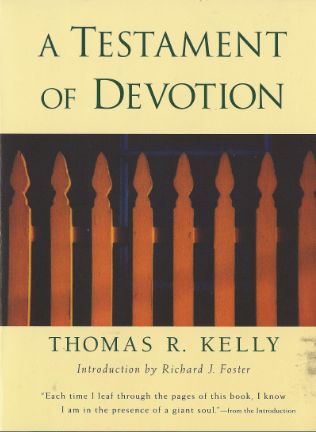
Ron Benefiel highly recommended Testament of Devotion. After several recommendations, I finally bought the book, and after some procrastination, I finally read it. And, of course, I loved it. It's written by Thomas Kelly, a Quaker seminary professor who lived in the first half of the 20th century. It's basic premise is that we are called to a deep life with God who lives in us.
I was repeatedly challenged and strengthened by this book. Actually, it dovetailed with a movement of God in my heart and life to call me deeper to Him within me. I'm now making my second journey through the book - something I almost never do. I am expecting and hoping to learn more and to grow more in my deep pursuit of God.
I quoted this book extensively in my sermon last week, so you might look there to see some further thoughts and applications.
Again, I highly recommend this book.
I picked up Primal Leadership last summer, and I just got around to it this spring. I absolutely LOVED it. It is written by Daniel Goleman (author of Emotional Intelligence), Richard Boyatzis, and Annie McKee. The premise is that leadership is essentially emotional.
Excellent leaders are in touch with their own emotions and with those of people around them. Excellent leaders know how to speak from their own hearts to others' hearts. Excellent leaders are able to manage their own emotions and even to guide the emotions of others (somewhat).
I was especially impressed with their summary of the dimensions of emotional intelligence (especially as it relates to leaders):
1. Self-Awareness (knowing your own emotions; accurate assessment of your own strengths and weaknesses; and self-confidence).
2. Self-Management (emotional self-control; transparency; adaptability; the drive to improve; initiative; optimism).
3. Social Awareness (sensing others' emotions and perspectives; organizational awareness; recognizing and meeting others' needs).
4. Relationship Management (visionary leadership; influence and persuasion; developing others; causing change; conflict management; teamwork).
Notably, awareness is the core element to personal and social success. We have to understand what's going on in us and in others. That is the first step in leadership. These four dimensions of leadership seem intuitively true, yet I have never seen it this clearly explained.
Another beautiful part of this book was their plan for personal change. They call these the 5 Discoveries.
1. My ideal self: Who do I want to be?
2. My real self: Who am I actually (strengths and gaps)?
3. My learning agenda: What is my plan to build on my strengths while reducing my gaps? (Interestingly, they suggest focusing growth plans on middle level capacities. The idea is that a small improvement in these will move them into the good or very good range. Whereas, focusing on our weakest points will lead us to working on very frustrating issues with smaller initial results.)
4. Experimenting and Practicing: How can I pursue these strengths in multiple areas of my life?
5. Developing trusting relationships: How can I build a network of mentors and peers for help, support, and encouragement in this growth process?
This book was deeply challenging on a personal level, and I am thinking about working out a similar growth plan with our pastoral staff. I highly recommend it to anyone interested in leadership.
Ron Benefiel highly recommended Testament of Devotion. After several recommendations, I finally bought the book, and after some procrastination, I finally read it. And, of course, I loved it. It's written by Thomas Kelly, a Quaker seminary professor who lived in the first half of the 20th century. It's basic premise is that we are called to a deep life with God who lives in us.
I was repeatedly challenged and strengthened by this book. Actually, it dovetailed with a movement of God in my heart and life to call me deeper to Him within me. I'm now making my second journey through the book - something I almost never do. I am expecting and hoping to learn more and to grow more in my deep pursuit of God.
I quoted this book extensively in my sermon last week, so you might look there to see some further thoughts and applications.
Again, I highly recommend this book.
Friday, May 28, 2010
Attending to the Trinity
Josh Broward
Proverbs 8:1-11, 17, 22-23, 29-31
Romans 5:1-5
John 16:5-7, 12-15
Today is Trinity Sunday. Our belief in the Trinity was born out of the experiences and teachings of Jesus the Messiah. When he was raised from the dead, his disciples faced the unlikely truth that God had come to them as a human being. On Pentecost, the disciples experience the Spirit of God like never before, and our understanding of God as Trinity was unstoppably begun.
Followers of Jesus began to see hints of the Trinity in the Old Testament. For example, we read the description of “Wisdom” in Proverbs 8 today. Theologians debate whether this is a reference to Jesus or to the Holy Spirit, but there is clearly some “part” of God that “was born before the oceans were formed” and that participated in creation.
The combination of Christian experience, the life and teachings of Jesus, and the hints in the Old Testament led Christians to the doctrine of the Trinity. The word “Trinity” was first used by Theophilus of Antioch in about 170 A.D. About 150 years later in 325, the Council of Nicea declared the doctrine of the Trinity to be fundamental to Christianity. Now, we say with Christians around the world, “We believe in one God the Father Almighty ... We believe in one Lord, Jesus Christ ... We believe in the Holy Spirit, the Lord, the giver of life.” We believe in the Trinity.
But what does it mean? What is the point? What difference does the Trinity make for us? Well, it makes lots and lots of difference for us, and it means lots and lots of things. However, today, I want to narrow our focus to one point. GOD IS IN US. ...
To continue reading this post, click here.
.
Tuesday, May 18, 2010
Prayer (Community Basics - Week 5)
Once upon a time, there were a group of cooks who never ate. They met together to cook. They made the most incredible dishes - adding just the right spices and holding the pan over the heat just so. But each week after they finished cooking their masterpieces, they tossed them into the trash bins and returned home.
Once upon a time, there was a Manchester United fan club. They all had the Man-U shirts and hats. They new all of the players’ names and statistics. They had autographed balls and photos. Their fan club met every week, but they never talked about soccer. They never watched any Man-U games. They weren’t even interested in the celebrity gossip about the Man-U players. Externally, they were the biggest fans in the world, but internally, their club had very little to do with Manchester United.
Once upon a time, there was an artists’ guild that didn’t do art. Artists from around the city met together to talk about the art of art. They discussed brush strokes and the tools for chiseling marble. They had heated debates about the best kind of paper to use when painting with water colors. However, the curious thing was that none of these art experts ever did any art.
...
To continue reading, click here.
.
Once upon a time, there was a Manchester United fan club. They all had the Man-U shirts and hats. They new all of the players’ names and statistics. They had autographed balls and photos. Their fan club met every week, but they never talked about soccer. They never watched any Man-U games. They weren’t even interested in the celebrity gossip about the Man-U players. Externally, they were the biggest fans in the world, but internally, their club had very little to do with Manchester United.
Once upon a time, there was an artists’ guild that didn’t do art. Artists from around the city met together to talk about the art of art. They discussed brush strokes and the tools for chiseling marble. They had heated debates about the best kind of paper to use when painting with water colors. However, the curious thing was that none of these art experts ever did any art.
...
To continue reading, click here.
.
Wednesday, May 12, 2010
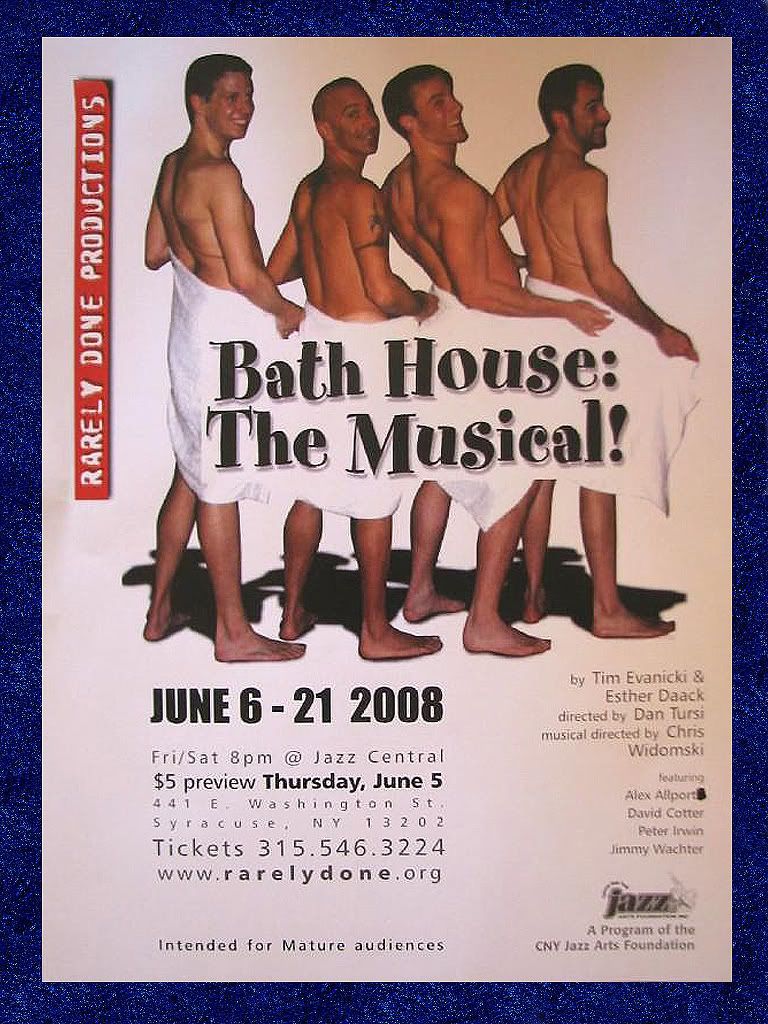
Bath House with the Pastors
Yesterday, I went to a meeting of Cheonan pastors. After lunch, we played soccer at a field across town. I asked if I'd be able to make it back for my 5pm appointment. "No problem. We finish at 4pm."
We had a nice game on a short field with side walls and a back net thing that kept the ball in play. No big fouls and two goals (one off the goalie's butt!). Nice day for a defender.
After the game, everyone decides to go to the public bath house for a "quick 15 minute shower." I enjoy the shower, hot tub, sauna, and postlude shower. Then one of the other pastors asks me to scrub his back - not kidding - and remember, we're completely naked. This is actually a sign of friendship and care. It's common to see father and son pairs giving each other a good scrub down. After a few minutes, he offered to scrub my back. It actually felt pretty good.
After about an hour, we finally left, and I was 30 minutes late for my appointment. But ... good times.
We had a nice game on a short field with side walls and a back net thing that kept the ball in play. No big fouls and two goals (one off the goalie's butt!). Nice day for a defender.
After about an hour, we finally left, and I was 30 minutes late for my appointment. But ... good times.
Recent Reviews
I have recently finished a few books and movies that deserve reviews.
1. FOLK TALES FROM KOREA. This is a fun collection of folk tales - mostly from oral sources. I had a few surprises as I read. Many of the tales have people turning into animals or animals turning into humans - mostly foxes and tigers - always evil figures. After many of the stories, I found myself scratching my head saying, "And the point was ...?" There is a great emphasis on respect for elders, finding out hidden truths, and success of underdogs. Some of the stories would make great movies (as I'm sure they already have). Some were just plain silly and fun, like the story of General Pumpkin who decimated whole armies with his flatulence (powered by massive consumption of pumpkins)!
2. NORTH KOREA. This book, written by Korean scholar Bruce Cummings, left me very sad at how badly the USA has messed up our relationship with North Korea. After reading this book, I feel like I have a much deeper understanding of our neighbors to the North. In many ways, their actions and attitudes are very understandable given our mostly hostile stance toward them. I was deeply surprised that atomic weapons were a regular part of our war strategy in Korea clear through the 90's (and maybe still - though there are no nuclear weapons on US bases in South Korea now). I highly recommend this book for anyone who wants to understand Korea (North or South).
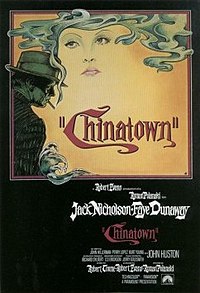
3. CHINATOWN (#21 on AFI's top 100 movies of all time). This is a very good tragedy, staring Jack Nicholson and Faye Dunaway. It's kind of a story about how messed up life can be sometimes. Sometimes, despite our best intentions and noble actions, everything goes wrong and the bad people get just what they want. That sucks, but it's true. This story is beautifully crafted and poignantly depicted. However, it still lacks the moral power that I really want in a movie, so it loses a star on that count. I'll give it 4Js.
(Only 4 movies left out of the top 25. Making progress.)
1. FOLK TALES FROM KOREA. This is a fun collection of folk tales - mostly from oral sources. I had a few surprises as I read. Many of the tales have people turning into animals or animals turning into humans - mostly foxes and tigers - always evil figures. After many of the stories, I found myself scratching my head saying, "And the point was ...?" There is a great emphasis on respect for elders, finding out hidden truths, and success of underdogs. Some of the stories would make great movies (as I'm sure they already have). Some were just plain silly and fun, like the story of General Pumpkin who decimated whole armies with his flatulence (powered by massive consumption of pumpkins)!
2. NORTH KOREA. This book, written by Korean scholar Bruce Cummings, left me very sad at how badly the USA has messed up our relationship with North Korea. After reading this book, I feel like I have a much deeper understanding of our neighbors to the North. In many ways, their actions and attitudes are very understandable given our mostly hostile stance toward them. I was deeply surprised that atomic weapons were a regular part of our war strategy in Korea clear through the 90's (and maybe still - though there are no nuclear weapons on US bases in South Korea now). I highly recommend this book for anyone who wants to understand Korea (North or South).
3. CHINATOWN (#21 on AFI's top 100 movies of all time). This is a very good tragedy, staring Jack Nicholson and Faye Dunaway. It's kind of a story about how messed up life can be sometimes. Sometimes, despite our best intentions and noble actions, everything goes wrong and the bad people get just what they want. That sucks, but it's true. This story is beautifully crafted and poignantly depicted. However, it still lacks the moral power that I really want in a movie, so it loses a star on that count. I'll give it 4Js.
(Only 4 movies left out of the top 25. Making progress.)
Subscribe to:
Posts (Atom)