This week, I'm preaching on the Sabbath, and I've found some interesting videos. I'll just share them here. I'd love to hear your feedback!
#1 - "1 outta 7" from Christianity Today:
#2 -"Sabbath Song" by Aaron Berge
#3 - Last but not least - and just for kicks - "Shabbat Shaloam" from a young Jewish band - gotta give it to 'em for making it contemporary.
Wednesday, January 7, 2009


Saturday, January 3, 2009
Korea Tip 97: Funny T-shirts

Check out www.baboshirts.com. These are hilarious. Be sure to scroll over the Korean T-shirts for the English translation.
"Babo" means "fool" or foolish in Korean. These shirts make good gifts for anyone who is comfortable with their foolish side.
Friday, January 2, 2009
Costco in Cheonan?

Joe just called me and said he saw a sign that said (as far as he can figure from the Korean text) that Costco is coming to Cheonan. If you don't live in Korea, you may not know that Costco is the Mecca for foreign foods here. Hundreds of expats living in Cheonan gladly make the train ride to Daejeon (the biggest city close to us) to visit the Costco there, conveniently located next to the train station. This is the source of our affordable cheeses, sour cream, hamburger meat, tortillas, canned goods, and a plethora of other yummy stuff.
So far this is just one step up from a rumor, but wouldn't it be great - and a little dangerous!
Oh, yeah, and if you haven't heard the Seoul Subway line now has a stop right outside KNU - called the SsangYong (Nazaret Dae) Station. (SsangYong is our neighborhood and Nazaret Dae is Korea Nazarene University.)
Moving on up...
Tuesday, December 30, 2008
Isaiah 60 - Radiant Beauty

Imagine that the sun did not rise tomorrow. Imagine that the sun did not rise for many days, for many weeks, for many months, for many years, for many generations. Imagine that the whole world was draped in darkness.
Imagine yourself in that world of darkness. Imagine yourself walking, working, living, eating, sleeping, waking in that world of darkness. Imagine your children and your children's children in that world of darkness.
After many generations it would no longer seem dark, but only real. It is dark, but what is dark if you can't remember light? It is cold, but what is cold if you can't remember warmth? The darkness is constant but unknown, unfelt.
Imagine that suddenly, in one corner of the world, light appeared.
Maybe it was the light of the sun finally rising again. Maybe it was the light of a star. Maybe it was the light of a great fire. A great light shone in a dark world.
What would you do? In that great world of darkness, if you saw light, what would you do? In that great world of dark coldness, if you felt warmth, what would you do? How would you feel?
To continue reading this sermon, click here.
.
Saturday, December 27, 2008
Butterfinger Pancakes and Pajamas till Noon
 About six months ago, our good friends Adam and Elisa took new jobs and moved to Seoul. When we saw them about a month ago at the concert in a helicopter (yes, in a helicopter - a big one), we made plans to come visit them after Christmas. This weekend was the auspicious occasion.
We came with no plans whatsoever other than hanging with them and eating at the restaurants of their choice. They suggested a place called Butterfinger Pancakes for supper on Friday night. Adam said that if we ate there for supper we would want to eat there the next day, too. He's right. We're ruined. This place has some of the best food I've ever eaten anywhere. There may be a bit of deprivation speaking here, but I was overwhelmed with the lush goodness of most of their food.
On Friday night, Sarah had some nut waffles - light, fluffy, crispy, excellent. Emma had the mac and cheese, also very good. Adam had the Fresco Burger, and Elisa and I split a Fresco Burger and a salad. The salad was blah, but the Fresco Burger was outstanding. It's actually a sausage burger topped with two kinds of cheese and bacon, then grilled on high quality bread. It's a living heart attack, but oh so delicious!
On Saturday, we sat around in our pajamas until noon. What a welcome reprieve from our busy end of semester and Christmas schedule! It was so nice to sip some coffee with friends and have nowhere we needed to go and nothing we needed to do. We also called our friends Mark and Naomi who are now studying in Canada. It was great to have all six of us on speaker phone, almost like old times.
 About 2pm, we returned to Butterfinger Pancakes for another mouthwatering meal. Sarah had a very good grilled bagel sandwich. Adam and Elisa had a large omelet, packed with goodness. Emma had straight buttermilk pancakes, which come with your choice of butters and fruit toppings. Em was a little overwhelmed by all the choices, so we helped her out and recommended blueberry topping.
 I had - get this! - the cream cheese and mozzarella pancakes. It sounds a little weird, but I figured: "When will I ever be able to try this again?" The cheese is actually in the pancakes. I topped it with a side of sunny side up eggs. It was incredible. I was practically moaning as I ate! I've never had pancakes so light and fluffy, and the idea of filling them with cheese was a stroke of genius. Elisa passed me her extra pancake - I think a gesture of generousity for the newbies who can't come back tomorrow - and I gladdly downed this perfect specimen of all a pancake should be - light, moist, fluffy, sweet, but not two sweet, buttery, but not greasy. I'm not kidding, I think those were the best pancakes I've ever had.
So if you're in Seoul and you have some time. Check out Butterfinger Pancakes. The prices are surprisingly reasonable for a Western style restarant in Korea. They now have locations at least in ApGuJong and KangNam, maybe more. Just google them to see some blogs. They don't have their own website, though.
Thanks, Adam and Elisa, for opening your home for some much needed rest and relaxation and for introducing us to a restaurant that has already become a legend in my mind!
Monday, December 22, 2008
Reading and Watching Updates
Tonight, I made quite a few updates in the sections on the right showing what I've been reading and what Sarah and I have been reading or watching together. I'll try to give a quick review of each one.
 Sarah and I often read before bed or when traveling. We recently finished Imperial Woman by Pearl Buck. The book is a beautiful insight into the Chinese royal court and to the era of Western encroachment, climaxing in the Boxer Rebellion, and the nearly avoided fall of the Chinese throne. However, it is also an unflinching look at the allure of power and the ability of power to corrupt and deceive even the wisest and noblest. By the end of the book, we were both very ready for it to end, but it was still a good read over all. Also, it helped me understand a little more about attitudes toward authority in Asian culture. My rating: jjj.
 My mom gave me The West Wing, seasons 3, 4, and 5 for my birthday. She found them at a very low price at Half Price Book Store. Sarah and I have really enjoyed this intelligent and funny show. The characters are very well developed, and the writers deeply probe important issues facing the USA and the world. We are still watching season 5. Season 3 gets a strong JJJJJ rating. Season 4 only gets jjjj because it was incredibly rushed at the end. They packed 3 episodes with enough drama and change for 6. It felt like bad form, trying to hard to get to a dramatic season ender.
 I've finally convinced Sarah to watch the Lord of the Rings series with me, and we've borrowed the extended version DVD's from Joe. Sarah felt exactly like I did after watching The Fellowship of the Ring: "That's it. You're kidding me. We watched 3+ hours of movie, and this is the only ending. They're sailing down a river alone." I know this movie/book is basically just setting the story for the rest of the trilogy, but it still felt disappointing at the end, hence: jjjj.
On the other hand, The Two Towers has perhaps one of the best movie battle scenes ever. The story develops beautifully, and the characters come forward with their full complexity. The extended version retains more of the story of the Ents, which the movie version cut out (and I greatly missed). My rating: JJJJJ.
As for my personal reading, I haven't had as much time as I would like because of my busier schedule this semester. This summer I went a little overboard in the book buying, so I've made a pact, which I'm mostly keeping, that I won't buy any more books until I read all the books I've already bought - not necessarily all of those given me by others.
 One of those books was Ruthless Trust by Brennan Manning. This book was classic Manning: lots of stories, lots of the same stuff only said better than other people say it, and dry but witty humor. I didn't find it especially profound, but I did find it meaningful for that particular stage in my life. My rating: jjj.
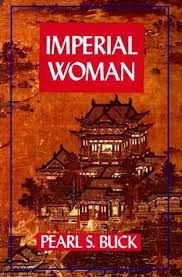 Sarah and I often read before bed or when traveling. We recently finished Imperial Woman by Pearl Buck. The book is a beautiful insight into the Chinese royal court and to the era of Western encroachment, climaxing in the Boxer Rebellion, and the nearly avoided fall of the Chinese throne. However, it is also an unflinching look at the allure of power and the ability of power to corrupt and deceive even the wisest and noblest. By the end of the book, we were both very ready for it to end, but it was still a good read over all. Also, it helped me understand a little more about attitudes toward authority in Asian culture. My rating: jjj.
 My mom gave me The West Wing, seasons 3, 4, and 5 for my birthday. She found them at a very low price at Half Price Book Store. Sarah and I have really enjoyed this intelligent and funny show. The characters are very well developed, and the writers deeply probe important issues facing the USA and the world. We are still watching season 5. Season 3 gets a strong JJJJJ rating. Season 4 only gets jjjj because it was incredibly rushed at the end. They packed 3 episodes with enough drama and change for 6. It felt like bad form, trying to hard to get to a dramatic season ender.
 I've finally convinced Sarah to watch the Lord of the Rings series with me, and we've borrowed the extended version DVD's from Joe. Sarah felt exactly like I did after watching The Fellowship of the Ring: "That's it. You're kidding me. We watched 3+ hours of movie, and this is the only ending. They're sailing down a river alone." I know this movie/book is basically just setting the story for the rest of the trilogy, but it still felt disappointing at the end, hence: jjjj.
On the other hand, The Two Towers has perhaps one of the best movie battle scenes ever. The story develops beautifully, and the characters come forward with their full complexity. The extended version retains more of the story of the Ents, which the movie version cut out (and I greatly missed). My rating: JJJJJ.
As for my personal reading, I haven't had as much time as I would like because of my busier schedule this semester. This summer I went a little overboard in the book buying, so I've made a pact, which I'm mostly keeping, that I won't buy any more books until I read all the books I've already bought - not necessarily all of those given me by others.
 One of those books was Ruthless Trust by Brennan Manning. This book was classic Manning: lots of stories, lots of the same stuff only said better than other people say it, and dry but witty humor. I didn't find it especially profound, but I did find it meaningful for that particular stage in my life. My rating: jjj.
Friday, December 19, 2008
Poker, Poker, Poker
 Several of our friends are planning some poker games to raise money for Elena's well through World Vision. Each game has a buy in price and a prize for the top winner. All of the money goes toward the well. (
Poker Preview: Last night, we had a small game in my house. The crowd was slim because of sickness and travel, but we had a good time. We played for the grand prize of some carribean jack salsa and chips, and we raised 50,000 won (around $40) for the well. (Yours truly had the lucky cards and got to keep the salsa.)
Mini-tourney: We are planning a mini tournament on January 10, the Saturday during KNU's winter English camp. This one will just be advertised in-house (around the church and with personal invitations), and we're hoping for 25-30 players. We'll just have it in one of the KNU classrooms.
Big tournament: In late February or early March, we hope to have a large poker tournament with 50 players. We want to rent the nice dining hall on the 7th floor of the Jae 2 Chang Hakwon, and we want to recruit players from all around Cheonan, and maybe beyond. If it gets really big, we might go way over 50 players. We're thinking there might be a 20,000 won buy in, some nicer big prizes like gift certificates to Outback, and a well-organized tournament.
Lots of fun, and if things go well, this could be the start of a tradition that helps us raise money for a good cause and make connections with people who wouldn't normally come to church. So if you like poker, or if you know people who like poker, help us spread the word. If anybody out there wants to help plan or advertise, talk to Kieth Pardue.
(Also, of note, I've requested a poker strategy book from Sarah for Christmas!)
Isaiah 65 - The Birth of a Dream

We're going to start this sermon today with one of my favorite activities: audience participation. Turn to someone around you and answer this question: “Why did Jesus come?” We are preparing for Christmas, right? Why did Jesus bother to enter our world in the first place? Why did Jesus come?
--- Talk in small groups.
--- Shout out answers.
Christians have two basic views of why Jesus came and how Jesus fits into the story of humanity.
In view #1, which has become popular over the past 100 years or so, the world is kind of like an airplane with engine failure. We are loosing altitude. Society is experiencing moral failure. The wings are smoking. This plane called humanity is going down. We are going to crash into the mountain of God's judgment, and everything we've ever known will explode in a ball of fire. Some parts of the Bible definitely sound like this.
In view #1, Jesus functions kind of like an ejection button and parachute. We can see the world going down in smoke. We can see the hell and fire of judgment coming our way, but aha! We also see a red button marked, “Jesus.” We push our little red Jesus button, say a quick prayer, and eject out of planet earth. We are saved by our Jesus parachute which carries us safely to heaven, while the earth burns wildly in the flames of God's judgment.
But there's another perspective in the Bible, another perspective available to us Christians. In view #2 ...
To continue reading this post, click here.
.
Friday, December 12, 2008
Isaiah 61 - Changed by Hope
 KNU International English Church
Josh Broward
December 14, 2008
"From Now On" video.
Now I know what you're thinking after watching that video: “Oh, no. Josh is preaching another one of those depressing sermons. He's even taking Christmas and making it sad. What's up with that?! Christmas is supposed to be happy!”
Let me tell you from the beginning that we'll get there. We'll get to the joy of Christmas today, but first we need to talk about the pain of waiting in the now, the pain of waiting when things don't go well, the pain of a world that is mixed up and not working right.
Have you ever had one of those days when everything seems to go wrong? A little boy named Alexander had one of those days. I want to take a few minutes to read you a story: Alexander and the Terrible, Horrible, No Good, Very Bad Day by Judith Viorst.
To continue reading this post, click here.
.
Monday, December 8, 2008
Raising a Well
 My friend, Elena Willey, has set an amazing goal. She wants to raise enough money to dig a well in a developing nation in one year. The total price for an excellent well through World Vision is US$18,000. Elena is asking all her friends and family to contribute to her well fund instead of giving her Christmas gifts. (No earrings or socks from us this year!) She is planning a variety of fund raisers, including a poker tournament in February (yahoo!!!).
This is such an incredible example of one person deciding to make a big difference. Way to go Elena!
Check out Elena's site for the well project. You can read the articles that influenced her, and if you feel so moved, you can make a donation.
Monday, December 1, 2008
Our Advent Wreath
 For the past several years, we have made our own Advent Wreath to use at home. Usually, we don't really have a wreath - just a collection of candles and greenery on our kitchen table. This year, we got some long, thin evergreen branches and cut them into smaller pieces - about 6 inches or 20 centimeters. Then, we laid them around the Christ candle to make something more like an actual wreath.
We light the candle(s) at each meal, and Emma really likes being involved in this little ceremony. It helps us all get into the Advent season and to anticipate the coming of the Messiah.
 This year, we found a helpful little site with some background history and a weekly prayer to use when lighting each candle. We'll pray these little one sentence prayers every day when we light the candle. As I type, Emma is copying the prayer onto a sketch pad so that we can use it at our meal times.
I hope you enjoy the pictures.
Friday, November 28, 2008
Isaiah 64 - Where Is God?
KNU International English Church
Josh Broward
November 30, 2008
Josh Broward
November 30, 2008

In 1928, on the border of Hungary and Romania, a Jewish family celebrated the birth of a son. God had blessed them. On the eighth day he was circumcised to show his participation in the covenant God had started with Abraham.
While this boy, Elie Wiesel, was still growing up, World War 2 began. Nazi Germany began moving across Europe sucking nation after nation into its dominating war machine which pretended to be Christian. In 1944, the German authorities put all of the Jews in Elie's home town into a ghetto and later into Auschwitz, a “concentration” camp.
In Auschwitz, Elie and his father endured near starvation, hard work, torture, and watching the death and execution of thousands of others. Elie and two of his sisters survived, but his father, mother, and younger sister all died at Auschwitz.
In his famous book, Night, Elie Wiesel tells of his experiences in a work camp connected to Auschwitz. ...
To continue reading, click here.
Tuesday, November 25, 2008
The Ancient-Future Generation
I just read a very good article. It is a basic introduction to postmodernism and the Emerging/Missional Church. I highly recommend it. Click below.

Thursday, November 20, 2008
Matthew 27:27-31 - Broken King
 Warning: Parts of this week's sermon are not good for children. The text describes Roman soldiers abusing Jesus. We will watch graphic videos of abuse and discuss torture. If you have a small child here today, I strongly recommend that you join the Children's Church for today.
Today is Christ the King Sunday. Around the world today, Christians are celebrating that Jesus is the King of Kings, the Lord of Lords, the Supreme Ruler of the Universe.
We are celebrating Christ's Kingship today with one of the most ironic passages in the entire Bible. All week long, I've been thinking of a song that Alanis Morissette sang when I was in high school:
A traffic jam when you're already late
A no-smoking sign on your cigarette break
It's like ten thousand spoons when all you need is a knife
It's meeting the man of my dreams
And then meeting his beautiful wife
And isn't it ironic...don't you think
A little too ironic...and, yeah, I really do think...
It's like rain on your wedding day
It's a free ride when you've already paid
It's the good advice that you just didn't take
Who would've thought... it figures
Matthew 27:27-31 is deeply ironic. The Roman soldiers give Jesus, the King of Kings, a crown of thorns, a wooden scepter, and a fake robe. As they insult him and poke him, they reveal his true nature as King. Isn't it ironic?
.
Tuesday, November 18, 2008
Humble Revelation

In 2006, I preached through the book of Revelation. It was THE most challenging preaching experience of my life. I took up the challenge because I was tired of hearing the book misinterpreted so often and because I had never really studied it in depth. In the process, I grew to love this beautiful and challenging book.
My sister April's Sunday School class in Houston, Texas is going to study the book of Revelation this year, so I decided to post my series on a separate blog: Humble Revelation. Check it out. If you have comments, you can post them on either site, and I'll try to reply.
Friday, November 14, 2008

A CENTURY OF ONE AND MANY
A History of
One Hundred Years of the Church of the Nazarene
The Nazarene Centennial is an anniversary, not a birthday. It marks a marriage that linked existing families and created a new one.
A century ago, the Nazarenes were a predominantly American family with relatives in other countries. Today we are an international family of congregations on every inhabited continent. No single language, race, or nationality claims a majority of our members. As an expression of the Holiness Movement and its emphasis on the sanctified life, our founders came together to form one people who then went forth into the world to become a people of many cultures and languages.
To read the rest of this post, click here.
Korea Tip 96: History of the Church of the Nazarene in Korea - through 1985

Korea, situated in the heart of the Far East, remained for centuries a strangely remote land, ethnically pure, and tied to its ancient traditions. It has been aptly called the “Hermit Nation.” Even the Church of the Nazarene passed it by as it established work in the country's more dominant neighbors, China and Japan.
But the beautiful Land of the Morning Calm was not wholly out of mind. In 1936 Sung-oak Chang, a young Korean student who had gone to Japan to further his education, crossed paths with Rev. W. A. Eckel and Rev. Nobumi Isayama. These men were able to help him become established in the Christian faith and encouraged him to return to his homeland and start a Nazarene church there.
He successfully launched a work in Pyongyang, the capital city of what is now North Korea, and then went down to Seoul, present capital of South Korea, to establish another church. In the latter place he secured an assistant by the name of Huk-soo Sung. The work was officially under the supervision of the Japan mission, but the relationship was apparently quite tenuous.
To read the rest of this post, click here.
Links to Longer Posts
To make this site more reader-friendly, I've started a parallel site: www.humblefuture2.blogspot.com. From now on, I'll try to post the first few paragraphs of an article here. Then, if you are interested, you can follow a link to read the rest of the article.
(Thanks, Dave, for this suggestion. I finally figured out how to make it work.)
(Thanks, Dave, for this suggestion. I finally figured out how to make it work.)
Tuesday, November 11, 2008
2008 Annual Report

Preparing the Foundations
My first time to attend an annual meeting as a pastor, I forgot that I was supposed to give an annual report. I had only been a lead pastor for about two months. Near the end of the meeting, Cathy Williams asked if I had a report to share, and I said something profound like, “Uh, not really.” Every year since then, I've tried to spend some time thinking of an analogy or a story that will help us put the year in perspective. I've talked about zits and puberty, giant flies, Julius Caesar crossing the Rubicon, and how God answered a prayer I prayed while walking across a basketball court.
This year, I want to tell a story about some of the times I've worked with my Uncle John. If you think I'm crazy, you should meet my Uncle John! One year for Christmas, the women wanted to have a nice formal dinner, so they asked the men in the family to “dress up” and to put on some “nice clothes.” My Dad and Uncle John disappeared into the bedroom and came out looking like this. (silly picture) I distinctly remember them saying, “What?! We're wearing ties! What else do you want?” (They also had the nice 80's afros going, too.)
Uncle John is also an expert concrete worker. Sometimes during the summers or when I had free time in college, I would work with him doing the concrete work for new houses. The concrete truck drivers said Uncle John was so good that he could do jobs by himself that usually took 10 people to finish. When I helped Uncle John, I usually got all the jobs he didn't want – shoveling rocks, carrying steel, drilling into old concrete. But I also learned a little about what it takes to make a good foundation for a house.
Step 1: Clear and Level the Land. Before you can do anything else, you have to get rid of all the trees and junk, and you have to make the ground fairly smooth and level. No, I never got to drive one of those cool little bulldozers.
Step 2: Set the Forms. Once the ground is level, it's time to set the concrete forms. This is setting the boundaries for where the concrete will go and the shape it will take when you pour.
Step 3: Add and Level Gravel. After the ground is level and the forms are set, you've got to make a solid base for the rest of your work. Somehow you dump in the gravel, and then you use a shovel or a “come-along” - kind of like a hoe – to spread it evenly around the area. This was probably my most common job – because it requires the least skill.
Step 4: Drill into the Existing Structures. Whenever we were making a garage or a driveway, we always had to drill holes into the existing foundation. This would help the new piece attach to what was already there. We did this by using a huge concrete drill. With the bit, it was about 80 centimeters (2 ½ feet) long. Sometimes I went home with my arms and head still shaking because of the vibrations from the drill.
Step 5: Lay and Tie the Steel Rebar. Rebar is specially made steel that keeps the concrete stable and strong. You have to lay it out in a particular pattern and then tie it together with metal wires. If there's not enough rebar, the concrete will crack when the ground shifts and changes.
Step 6: Pour the Concrete. This is when it starts getting fun. The big concrete truck comes out, and you get to wear the cool rubber boots and get all dirty. You have to spread the concrete out and help it evenly and thoroughly fill the forms. Then, as it starts getting hard, you use a variety of tools to smooth it out so that it has that nice flat finish.
Step 7: Build the House. After you've done all of this work on the foundation, then you're finally ready to start building the actual house. But first you've got to do a good job on the foundation.
**********
Instead of just reporting on what happened this year, I'd like to talk about the entire history of our church. Maybe this will help us get a better sense of the significance of this year. In many ways, everything we've done as a church so far has been simply preparing the foundations for the house that God wants to build here.
Step 1: Clear and Level the Land (1995-2001). In many ways, the first 6 years of our church was simply clearing and leveling the land. Our church started as a simple worship service in 1995. The primary goal of this worship service was to give the international teachers of KNU a place to worship in English. Through these six years, we have had 5 different pastors and sometimes no pastor at all. Often we struggled to survive and to keep going.
Step 2: Set the Forms (2001-2004). When John Bondy came to KNU, he quickly took the role of pastor of this struggling worshiping community. He was an experienced pastor, and he helped us make some significant steps. We began to identify ourselves as a congregation – maybe not yet a church – but something more than a group of people who get together on Sunday mornings. We also wrote a constitution to guide us, and we formed the first Advisory Council. We also began developing an understanding that our mission was something larger than the English speakers at KNU. In the spring of 2004, we sent a mission team to Indonesia. This was a great step in thinking and acting beyond ourselves.
Step 3: Add and Level Gravel (2004-2005). KNU asked Sarah and I come to Korea so that I could serve as pastor of this community in the summer of 2004. For the first few years, we were still trying to understand who we are. We did some soul searching and hosted some discussions to help us understand ourselves. Jean Johnson and Patricia Clark helped us write a history of our community up to that point.
During this time, we also made strides in several other areas. More and more people from outside the KNU community began attending our worship service. We had always had some people from outside KNU, but I think it was during time that we first had about 50% of our attendees from outside KNU. Our Advisory Council and our worship band also grew and strengthened.
Step 4: Drill into the Existing Structures (2006-2007). In 2006 we commissioned a Vision Team to complete our search for identity. They answered the call with a clear articulation that God is leading us to be a genuine church, not just a worshiping community. The Vision Team crafted our church motto: TO BE A LOVING COMMUNITY THAT CHANGES OUR WORLD.
Because of our growing identity and our growing attendance, we decided to move to Patch Hall, so that we could comfortably host more people on Sunday mornings. And we also made a big decision – which had its own set of conflicts. We decided to change the time of our worship service to
In 2007, we formally joined the Church of the Nazarene on the Korea National District. This was a big step for us, “cementing” our identity as a “real church.”
During this era, we also enjoyed an increasingly strong and diverse Advisory Council. In 2006, for the first time ever, we had more than one Korean serving on the Advisory Council, and in 2007 for the first time ever, we had several returning Advisory Council members. We also made progress in other ways. Our children's program grew by leaps and bounds, and Stan Martin helped us start Compassionate Hearts Ministries – a beautiful group, helping us reach out to those who need help right here in Cheonan.
Step 5: Lay and Tie the Steel Rebar (2008). This step is developing the supporting structures, which will hold us together and keep us strong. This year, we've made progress in a host of ways. Every team on the Advisory Council has grown in some way. We have made a new website which should be up and running any day now. We have increased stability in giving, attendance, and leadership. It seems like every week we are growing and becoming more diverse. But the biggest area of progress this year has been through the Planning Team. Our Planning Team identified our mission as the motto which we'd already been using: TO BE A LOVING COMMUNITY THAT CHANGES OUR WORLD.
The Planning Team also identified the three core points of our vision:
1) Renewed by God's Love
2) Multicultural Community
3) Global Change through Local Action
The Planning Team's full recommendations are part of the packet you all received tonight. It's pretty long, and the members of the team will give some highlights later. For now, let me just give you a brief overview of each of these points.
1) Renewed by God's Love means being renewed by God's love to love God, ourselves, and others. This will involve a lot of different stuff for us. First of all, it means that each of us needs to work to be healthy. We also need healthy families. We will also try to let God’s love soak into us so that we live out his love more in our daily lives. Finally, we are going to develop great leaders who will practice leadership here and learn skills that will help them and their churches wherever they go.
2) Multicultural Community means that we are embracing our diversity as God brings us together through Christ. Obviously, our church is very multicultural, but we want to make “multicultural-ness” and community core components of everything we do. To accomplish this part of our vision, we will need teams that focus on welcoming new people, hosting events and celebrations, forming friendship partners, giving support to our community, and getting out information and publicity about our church.
3) Global Change through Local Action means nurturing our local community to care for others here and abroad. We want to do this in two basic ways. First, we are going to work through Compassionate Hearts Ministries to reach out to the poor and needy here in Cheonan. Second, we want to form a long-term partnership with a poor community in another country. Instead of doing a little here and a little there, we will focus our efforts on improving lives, strengthening Christian community, and forming real friendships with one group of people in a struggling community.
Step 6: Pour the Concrete (2008-2009). This is when we put the finishing touches on our foundation. Part of that will happen right here in this meeting when we vote on the Planning Team's recommendations and when we vote about having a full-time pastor. We'll finish the rest of the foundation as we connect each part of the plan to one of the Advisory Council teams and set target dates for each goal or for portions of each goal. When we complete these steps, we will finally have finished our foundation for action.
Step 7: Build the House (2009 onward). This is when the real fun starts. Everything we've been doing up to now as a church has been building up to this time. We finally understand who we are. We finally understand where God is leading us. We finally understand what it will take to do what God is calling us to do. We finally have the resources to provide the leadership we will need to fulfill our vision.
This is the time. This is the dawn of a new era in our church.
This year is the time when we really and truly begin to live out our vision. This year is the time when we get to turn our plans into actions. This year is the time when we begin to make our dreams a reality right here in this place.
As we grow closer to God and closer to each other …
As we learn about each other and learn about our world …
As we become friends with each other and friends with our neighbors and coworkers …
As we learn to give and to serve more faithfully …
As love begins to saturate everything we do …
As our programs and structures and organic, unplanned activities all come together to make us better people together than we could ever be alone …
As we develop connections with people who live far from us but desperately need us …
As our worship services become more rich and full …
As our conversations become more real and honest and grace-filled …
As our lives become more relaxed …
As we have more and more fun together even as we give more and more together …
Then we will be a loving community that changes our world.
And we will look back on this time and say, those were some of the best years of our lives.
Friday, November 7, 2008
Celebrating 100th and 60th Anniversaries
KNU International English Church
Josh Broward
November 9, 2008
Josh Broward
November 9, 2008
Celebrating our Anniversaries
(100th Anniversary of Church of the Nazarene and 60th Anniversary of Nazarenes in Korea)
Isaiah 35:1-10, Acts 2:1-12, 38-47, Matthew 25:31-46
My grandparents, my Mom's parents, have been married for a very long time – about 67 years now. For anyone to be married for this long, you must have deep love, undying commitment, and - of course - a very early start. When my grandparents got married, my granddad was 18, and my grandma was 15, but she's quick to say “almost 16!” My granddad always says, “Yeah, she was two months past her 15th birthday.”
I remember two great family celebrations. The first was when I was in middle school. It was my grandparents 50th wedding anniversary. We got all of the kids and grandkids together for a big family party at my grandparents' small ranch in Arkansas. They kept that 50th anniversary marker off the cake for a long time. They probably still have it.
Then, two years ago, they threw a huge family party for their 65th wedding anniversary. This time they went all out. They rented a huge room at a restaurant and invited all of the kids, grandkids, great-grandkids, cousins, and family friends. There were probably more than 100 people there. We were celebrating their incredible marriage, but we were also celebrating their beautiful lives and this wonderful collection of family and friends.
Those two wedding anniversaries will always rank among my favorite memories.
Today, we have the privilege of celebrating two great anniversaries – the 100th anniversary of the Church of the Nazarene and the 60th anniversary of the Church of the Nazarene in Korea. Both of these are amazing and beautiful stories.
Let's start with the beginnings of the Church of the Nazarene itself.
Today, we read part of the story of Pentecost from Acts chapter 2. On the day of Pentecost, God poured out his Holy Spirit on the very first church meeting in Jerusalem. The Church of the Nazarene grew out of a great desire for the Church to become a church of Pentecost again. In the second half of the 19th century, people all around America met together regularly in prayer meetings, “revival services,” and “camp meetings” to ask God to purify their hearts and to purify their churches.
The Church of the Nazarene is a direct result of this great passion for a renewal of the fires of the Holy Spirit as seen at Pentecost. For many years our name was “The Pentecostal Church of the Nazarene.” In fact, you can see on the logo for the Church of the Nazarene two symbols for the Holy Spirit – fire (like at Pentecost) and the dove (like at Jesus’ baptism).
For a variety of reasons, many of the Christians who encountered God at these revivals and camp meetings didn't feel welcome in their more traditional churches. All around America and Canada, independent movements began to spring up, gathering together in regional groups. In the early 1900s, but especially in 1908 many of these regional groups “got married” and formed the Church of the Nazarene. From the first day of the formation of the Church of the Nazarene, we were international, with churches and mission work in USA, Canada, India, Cape Verde, Mexico, and Japan (and soon China, Guatemala, and Africa).
What brought all of these people together? From the beginnings of the Church of the Nazarene down through the present, we have always had two unifying themes: holiness and missions. Nazarenes have always believed deeply that God calls us to represent him to our world. Being God's representatives means being like God and acting like God – holiness and missions. In a lot of ways, these are basically the same thing.
John Goodwin was one of the first General Superintendents of the Church of the Nazarene. (This is the highest level of leadership in our denomination.) In 1920 he wrote, “Pure religion has and always will have two sides, purity and service. To neglect service in the welfare of others is to demonstrate a lack of purity. Holiness people should be preeminent in social service. This is what chiefly characterized the Early Church – their untiring service to their fellowmen and their care for widows and fatherless children.”1
Early Nazarenes lived this without fail. The very first church to use the name “Church of the Nazarene” was an inner city mission for the poor of Los Angeles. Nazarenes around the world built orphanages, schools, hospitals, and other ministries to reach the poor and endangered. Let me give you just a few examples of Nazarene activities in the first 25 years of the 1900s.
In India Nazarenes started an orphanage and school for orphaned girls.
In Bethany, Oklahoma in the USA, Nazarenes started an orphanage for abandoned babies, and workers often cared for large numbers of infants at one time.
In Ta Ming Fu, China, Nazarenes started the Bresee Memorial Hospital with 100 beds. (After World War 2, this compound was taken by the government, and the church moved “underground.”)
In Kansas City, Chicago, Tennessee, Texas, and many other places, Nazarenes built “rescue homes” for unmarried girls who got pregnant, many of them prostitutes.
Throughout the history of the Church of the Nazarene, we have affirmed what Miss Lue Miller wrote in 1917 regarding Nazarene rescue homes: “'Jesus Christ, the same yesterday, today, and for ever.' The Friend of sinners still, the Hope of the penitent outcast, the Redeemer of man or woman of many sins. The loving compassionate heart still beats with tender love over the bruised and broken. The water of life is still being given out by the Master. The setting is different, but the story is about the same...”2
After 100 years, we have 1.6 million Nazarenes in more than 150 countries. As John Bondy likes to say, the Church of the Nazarene is in more countries than McDonald's. All around the world, these 1.6 million Nazarenes are working together to continue our two basic themes: living like God and sharing God's grace and healing with those around us.
Now let's talk about the Church of the Nazarene in Korea.3 Maybe we can have a little fun with this by turning this into a quiz. (But don't cheat! If you have the manuscript, try to resist the temptation to look ahead and see the answers.)
Question 1: When was the first Church of the Nazarene in Korea started?
Around 1908
Around 1938
Around 1948
Around 1995.
You probably think the right answer is 1948 since we're celebrating the 60th Anniversary of the Church of the Nazarene, but actually the correct answer is B. In 1936 Chang Sung-Oak went to Japan to study. While in Japan, he met some Nazarene missionaries and pastors. They “discipled” him – which means they helped him understand how to be a Christian and what Christians believe. Then, they challenged him to return to Korea to start a Nazarene church there.
Question 2: Where was the first Church of the Nazarene in Korea?
Cheonan
Seoul
PyoungYang
Busan
This is pretty cool. Pastor Chang returned to Korea and started the first Korean Nazarene church in PyongYang (now North Korea) in about 1937 or 1938. After that church was stable, he helped Seong Heok-Soo start a church in Seoul. However, the connection between these churches and the international Church of the Nazarene was not very strong.
After World War II, North Korea became a dangerous place for Christians. Pastor Chang and most of the PyongYang church moved to Seoul. (Interestingly, Nazarenes in the US military were regular attenders in that early Nazarene church. As pastor of an international Nazarene church, I find it amazing and encouraging that one of the first Nazarene churches here was also multicultural near its beginning.)
Question 3: Why is 1948 celebrated as the beginning of the Church of the Nazarene in Korea?
The number 1948 is connected to end-times predictions in the book of Revelation.
Bill Patch was born in 1948.
The first Nazarene missionaries came to Korea in 1948.
A collection of independent churches merged together to for the Korean Church of the Nazarene in 1948.
In 1947, a famous Korean preacher named Jung NamSoo visited the USA. While traveling around the USA gaining support for his work in Korea, Jung NamSoo met several of Nazarene leaders. They encouraged him to join the Church of the Nazarene and give more organization to the Nazarene work in Korea.
Jung agreed, and he did more than that. He also talked to the pastors of several independent churches and encouraged them to join the Church of the Nazarene. In October of 1948, General Superintendent Orval Nease organized 9 congregations with 835 members into the Korea District of the Church of the Nazarene. (The Jung NamSoo building at the top of the hill is named after this early leader.)
Question 4: Who were the first Nazarene missionaries in Korea?
Bill and Gail Patch
Josh and Sarah Broward
Don and Adeline Owens
Korea has never had official Nazarene missionaries.
When the Nazarene leaders sent Jung NamSoo back to Korea to organize the Nazarene Church, they promised to send a missionary couple to help out. The Korean War slowed down their plans, but they sent Donald and Adeline Owens to Korea in 1954. Don Owens had graduated from Bethany Nazarene College and pastored in the USA for a few years, but he was still very young. When he got to Korea, some of the Korean leaders secretly complained that they asked for missionaries, but instead, “they have sent us boy scouts.” (I expect that some people in our church felt the same way about me!) However, God helped out a little. After Don Owens' first sermon, 30 people decided to become Christians.
The Owenses got right to work. One of their first tasks was rebuilding and restocking after the Korean War. Many churches and homes were damaged. In less than four months, they had opened Nazarene Bible College, which is now Korea Nazarene University. The building was an old burned-out missionaries home.
Question 5: How many students did the Nazarene Bible College (KNU) have on the first day?
4
24
204
2,004
Remember those two themes that are part of the Nazarene DNA: Holiness and Missions. God transforms us to be holy and loving like he is, and then we live out his love and grace in our world. Korean Nazarenes have lived these out from the very beginning. Korean Nazarenes have been serious about following Jesus, and they have been intense about sharing his grace with others.
Much of the time, they have tried to live out these two core points by planting new churches and talking to friends and neighbors about Jesus. In the early days, they enacted a plan called “The Moving Nazarene Family.” A Nazarene family would move to a new town and hold Bible studies in their homes. If the Bible studies went well, they would start a house church and later build a church building.
In 1954, after the Korean War, we had 8 churches and 400 members.
In 1957, we had 23 churches and 1,332 members.
In 1963, we had 39 churches and nearly 3,000 members.
In 1970, we had 70 churches and 6,155 members.
In 1972, we had 79 churches and 7,126 members.
In 1973, Korea hosted the Billy Graham crusade. 1.1 million people attended the final rally in Seoul, the single largest Christian gathering in history. In 1973, the Church of the Nazarene doubled to 125 churches and 16,532 members. (1973 was also the year Bill and Gail Patch came to Korea.)
In 1985 we had 161 churches and 28,006 members.
Now, in 2008, we have 280 churches and 21,000 members. (In the last few years, we have been growing.)
Korean Nazarenes are also living out our Nazarene DNA by sending missionaries. Korea now sends more Nazarene missionaries than any other country except the USA.
In 1979 Korea Nazarene Theological College (later called KNU) moved to a very small town called Cheonan. Around 1996, this small college made the transition to a full university, specializing in rehabilitation, special education, and social welfare, preparing people to serve those who are most neglected and needy. Since 1996, KNU has experienced amazing growth. KNU Is now the largest Nazarene university in the world.
Question 6: How many students does Korea Nazarene University have now?
1,000
3,000
5,000
7,000
Every year, the Korean Ministry of Education ranks different universities according to major, and every year KNU is the #1 university for rehabilitation. This is one way we are living out our Nazarene DNA of caring for those who most need our help. As KNU becomes an international university, we're starting to include people from many countries in this Nazarene DNA of living like Jesus and sharing his healing grace with others.
We are part of a beautiful story. We are part of a story that started when God created Adam and Eve, a story that continued with the call of Abraham and his family, the coming of Jesus the Messiah, the birth of the Church at Pentecost, the struggle and growth and service of the church throughout the world.
And we are part of a particular story of a particular people within this beautiful story. We are part of a people who felt God's call to be holy and missional Christians. They deeply longed to be like Jesus and to live like Jesus by serving others. They became the Church of the Nazarene 100 years ago. They started churches and hospitals and schools all over the world, eventually entering Korea and starting the Church of the Nazarene here 60 years ago.
How do we fit into this story? The Nazarene DNA are expressed in our church's vision. We want to be renewed by God's love to love God, ourselves and others; this is holiness. We want to cause global change through local action; this is missions. And we're living out this Nazarene DNA as a multicultural community. For any of you who have experience with other Nazarene churches, most of you would say that we are different. We're a different kind of Nazarene church, but we are truly Nazarene. The Nazarene DNA runs deeply in us. The Nazarene DNA is fundamental to who God is calling us to be: holiness and mission, God's love changing us and our world.
Today, we are celebrating with the 1.6 million Nazarenes around the world – in Venezuela, in New Zealand, in Tanzania, in Holland, in England, in Russia, in Japan, in South Africa, in Guyana, and in Korea, and in 140 other countries. Around the world, we have become a global loving community that is changing our world.
1John Goodwin, Herald of Holiness, (November 10, 1920). Quoted in Rescue the Perishing, Care for the Dying: Sources and Documents on Compassionate Ministry in the Nazarene Archives, Stan Ingersol, Ed., 2nd Edition.
2Lue Miller, “Thanksgiving for Our Rescue Work,” Herald of Holiness, November 28, 1917. Cited in Rescue the Persihing.
3All information about the history of the Church of the Nazarene in Korea is from: J. Fred Parker, Mission to the World: A History of Missions in the Church of the Nazarene through 1985 (Kansas City, MO, USA: NPH, 1988), 309-322.
Subscribe to:
Posts (Atom)